The implementation of the Directive 2014/41/EU of 3rd April 2014 regarding the European Investigation Order (EIO) in criminal matters: the way forward

100_4650.JPG

by Gemma Pérez Souto, Collaborating Member of CEDU

The Directive 2014/41/EU regarding the European Investigation Order (EIO) in criminal matters was approved on 3rd April 2014[i] to avoid the current fragmented framework and set up a comprehensive system for the gathering of evidence[ii] with a cross-border dimension in the area of freedom, security and justice, based on the principle of mutual recognition but also taking into account the flexibility of the existing system of mutual legal assistance.[iii]

The European Investigation Order will replace, as from 22nd May 2017, the corresponding provisions of International Conventions, Framework Decisions or Directives applicable between the Member States bound by this Directive referred to in Article 34 EIO. One of the key aspects of the new Directive relies on this question, as this instrument will replace in the future the traditional system of mutual legal assistance[iv] concerning obtaining evidence.[v]

In accordance with Article 1 EIO, a European Investigation Order is a judicial decision which has been issued or validated by a judicial authority of a Member State[vi] to have one or several specific measure (s) carried out in another Member State to obtain evidence[vii] in accordance with this Directive.[viii] With the adoption of the EIO Directive, the European Union shows that is determined to achieve a sort of ‘European Evidence Law’[ix] flexible and effective at the same time, in order to not only obtain evidence previously in possession of the authorities of another Member State (s), but also to carry out investigative measure (s) with a view to gathering evidence.

Continue reading “The implementation of the Directive 2014/41/EU of 3rd April 2014 regarding the European Investigation Order (EIO) in criminal matters: the way forward”

Summary of Francovich – 6/90

by José Ricardo Sousa, student of the Master's degree in EU Law of UMinho

Keywords: social policy; liability; directive implementation; failure to fulfil an obligation; compensation.

Court: CJEU | DateNov. 19th 1991 | Case: 6/90 | Applicants: Andrea Francovich vs Italian Republic

Summary: The Directive 80/897 goal was to assure a minimum protection for all European workers in case of bankruptcy of a company. For this purpose, it predicted specific guarantees for the payment of claims relating to debt remuneration. Italian Government didn’t implement the mentioned policy in time. Mr Francovich and Mrs Bonifaci filed in court arguing that it was the Italian Government’s obligation to implement the Directive 80/897 and so they claimed a state compensation. The national court suspended the case and referred the following questions to CJEU:

“Under the system of Community law in force, is a private individual who has been adversely affected by the failure of a Member State to implement Directive 80/897 — a failure confirmed by a judgment of the Court of Justice — entitled to require the State itself to give effect to those provisions of that directive which are sufficiently precise and unconditional, by directly invoking the Community legislation against the Member State in default so as to obtain the guarantees which that State itself should have provided and in any event to claim reparation of the loss and damage sustained in relation to provisions to which that right does not apply?”

Continue reading “Summary of Francovich – 6/90”

The scope of application of the Services Directive – in need of clarification?

by Sophie Perez Fernandes, Junior Editor

Two requests for a preliminary ruling concerning the Directive 2006/123[i] on services in the internal market were recently made to the ECJ. The joined cases concerned raise some fundamental questions relating to its scope of application.

The first case (C-340/14) concerns the application of Mr. Trijber for an authorisation for the transportation of passengers by water. Mr. Trijber wishes to use his boat, an open sloop powered by an electrical motor suitable for transporting small groups of persons, to carry passengers, in return for payment, on tours of Amsterdam by waterway for festive occasions. The second case (C-341/14) concerns the application of Mr. Harmsen for the operation of two window prostitution businesses in Amsterdam as well. Mr. Harmsen specified in his application that he would not rent out rooms to prostitutes with whom he could not communicate in English, Dutch or any other language comprehensible to him. Both applications were, for different reasons, denied by the competent national authorities.

Continue reading “The scope of application of the Services Directive – in need of clarification?”

Summary of CILFIT – 283/81

by José Ricardo Sousa, student of the Master's degree in EU Law of UMinho

Keywords: Common Market; Court of Justice; Question; Article 177; Member States.

Court: CJEU | DateOct. 6th 1982Case: 283/81 | Applicants: Srl CILFT vs Italian Minister of Health.

Summary: Since the adoption of the Italian Law nº 30 of January’68, textile firms had paid by way of fixed health inspection levy a certain amount of wool, until the application of law nº1239 of December’70. The last mentioned law amended the levy, but textile firms had been required to pay a sum of the levy. Tribunal di Roma dismissed the plaintiffs’ appeal in October’76. They argued that Law nº 1968 was inapplicable because Regulation (EEC) nº 827/68 was adopted. Court of Appeal had also given reason to Ministry of Health. In October ’79, Ministry of Health lodged the judgement of Court of Appeal and added that wool was not included in Annex II of EEC Treaty, so it’s the states’ competence to rule on the matter, and they said that it wasn’t necessary to send any question to CJEU because the case was very clear. According to MoH’s arguments the Court of Appeal found a relevant question to send to the CJEU involving article 177 of the Treaty:

Continue reading “Summary of CILFIT – 283/81”

Summary of Van Gend en Loos – Case 26/62

by José Ricardo Sousa, student of the Master's degree in EU Law of UMinho

Keywords: direct effect; tax; legal order; common market; particular

Court: CJEU | Date: Feb. 5th 1963 | Case: 26/62 | Applicants: Van Gend en Loos v. Netherlands Inland Revenue Administration

Summary: The transport company Van Gend en Loos imported a certain quantity of urea-methanal, which belonged to a specific category in the tariff of import duties list (implies 10% tax). After that, the transport company introduced an objection against the application of this duty, with the argument that the urea-methanal was in another category duties (only implies 3% tax) when the EEC treaty entered in force in 1958. Therefore, the Dutch Government infringed the 12 article of EEC Treaty, which provides Member States to change or introduced any new customs duties.

Thus, the Inspector of Customs and Excise at Zaandam dismissed the objection of Van Gend because it was “not directed against the actual application of the tariff but against the rate”. Furthermore, Nederlandes administratie der belastingen stated that when the EEC Treaty entered into force, this product was incorporated in another category, which had the same tax (10%) as the new category, so it wasn’t raised any rate. The national court suspended the proceedings and referred two questions to the CJEU about this matter:

Continue reading “Summary of Van Gend en Loos – Case 26/62”

Editorial of March 2016

24947332642_045d3ea406_z
by Allan F. Tatham, Professor at Facultad de Derecho, Universidad CEU San Pablo
 ▪

New Deal for the UK in Europe: Rewarding British particularism or Making Exceptionalism Acceptable?

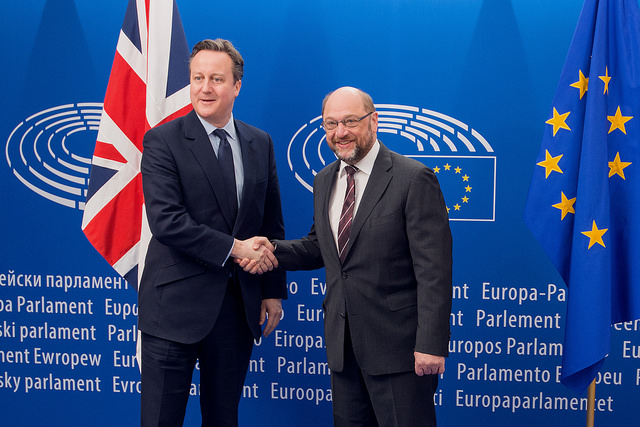
And so British Prime Minister David Cameron, standing outside No. 10 Downing Street last Saturday, announced to a waiting nation (and Union) that he had wrested for the United Kingdom  almost all of the concessions he had been negotiating on with his EU Member State partners. What had once seemed as an almost Herculean task to achieve and an unprecedented one at that, has led to agreement with his fellow colleagues (no doubt grudgingly for some) in the European Council. Yes, Cameron was thus able to recommend to the British people on 20th February 2016 to accept the results of his “historic” renegotiation and vote for “Bremain” this summer; yes, the European Council has expressly recognized the constitutional and legal existence of a two- or multi-speed Europe[ii]; and, yes, the EU has accepted the existence – once again but in a much stronger version this time – of British particularism, in other words “in Europe but not of Europe” so to speak.

In the months leading up to the February European Council meeting, commentators canvassed the various options open to the UK were PM Cameron to have instead recommended a “Brexit” following negotiations and which might still happen if the popular vote in the 23rd June 2016 referendum were to show a majority in favour of leaving the EU.[iii] Among the possibilities considered have been: (1) UK membership of the European Economic Area (“EEA”) through reapplying for membership of the European Free Trade Association (“EFTA”) which would create the scenario of “back to the future” for the country as it was an original founding EFTA state in 1960, leaving to join the then European Economic Community in 1973; (2) a series of bilateral agreements between the UK and the EU, following Switzerland, each agreement being separately negotiated although the format is subject reconsideration by the EU; and (3) the Turkish model including a customs union, free movement of goods, and limited movement of workers as well as forming a strategic partnership in areas of mutual interest. Yet all three options would leave the UK woefully exposed internationally and in a very much weakened bargaining position outside the EU although probably still within the World Trade Organisation.

Continue reading “Editorial of March 2016”

Eco and EU Culture. “The language of Europe is translation”

3381749342_ccbd0177c7_o

by Sérgio Maia Tavares Marques, Managing Editor
 ▪

Umberto Eco passed away this week but his words shall remain very much alive. Apart from his literary and semiology brilliance, Eco was an accurate observer of the European reality. For him, the Erasmus Programme is a sexual revolution that makes us all Europeans. A sort of spirit we can sense from – and that moved Bertolucci into his piece – The Dreamers.

He was supportive of the integration since his early days as he believed in the fundamental unity of the European culture. Moreover, he stated: “it´s culture that cements European identity”.

– How exactly? One may ask imaginarily.
– “We have too many languages and cultures, indeed (…)Europe is a continent that was able to fuse many identities (…) We know there are books we have yet to read that will help us reflect on cultures different from our own. Little by little: that is how our European identity will become more profound.”

Lyrically enough, instead of emphasizing the euro-crisis (and he highly regarded the values of the internal market), he suggested to print the faces of Dante, Shakespeare, Balzac or Rosselini in our Euro notes.

Umberto Eco’s lifetime reminds us all that, we do live under a Union based on the rule of law, we do benefit from an internal market and, essentially, we must live up to being surrounded by multilingualism, by a plural culture. This is what our existence is about – enabling ourselves to endless possibilities through the others. Through translating ourselves – beyond communicating, we translate to perceive, to know, to feel, to comprehend. Through at last achieving tolerance as we have been underlining this February on UNIO’s blog.

Afterall, la lingua dell’Europa è la traduzione, la langue de l’Europe, c’est la traduction, die sprache Europas ist die übersetzung, a língua da Europa é a tradução…

Picture credits: Umberto Eco  by giveawayboy.


Analysis of the Taricco Judgement: The EU’s Financial Interests Come First

by Daniela Guimarães, Collaborating Member of CEDU
 ▪

On 8th, September 2015, the Court of Justice of the European Union reached a decision that draws consequences from the case law Åkerberg Fransson, C-617/10, considering the standpoint of the protection of the financial interests of the European Union.

Mr. Ivo Taricco and other defendants, Italian citizens, were charged before the Tribunale di Cuneo (Italy), for having formed and organised during the fiscal years 2005 to 2009 a conspiracy to commit various offenses in relation to VAT. During their legal prosecution, several matters have arisen in the case causing delays in the process. Such delays can have serious consequences once the limitation period for each of the accused goes from six to seven years and even though that limitation period can be interrupted, it cannot be extended beyond a quarter of its initial duration (Articles 160 and 161, Italian Penal Code). According to the referring court, it is certain that all the offences will be time-barred before a final judgement can be delivered regarding the accused. The referring judge says that situations of “de facto impunity” in cases related to tax evasion are rather normal due to the mentioned Italian norms as they do not allow an extension of the limitation period in crimes such as the ones at stake. Being the criminal investigations, in most cases, of great complexity, often, the time-limit compromises an effective criminal prosecution. In practical terms, the statute of limitations regime in Italy can, actually, function as a “way out” for white collar crime offenders.

Continue reading “Analysis of the Taricco Judgement: The EU’s Financial Interests Come First”

European cinematographic culture… and interculturally defending tolerance through art

6901741107_bb83e08284_b

by Sérgio Maia Tavares Marques, Managing Editor
 ▪

From 11th to 21st, Feb. 2016, Berlin will be the European (and not only) movie capital as the 66th Berlinale Festival takes off. 128 countries, more than 400 films presented, over 30000 people involved and more than 330000 tickets sold. However, apart from that commercial, industry façade of the Festival, a deeper artistic side has also its seat on Berlinale. Sections such as Panorama, Forum, Culinary Cinema and NATIVe offer a different view of the seventh art: independent movies, new comers, experimental art and indigenous people story-telling, for instance. Berlinale Talents section intriguingly revolves around “The Nature of Relations”.

Each programme brochure can be found here.

Nevertheless, the most impressive message of this year´s edition of the Festival is described by the Berlinale Director, Dieter Kosslick. He declares that the Festival is devoted to the refugees. In his words, “since the festival was launched in 1951, we have only had positive experiences with what is today known as “a culture of welcome”. Moreover the Berlinale would not exist if it were not for foreigners. The eleven days of the festival at Potsdamer Platz demonstrate how cultural diversity can celebrate a peaceful fest with great energy and verve.”

According to him, it is vital to follow Steinmeier´s principle of six eyes. “Each of us has our own perception of things, our own two eyes, and with each of them we should try to see the view of the other, to find a joint view, so to speak, so as to achieve, through a shift of perspective, a view shared by both sides (…). In the cinema the principle of six eyes is a matter of course. We look through a screen like we do through an open window into another world or we are right in the middle of it.”

Cinema and all arts are platforms to explore societal issues. They are a narrative of our lives and our time. His editorial urges us all to not misunderstand themes and that refugees arrival can carry out social tolerance (UNIO Blog’s motto for the time being, by the way. As should remain EU law’s. In fact, legal systems as a whole can take in many lessons.).

Picture credits: La Berlinale s’en va!  by Charlotte Noblet.

Editorial of February 2016


hqdefault

Pedro Madeira Froufe, Editor
 ▪

Budgetary control, integration, sovereignty.

The budgetary control that the rules of the monetary Union demand from the Member States has given risen to some tension among some of the national Governments and Brussels. The most recent case (and let’s forget about what happened, and still happens, with Greece) regards Portugal. The new socialist Government, supported in the Parliament by Parties that always dealt uncomfortably with the idea and the dynamics of the integration process, is facing its first challenge with Brussels and the European Commission, regarding the Portuguese Draft Budgetary Plan for 2016.

As a matter of fact, the budgetary control (even if only understood as common supervision or monitoring of the internal budgetary decision is, effectively, a control) has the goal, in accordance with Article 126 TFEU, of “avoiding excessive deficits”. One should consider that, in the framework of monitoring that is attributed to the Commission by the same Article, this entity should intervene (and it should be stressed, within its “monitoring” role only) to identify and avoid, in terms of budgetary evolution and public debt, important deviations, within the criteria set out in Article 126(2)(a) and (b) TFEU. In the end, everything is built around the comparison between the programmed deficit and a certain benchmark rate in the relation between public debt and the national GDP (the “famous” 60% of that GDP in terms of public debt).

The Union is a “Union based on the rule of Law”. It pretends to be so with the (final) protection of rights and guarantees, as ensured by the European Court of Justice (ECJ). A Union of Law implies, evidently, the respect and the guarantee that the existent rules are effectively applied. In the case of the Union, the respect of the Primary Law, the Secondary Law, the fundamental praxis and legal acquis that support the dynamics of the integration. However, the reverse results in generating rules, also reasonable, within the context of the permanent balance relation between the Union and the Member States and, naturally, among those (and between each other). These relations must safeguard balance (isonomy) and ponderation, bearing in mind the goals of the integration process. In the end, there is a permanent negotiating process, a consensus dynamics that – even in the framework of the effective application of legal rules – is, naturally, in the foundations of a material “Union based on the rule of Law”.

That said, all actors have indeed to abide by the rules and this shall be done in good-faith (loyalty) even if, in extremis, those rules have to be feasible and balanced.

It is not whichever rule, regardless of the circumstances (and, in this case, the concrete Portuguese reality) that has to be implemented blindly and by hook or by crook. This also blocks the idea and dynamics of the “Union based on the rule of Law” and endangers the integration process. It is, however, inadmissible that some resort to the argument of “the national sovereignty” to criticise existent rules and to say even that the Portuguese Constitution “undoubtedly prevails” over the rules of the Treaties.

It is clear that, in the end, all will come to a solution through the dynamics of the negotiation, through the creation of balances, of bridges of consensus. No one will lose his face in political terms and the idea of respect of the existing legal framework will prevail. That is, ultimately, one of the lessons learned from the History of European Integration.

Picture credits: via this Youtube video [EU Commission’s opinion on the Portuguese Draft Budgetary Plan].

More on the Portuguese Draft Budgetary Plan for 2016 here.