
By Alessandra Silveira (Editor)
▪
Is there a threat to the rule of law in the EU as a consequence of the government agreement in Spain and the institutional crisis in Portugal?
The Government agreement in Spain (the amnesty proposal for the Catalan secession process) and the institutional crisis in Portugal (the resignation of the Government due to signs of influence peddling) have an impact on the functioning of the European Union (EU) because they could jeopardise the value of the rule of law on which the Union is founded (Article 2 TEU).
What is the meaning of the principle (i.e. the legal norm) of the rule of law in the EU? It means that the exercise of power is subject to legal rules and procedures (i.e. legislative, executive, and judicial procedures) that allow citizens to monitor (and possibly challenge) the legitimacy of decisions taken by public authorities. The basic idea of the rule of law is therefore to submit power to the law. This fundamental norm conditions the accession of a candidate State to the EU – and authorises the Union to monitor the proper functioning of the rule of law in the various Member States.
How does one identify a threat that could jeopardise the rule of law in the EU? The rule of law is threatened when a significant number of actors in a given Member State fail to guarantee the normative expectations and legal certainty enjoyed by citizens, leading to a lack of confidence in the law and in public institutions.
Why would a threat to the rule of law in Spain or Portugal be a matter for the EU? Well, because in this case the very functioning of the Union is threatened, as an area of freedom, security and justice without internal borders. The confidence of European citizens in the legal systems of all the Member States is crucial to the functioning of the Union as a whole. In other words, the Union’s ability to defend the rule of law is essential to its very survival.
It suffices to remember that a driving licence issued in Spain is currently valid for the whole of Europe – and the same goes for a residence permit issued in Portugal. Moreover, a judicial decision adopted in Portugal must be automatically recognised and enforced in another Member State – and a European arrest warrant issued in Spain must be immediately executed in another Member State for the prosecution of criminal offences or the execution of a sentence. The entire EU is therefore affected if the rule of law is not fully respected in each Member State – a problem for every citizen in all Member States.
It is no wonder that the European Parliament is amid debating the controversial amnesty pact reached between the Spanish Socialist Party and the pro-independence parties to make Pedro Sánchez President of the Government.[1] The amnesty pact aims to abolish legal proceedings and sanctions against independence politicians and activists who took part in both the secessionist insurrection in 2017 and previous events – which could involve, among others, misappropriation of public funds, prevarication, attacks against authority.
And why is it said that the amnesty pact threatens the separation of powers and judicial independence? Because it could lead to the creation of parliamentary committees to identify whether judicial convictions related to the 2017 secession amounted to lawfare – in other words, the strategic use of the law and the judicial system as instruments for persecuting and attacking political opponents. This would make it possible to subject judicial decisions to political interpretations, which would jeopardise the independence of the judiciary.
The European Commission has therefore requested more detailed information from the Spanish government on the personal, material, and temporal scope of the planned amnesty law.[2] Actually, is important to know, for example: could the Spanish amnesty law affect in some way the financial interests of the EU and the principle of equality before the EU law?; would a political re-examination of judicial decisions affect the independence of the courts that form part of the EU’s judicial structure?
The EU is therefore competent to assess whether i) what is being granted amnesty and ii) the judicial procedures leading to the amnesty respect the principle of the rule of law, as the EU recognises it. And the CJEU may be called upon to assess the compatibility of the Spanish amnesty rules with EU law– either at the initiative of the European Commission [in the context of an action for failure to fulfil obligations (Article 258 TFEU)] or at the initiative of any national judge who must apply them [in the context of a preliminary ruling (Article 267 TFEU)]. In any case, it takes time for the CJEU to act – which is why an active European citizenship must be alert.
It is important to remember that the CJEU recently recognised the direct effect of the rule enshrined in the second paragraph of Article 19(1) of the TEU in the judgment in M.F. v J.M (C-508/19). This recognition allows any private individual to invoke that provision in order to set aside or disapply national rules that hinder the effective judicial protection of EU law. Moreover, in Portuguese Judges (C-64/16), the CJEU stated that Article 19 TEU gives concrete expression to the value of the rule of law affirmed in Article 2 TEU, having recognised the integrated nature of the Union’s judicial system. Member States must therefore ensure that the bodies which form part of their system of remedies in the areas covered by EU law fulfil the requirements of effective judicial protection. And this is regardless of whether the Spanish Constitution allows amnesty[3] – as questions of EU law are not to be mistaken for the constitutional questions of a Member State.
In any case, the functioning of the justice system (its independence, quality, and efficiency) is one of the criteria used by the European Commission to assess the state of the rule of law in the various Member States. The European Commission’s 2023 Rule of Law Report[4] expresses concerns about public statements made by Spanish politicians regarding the judiciary – including members of the government. In the course of 2022, the Consejo General del Poder Judicial (“General Council of the Judiciary”) and the four main associations of judges and magistrates published press releases in which they condemned such statements – which were directed to the judiciary as a whole, thus affecting citizens’ confidence in it. As the European Commission has warned, in accordance with European rules, even though Courts are not immune to criticism or scrutiny, the justice system must enjoy public trust, in order to fulfil its function successfully, given its special role in society. This is especially important regarding statements made by members of the legislative and executive branches, since all branches of a Member State must foster and preserve citizens’ trust in constitutional institutions.
Another criterion used by the European Commission to monitor the rule of law in the different Member States is the anti-corruption framework – in other words, the effectiveness of national anti-corruption policies. Given the institutional crisis currently being experienced in Portugal, the major challenge is to transform Portuguese political culture, the practice of organising the State, and the design of public policies to prevent corruption in decision-making processes. Not necessarily corruption in a criminal sense, which is sometimes difficult to prove; what is at issue is the favouritism, the seizing of the decision-making process by obscure interests.
This requires improving the register of interests to avoid potential conflicts involving Parliament and the Government. In its 2023 Rule of Law Report, the European Commission reveals that although the Code of Conduct of the Portuguese Government offers guidelines on conflicts of interest and the use of public resources, it does not provide for any enforcement mechanism in the event of a breach of the rules.
Yet, in addition to the register of interests, it is also necessary to regulate the activities of pressure groups that exert influence on the legislative process. Regulating lobbying – as it exists in the EU, for example – means ensuring a level playing field so that all interested actors can intervene in the decision-making process on an equal footing. Lobbying should not be demonised, as it serves to provide arguments and information to decision-makers, on whether a piece of legislation will have an impact on a given sector. Regulating lobbying prevents interest representation from turning into influence peddling. As none of this is properly regulated in Portugal – despite the European Commission’s warning in the 2023 Rule of Law Report –, the red line is the existence of a quid pro quo, but this is not enough to identify the problems.
In any case, regulating lobbying is not enough to guarantee a level playing field, because the impact of lobbying on legislation and public policies requires transparency. In other words, lobbying must be transparent so that society can know who is exerting influence and how. Transparency makes it possible to distinguish between what is the domain of politics (on the one hand) and what is the domain of the technical autonomy of the Public Administration (on the other). This requires the de-partisanship of administrative structures, the strengthening of the technical specialisation of the Public Administration to keep it away from illegitimate influences, etc.
The European Commission’s 2023 Rule of Law Report reveals that several high-profile corruption cases are underway in Portugal. Although the number of cases has decreased, the European Commission warns that their complexity remains a challenge, especially given the scarcity of resources. In 2021, 20 convictions were issued for corruption-related cases, decreasing compared to 2020 (92 convictions) and 2019 (88 convictions). However, the Portuguese Public Prosecutor’s Office informed the European Commission of almost 4000 new enquiries in 2022 – which shows that corruption is not just a “perception” of the Portuguese people. In any case, the European Commission states that the National Anti-Corruption Mechanism (MENAC) should be operational by the second quarter of 2023 – and, effectivelly, it is still not in place. The National Anti-Corruption Strategy for 2020-2024 is being implemented in Portugal, although its success also depends on the effective functioning of MENAC.
Why is this external supervision (this “monitoring” of the functioning of the rule of law in the various Member States) so important [for which two other criteria are mobilised by the European Commission: i) pluralism and freedom of the media and ii) institutional checks and balances]? It is essential because, in essence, there is no democracy without the rule of law. In the absence of the rule of law, democracy becomes the tyranny of the majority that is circumstantiality in power. There is no legitimate exercise of power in the absence of the rule of law – in other words, without a set of rules that order and moderate the exercise of power. This is particularly relevant given the authoritarian drift that has returned to the European continent – and which could disrupt the 2024 European elections. There are no strategic gaps in politics: where there are no democrats, others will step in.
[1] “Spanish rule of law battle engulfs Brussels, Sánchez called ‘Orbán of the south’”, EuroActiv, 15 November 2023, https://www.euractiv.com/section/politics/news/spanish-rule-of-law-battle-engulfs-brussels-sanchez-called-orban-of-the-south/.
[2] On this theme, see Mared Gwyn Jones, “European Parliament to debate Spain’s amnesty deal next week over rule of law fears”, Euronews, 13 November 2023, https://www.euronews.com/my-europe/2023/11/13/european-parliament-to-debate-spains-amnesty-deal-next-week-over-rule-of-law-fears.
[3] On this topic, see Germán M. Teruel Lozano, “Rule of law eroded: unpacking the Catalan amnesty law”, Verfassungsblog, 6 December 2023, https://verfassungsblog.de/rule-of-law-eroded/ .
[4] Cf. European Commission, 2023 Rule of Law Report – Communication and country chapters, Directorate-General for Justice and Consumers, 5 July 2023, https://commission.europa.eu/publications/2023-rule-law-report-communication-and-country-chapters_en .
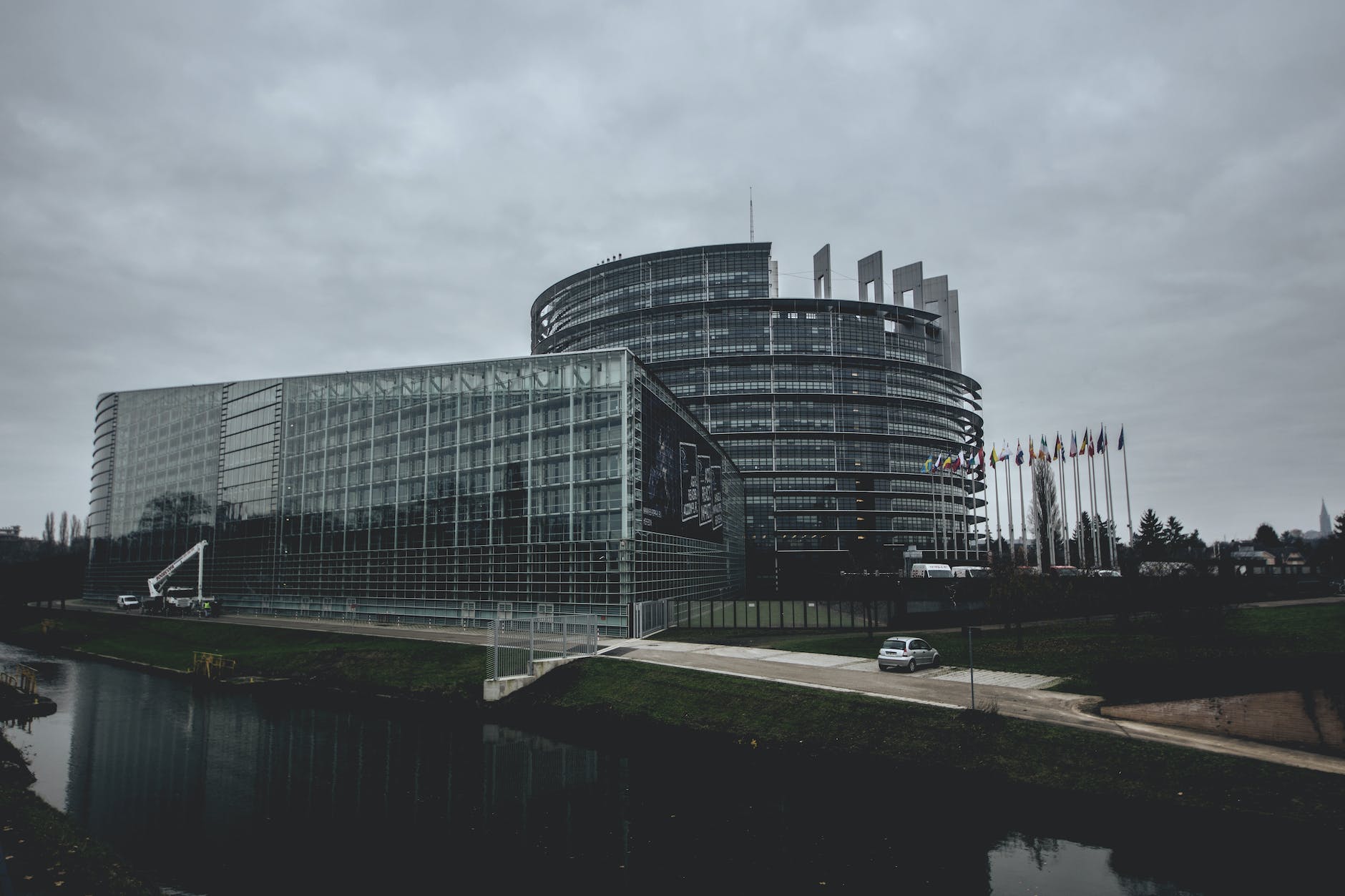
Picture credits: Photo by Artur Roman on Pexels.com.
 Official Blog of UNIO