A time of challenges for our Union

Find below some links to interesting opinion articles on some of the challenges that the EU is currently facing:

Europe isn’t working for this generation, via The Guardian (by Matteo Renzi the prime minister of Italy)


The economic consequences of austerity, via the New Statesmen (by Amartya Sen)


Can Germany Be Honest About Its Refugee Problems?, via the The New Work Times (by Jochen Bittner)

We also invite you to take a look at our editorial of this month here.

The principle of recognition as the cornerstone of European neighbourhood policies: waiting for Godot? Who is you, human being?

17434698599_7e5f0cf29d_z

by Daniela Cardoso, Collaborating Member of CEDU
 ▪

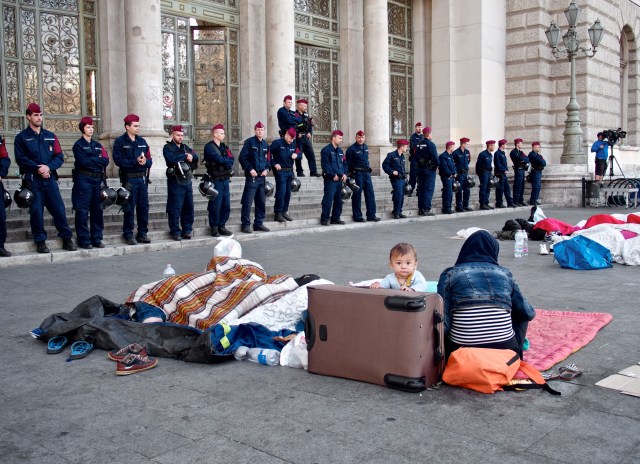
Due to the widely-acknowledged vulnerabilities that characterise the current European neighbourhood policies and external relations, the European Union has sought to encourage a renewed political dialogue. To a large extent, these new efforts are grounded on the need to face the current humanitarian and social crisis involving migrants and refugees and encountering two leading actors: Germany and Turkey.

The underlying issue is border management in order to polish and consolidate a more realistic answer to different needs. On one hand, attention must be drawn to the internal organisation of countries endowed with the geo-political profile, as the one that can be pointed out to Turkey, and their inabilities to handle the massive incoming of refugees in a solitary confinement. On the other hand, one is confronted with another issue concerning identities in transit. Giving the uncountable number of identities crossing geographical, social and cultural borders, is there any moral obligation on the part of the States to open their borders? At the core of what can be regarded as the management of political borders we encounter two chess pieces. The first thrives on cooperation and stability, sustaining that borders do have a peculiar moral meaning with its own sense of justice at the “local” level, regardless of shared views with political communities on distributive justice. The second one insists on a more plural argument placing the moral significance both in geopolitics and on people, which would be shyly seen in the possible accession of Turkey to the European Union – a topic which was recently re-placed on the table.

In short, there is one map with different languages: the tonic placed on the enlargement of the European Union and the emphasis on shared global governance.

Continue reading “The principle of recognition as the cornerstone of European neighbourhood policies: waiting for Godot? Who is you, human being?”

Editorial of January 2016

OLYMPUS DIGITAL CAMERA

by Mariana Canotilho, Editor
 ▪

‘The inclusion of the other and the fall of the Empire’

The word of the year 2015 was ‘refugee’. It is quite amazing how seven letters can actually encompass the sea of problems the European Union is facing, which will almost certainly be prevalent throughout 2016.

Aylan Kurdi died at our doorstep in the beginning of September. Before him, thousands of other migrants had already drowned in the Mediterranean, but it took the powerful image of a dead child lying on the sand for the Europeans to address the problem. Hundreds of volunteers mobilized to help their fellow humans, who ran away from war and misery. But although individuals acted, according to their possibilities, the EU institutions seem helpless, almost paralyzed. The Union struggled to reach an agreement about the reception and support to the refugees; some Member states refused the proposed quotas’ system. Hungary’s parliament voted to deploy troops to repel refugees from its border, deepening divisions with the rest of the EU. The common mechanisms negotiated have proven almost useless until now. Very few refugees have been resettled. 2016 began with yet another picture of a dead child, while trying to reach safety and peace, and with the alert from the former United Nations High Commissioner for Refugees, António Guterres: the EU has failed, and only traffickers are managing the migrants’ influx.

There is a growing and worrying incapacity, within the Union, to “include the other”, to use a classical expression of J. Habermas. In fact, the refugees’ crisis is only the worst, more serious symptom, of a larger problem: the loss of the European social project, the abandonment of an idea of Europe as an inclusive and plural community of equals. With this phenomenon comes the loss of hope in the Union’s institutions, trapped between the unwillingness of some and the incapacity of others to find reasonable political solutions to people’s problems.

Under this scenario, citizens are turning to other, quite unsettling, options. Extreme right-wing parties are gaining followers and votes all over Europe (France, Hungary and Poland are good examples of this), without a decisive institutional reaction from the EU, even in common matters, and in a striking contrast with the way the Greek crisis was handled.

Nationalism and separatism are rising. No later than 2017, the UK will hold an in-out referendum about the Union. An “out” vote will have unpredictable consequences and may be the end of the European project as we knew it: the “fall of the Empire”. Therefore, the biggest challenge for the time to come is to reinvent the EU. To build European politics based on hope and on values such as solidarity, diversity and rule of law, rather than fear and exclusion. Only Europe can save itself. Will it succeed?

Picture credits: Michael Gubi

[We also invite you to take a look at the Portuguese elections aftermath as commented by Sérgio Maia Tavares Marques, here.]

General Comment – foyer (or Cul-de-sac A Failure Not Worthy Being Called a Failure) [PART 2]

[This is the second part of a comment on the Portuguese elections aftermath, the author will soon provide the final part of this article – PART 3.]
by Sérgio Maia Tavares Marques, Jurist and 
student of the Master's degree in EU Law of UMinho

▪

22794253643_f7c1806a91_o_d


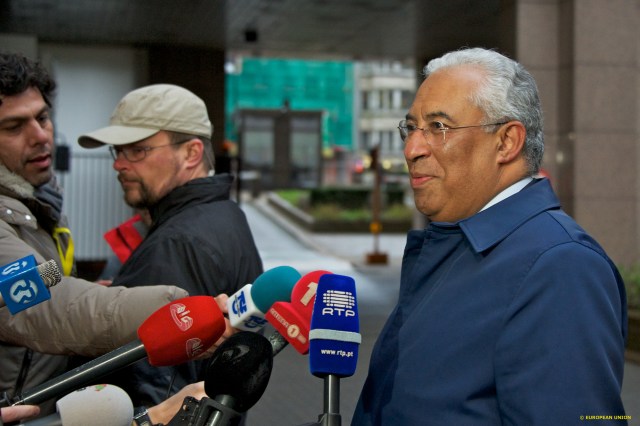
Previously, I have argued that the seeming failure of Portugal for not presenting the draft for the annual budget within the deadline fixed in the TSCG could not be considered a failure. I pointed that the reason for that fact (the delay/failure) was the political negotiation process in the country that it was not yet concluded at that time following a post electoral circumstance never seen before. Days have come and gone and on 26th of November a new Socialist + Leftist parties government took over. Mr. António Costa came to office in replacement of the right wing coalition led by PSD and the former PM, Mr. Pedro Passos Coelho, who had been originally nominated by the President. However, a motion of rejection was voted and approved by the left wing parties altogether and a new cabinet was formed and got in place.

As I underlined, my point was that it was not possible, nor advised for Portugal, to send the European Commission a budget draft when an upcoming administration (with its expenditure priorities) was still unknown. The country could not commit itself to figures that would only be mythical and/or misplaced. Plus and more importantly, I reasoned (in constitutional pluralist terms) that the appointment of a new government, as a direct result of the people´s will expression, can only be considered part of a national identity. In that sense, it falls within the scope of article 4/2 TEU. Therefore, the EU should encourage the demos and not persecute it. Nonetheless, Mr. Valdis Dombrovskis pressured Portugal with possible judicial actions and the situation was put on hold.

Continue reading “General Comment – foyer (or Cul-de-sac A Failure Not Worthy Being Called a Failure) [PART 2]”

Intellectual Property in the European Union

by Professor Luís Couto Gonçalves, Integrated Member of CEDU

 ▪

  1. Copyright

In what concerns the copyright, the (now) European Union made a first harmonization effort following a position taken by the European Commission, on its 1998 Green Paper[1] which intended to reinforce the protection of the copyright and  related rights.

Based on this orientation, several directives were adopted: on the legal protection of computer programs[2], on rental right and lending right and on certain rights related to copyright in the field of intellectual property[3]; on the coordination of certain rules concerning copyright and rights related to copyright applicable to satellite broadcasting and cable retransmission[4]; on the harmonization of the term of protection of copyright and certain related rights[5]; on the legal protection of databases[6]/[7].

The circumspect nature of these legal instruments was intended in order to avoid the establishment of fundamental principles of copyright. It is true, however, that if we read them combined it is possible to extract some general principles or, at least, the genesis of some of the principles that would appear expressly recognized in the following directives.

Continue reading “Intellectual Property in the European Union”

EU referendum(s)

Some interesting news on the results of Denmark’s referendum:

PM: Danish Vote Shows ‘Considerable Skepticism’, via The New York Times.

Five burning questions after Denmark’s EU ‘no’, via The Local

And about the possible outcome of the one taking place in the United Kingdom:

David Cameron may be ‘reliant on Labour members in EU referendum’, via The Guardian

‘EU referendum result to be declared in Manchester’, via the BBC.


To read other news that we shared, on highly debated topics in the EU, please click here. You can also share other links that you might find interesting for thinking&debating Europe, in the comments section.

Editorial of December 2015

‘ Paris and Europe, between a rock and hard place’


by Pedro Madeira Froufe, Editor
 ▪

The French Government informed the Council of Europe that, from now on, it would assume the risk of disrespecting the European Convention of Human Rights (ECHR) regarding the required measures to fight terrorism.

Point made: France, in a “state of emergency” (declared in November 14 by the French Government) admits the derogation of some of the rights enshrined in the ECHR. Article 15 ECHR allows the legitimate possibility for the Contracting States to derogate from the rights provisioned in the Convention “in time of war or other public emergency threatening the life of the nation any High Contracting Party (…) to the extent strictly required by the exigencies of the situation, provided that such measures are not inconsistent with its other obligations under international law”. Note, however, that, according to paragraph 2 of Article 15, in any case, derogations of Article 2 (right to life), Article 3 (prohibition of torture), Article 4/1 (no one shall be held in slavery or servitude) and Article 7 (principle of legality) will be admitted.

Within this context, it is important and only natural to question the decision of the French Government in the light of the underlining obligations of the European integration. Article 4/2 TEU states that “The Union shall respect the equality of Member States before the Treaties as well as their national identities, inherent in their fundamental structures, political and constitutional, inclusive of regional and local self-government. It shall respect their essential State functions, including ensuring the territorial integrity of the State, maintaining law and order and safeguarding national security”. This provision must be, however, articulated with Article 7/1 TEU: there is always the possibility, in the institutional and functional framework of the EU, that the Council, acting by the 4/5 majority of its members, verifies the existence of “clear” risk of violation of the values mentioned in article 2 (TEU) among which it is stated the backbone of the European construction “respect for human rights, including the rights of persons belonging to minorities”.

Well, there is, therefore, (formal) legal legitimacy in order to adopt the derogatory measures of some of the rights protected by the ECHR. And, beyond that (always insurmountable) legal legitimacy, there is a general recognition – in particular in the international community – that France has all the legitimacy to react and engage a war of State, both internally and externally, against groups of organized killers, as the ones who perpetrated the terrorist attack in Paris, on November 13, and the self-proclaimed “Islamic State”. Moreover, for the first time after the II World War, there is in regard to those groups a consensus “post November 13” among the permanent members of the UN Security Council. For the first time, in many years, there is a joint action and clear legitimacy, in the light of international law, regarding an armed intervention and the need of a unison action. Between September 11 of 2001 and November 13 of 2015, the will to deal with terrorism together without condition or reserve (considering the terms in which it operates and refines its barbaric nature nowadays) matured, and was less an acknowledgment of a necessity.

It has been understood – I believe – that the erroneous nature of the (pseudo) justifications that so often were given, based on circumstantial interests and political affections, always ended (even if that was not the intention) benefiting the terrorist agenda: the condemnations followed by “but”, the justifications intellectually inconsequent based on a socio-tributary analysis of the “class struggle”, the justifications based on economic reasons, on the flawed integration of immigration, of the “problem of the West”.

In the French case, I was always perplex with this type of condescending narrative based on the environment of the Parisian “Hlm” (social housing with moderated costs), when the Portuguese (as well as the Spanish) emigrants, in the decades of the 60s and 70s, integrated themselves from the “bidonville”. Like someone once said, we have to face the problem as organized and global banditry. Period. Even the qualification/denomination of what happen as terrorism opens the door to a glimmer of a justification to a vaguely understandable (although not admissible) cause. Therefore, there is no room for any possible justification or excuse to what Paris lived and experienced on November 13.

Resuming, however, to observations of a more obvious legal nature, it is important to highlight the risk that we face: we are between a rock and a hard place in terms of the fundamental balance between the adoption of the necessary and efficient measures to fight terrorism, at a global scale, and the preservation of the rule of Law which, in the end, justifies that same fight.

The media exposed some examples of the measures undertaken by the Parisian authorities, making clear in what that risk might translate into. For instance, a local authority from the North of France justified the adoption of a measure that bans the sale of alcoholic beverages in glass bottles, between 8 pm and 8am, with the state of emergency and the terrorist attacks.

A recurring question: the possible suspension of “Schengen”. At the bottom of this issue, the possible setback in terms of the free movement of persons and, necessarily, in one of the mains traits of the road towards the concretization of the European citizenship…

It is important to face this question (which already generated hasty reactions). The reinforcement of the cooperation and efficiency of the action of the European intelligence is of the utmost importance. But this does not imply, necessarily, a setback – at least in terms of principles – on the free movement of persons, of citizens among Member States. When the main operational bases of terrorism (banditry) are placed in European territory and are perpetrated by citizens from Member States it is important to avoid hasty reactions always … and especially when we are between a rock and a hard place.


Best European Fiction 2015

by Alexandra Severino, Managing Editor_
 ▪

It is worth reading the very interesting review of the Best European Fiction 2015, edited by West Camel, written on The Guardian by Daniel Hahn.

There are many voices arguing that only art and culture can put the European Union integration process back on its feet and while it is my belief that it is not exactly so, I still find culture and art (literature in this case) to be excellent fuel for getting to know better our European counterparts better and to bond more with the cultures of our Union.

Since the editorial intentions of this blog were to approach and analyse subjects both within and beyond the scope of EU law, I found it worthwile to share the very interesting thoughts of Daniel Hahn on the best European literary fiction.

You may find the review here.

Summary of Rottmann – Case C-135/08

by Daniela Cardoso, Jurist and Collaborating Member of CEDU 

Keywords: Citizenship of the Union; nationality of one Member State acquired by birth; nationality of another Member State acquired by naturalisation; loss of original nationality by reason of that naturalisation; loss with retroactive effect of nationality acquired by naturalisation on account of deception practised in that acquisition;  statelessness leading to loss of the status of citizen of the Union.

Court: ECJ | Date: March 2 2010 | Case: C-135/08 | Applicants: Janko Rottmann v. Freistadt Bayern

Summary: The European Court of Justice (ECJ) was referred for a preliminary ruling on proceedings that concerned a decision withdrawing the nationality, granted by way of naturalisation that, in turn, would result in the loss of the status of citizen of the Union.

Rottmann, an Austrian citizen, had acquired the German nationality through a naturalisation process from which, in accordance with the Austrian legislation, he automatically would lose his nationality of origin. The German authorities later found out that Rottmann had omitted the fact of being previously involved in serious criminal proceedings, and of being the main target of an arrest warrant. Due to this predicament, the German authorities decided to withdrew the German naturalisation with retroactive effect, on the grounds that the applicant had obtained German nationality by deception. Since these proceedings would result in the loss of the German nationality and, therefore, the citizen of the Union status as well, leaving him stateless, Rottmann challenged the decision from the German authorities.

The analysis made by the ECJ started to consider that, according to international law, it is within the competence of Member States to establish the conditions in which there is acquisition or loss of nationality. However, it also acknowledged that the exercise of this power can be subjected to further judicial control, when it affects rights and guarantees covered by EU law.

In fact, it is in the legitimate interest of the Member States to protect and foment the solidarity and good-faith relations among the State and their nationals, guaranteeing their loyalty, relation in which the concession of nationality is based. Accordingly, the ECJ states that EU law does not oppose to a decision of a Member State decision withdrawing the nationality, granted by way of naturalisation, when it was obtained by fraud, and as long as that decision goes through the proportionality test in regard to its consequences and effects in terms of EU law.

It is also relevant to highlight the opinion of the Advocate General which defended that there is a relation of reciprocity between the acquisition of nationality and the exercise of the rights that arise from the Treaty. Accordingly, the imposition of loyalty and good-faith in the process of acquisition of nationality, demanded by Germany, does not violate any EU law provision. Moreover, international law does not prohibit the loss of nationality even when the result is the statelessness.

The decision can be accessed here and the conclusions here.

Continue reading “Summary of Rottmann – Case C-135/08”