Eco and EU Culture. “The language of Europe is translation”

3381749342_ccbd0177c7_o

by Sérgio Maia Tavares Marques, Managing Editor
 ▪

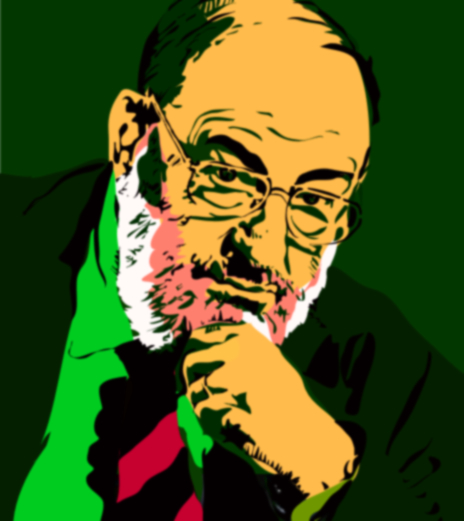
Umberto Eco passed away this week but his words shall remain very much alive. Apart from his literary and semiology brilliance, Eco was an accurate observer of the European reality. For him, the Erasmus Programme is a sexual revolution that makes us all Europeans. A sort of spirit we can sense from – and that moved Bertolucci into his piece – The Dreamers.

He was supportive of the integration since his early days as he believed in the fundamental unity of the European culture. Moreover, he stated: “it´s culture that cements European identity”.

– How exactly? One may ask imaginarily.
– “We have too many languages and cultures, indeed (…)Europe is a continent that was able to fuse many identities (…) We know there are books we have yet to read that will help us reflect on cultures different from our own. Little by little: that is how our European identity will become more profound.”

Lyrically enough, instead of emphasizing the euro-crisis (and he highly regarded the values of the internal market), he suggested to print the faces of Dante, Shakespeare, Balzac or Rosselini in our Euro notes.

Umberto Eco’s lifetime reminds us all that, we do live under a Union based on the rule of law, we do benefit from an internal market and, essentially, we must live up to being surrounded by multilingualism, by a plural culture. This is what our existence is about – enabling ourselves to endless possibilities through the others. Through translating ourselves – beyond communicating, we translate to perceive, to know, to feel, to comprehend. Through at last achieving tolerance as we have been underlining this February on UNIO’s blog.

Afterall, la lingua dell’Europa è la traduzione, la langue de l’Europe, c’est la traduction, die sprache Europas ist die übersetzung, a língua da Europa é a tradução…

Picture credits: Umberto Eco  by giveawayboy.
 

European cinematographic culture… and interculturally defending tolerance through art

6901741107_bb83e08284_b

by Sérgio Maia Tavares Marques, Managing Editor
 ▪

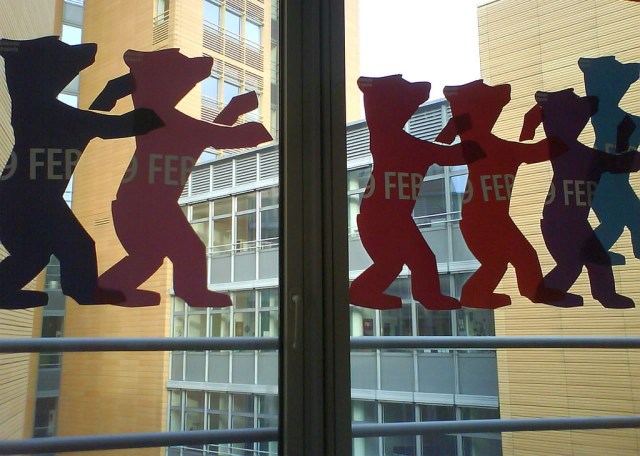
From 11th to 21st, Feb. 2016, Berlin will be the European (and not only) movie capital as the 66th Berlinale Festival takes off. 128 countries, more than 400 films presented, over 30000 people involved and more than 330000 tickets sold. However, apart from that commercial, industry façade of the Festival, a deeper artistic side has also its seat on Berlinale. Sections such as Panorama, Forum, Culinary Cinema and NATIVe offer a different view of the seventh art: independent movies, new comers, experimental art and indigenous people story-telling, for instance. Berlinale Talents section intriguingly revolves around “The Nature of Relations”.

Each programme brochure can be found here.

Nevertheless, the most impressive message of this year´s edition of the Festival is described by the Berlinale Director, Dieter Kosslick. He declares that the Festival is devoted to the refugees. In his words, “since the festival was launched in 1951, we have only had positive experiences with what is today known as “a culture of welcome”. Moreover the Berlinale would not exist if it were not for foreigners. The eleven days of the festival at Potsdamer Platz demonstrate how cultural diversity can celebrate a peaceful fest with great energy and verve.”

According to him, it is vital to follow Steinmeier´s principle of six eyes. “Each of us has our own perception of things, our own two eyes, and with each of them we should try to see the view of the other, to find a joint view, so to speak, so as to achieve, through a shift of perspective, a view shared by both sides (…). In the cinema the principle of six eyes is a matter of course. We look through a screen like we do through an open window into another world or we are right in the middle of it.”

Cinema and all arts are platforms to explore societal issues. They are a narrative of our lives and our time. His editorial urges us all to not misunderstand themes and that refugees arrival can carry out social tolerance (UNIO Blog’s motto for the time being, by the way. As should remain EU law’s. In fact, legal systems as a whole can take in many lessons.).

Picture credits: La Berlinale s’en va!  by Charlotte Noblet.

EU referendum(s)

Some interesting news on the results of Denmark’s referendum:

PM: Danish Vote Shows ‘Considerable Skepticism’, via The New York Times.

Five burning questions after Denmark’s EU ‘no’, via The Local

And about the possible outcome of the one taking place in the United Kingdom:

David Cameron may be ‘reliant on Labour members in EU referendum’, via The Guardian

‘EU referendum result to be declared in Manchester’, via the BBC.


To read other news that we shared, on highly debated topics in the EU, please click here. You can also share other links that you might find interesting for thinking&debating Europe, in the comments section.

Paris attacks – test on EU values or the chance to rebuild a more united and welcoming Union?

Please find bellow some interesting news on the reactions across EU in the aftermath of the Paris attacks that took place on Friday 13, 2015 .

Paris attacks: European leaders link terror threats to immigration, via The Guardian

Europe’s response to the Paris attacks is different this time, via The Economist 

Paris Attacks Shift Europe’s Migrant Focus to Security, via The New York Times

To read other news that we shared, on highly debated topics in the EU, please click here. You can also share other links that you might find interesting for thinking&debating Europe, in the comments section.