Editorial of July 2022

By Pedro Madeira Froufe, Alessandra Silveira, Joana Covelo de Abreu (Editors), Carlos Abreu Amorim (Professor of Administrative and Environmental Law, UMinho) and Tiago Sérgio Cabral (Managing Editor) 

“European bloc” vs. “European network” – on the enlargement of the EU

The European Council of 23-24 June 2022 approved the granting of “candidate for accession” status to both Ukraine and Moldova. Prior to the granting of such status, there was a summit between the EU and the Western Balkans with the aim of preparing the environment and conditions for another prospective enlargement, involving Albania, Bosnia, Serbia, North Macedonia, Montenegro and Kosovo. Some of these States (such as Albania, North Macedonia, Montenegro and Serbia) are already formal candidates for membership – Turkey too possesses such a status. Georgia had formally expressed its wish to join and therefore applied for candidate status. However, the European Council felt that, for the time being, and particularly in view of the few guarantees provided that the problems linked to corruption would be overcome relatively easily, it was not yet appropriate to consider it as a candidate State, although it was felt that it should be given a “European perspective”.

It should be noted that the accession of a new State to the “European bloc” follows a set rules and is part of a dynamic of political consensus and commitment on the part of both parties –  i.e. the Union and the candidate State – and it is certain that this animus or firm and consensual political will ultimately be decisive, irrespective of compliance with the existing and legally enshrined criteria [Article 49 of the Treaty on European Union (TEU)]. Thus, a candidate State will not succeed if it does not profess, clearly and with commitment, the values which guide integration and which are a kind of “identity” of the Union: democracy, freedom, human dignity, equality, rule of law, respect for human rights and guarantee of protection of minorities (in essence, the values referred to in Article 2 of the TEU).

Continue reading “Editorial of July 2022”

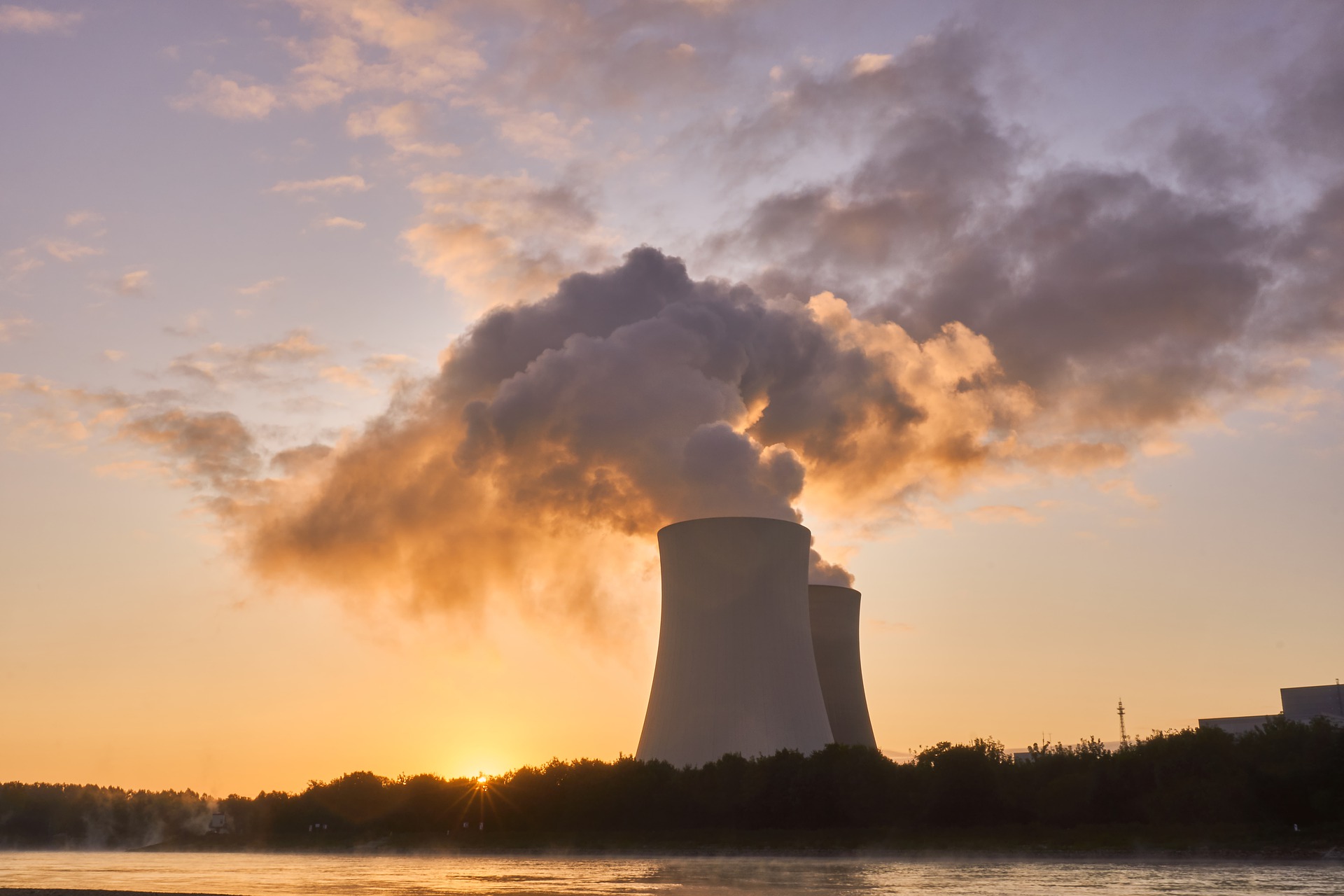
REPOWER EU – A challenge and an opportunity

By Maria Barros Silva (Associate Lawyer at SRS Advogados – Energy and Competition Law) and Nuno Calaim Lourenço (Managing Associate at SRS Advogados – Energy and Competition Law)

1. Context

The energy sector is cyclical by nature. History offers several examples of market expansion followed by very sudden contractions. Unfortunately, the current crisis differs from previous ones. To put things into dire perspective, the European Union (“EU”) heavily relies on fossil fuel (gas, oil and coal) imports for its energy needs, amounting to circa 60% of gross energy consumption in the past 5 years. The EU imports 90% of its gas, with Russia previously accounting for 45% of those imports, as well as for 25% of oil and 45% of coal. Although European domestic production of renewable energy sources has increased significantly in recent years, the intermittent nature of the so-called “green energy”, coupled with limited renewable-energy storage and a drastic and intransigent reduction in the production of EU coal, lignite and gas has meant that the EU remains energy dependent.

Continue reading “REPOWER EU – A challenge and an opportunity”

The future of Europe: “citizens with real experience” and the European Political Community

By Pedro Madeira Froufe (Editor) and Tiago Sérgio Cabral (Managing Editor)

1. The expression “citizens with real experience”, was used by President Emmanuel Macron in his speech on 9 May 2022 at the European Parliament.[1] 

This speech was delivered at the European Parliament’s traditional Europe Day session. This year, this session also marked the closing of the Conference on the Future of Europe. In fact, President Macron used that expression, addressing all those who were involved in the work of the Conference, highlighting the democratic exercise that meant the active participation of citizens, concretised in several proposals. According to Macron, these proposals are creative, as indeed the times we live in in Europe require.

2. The first striking feature of this speech has to do directly with the temporal contextualisation of President Macron’s programmatic ideas. A time of war. A time of war that effectively demands “creative efforts” in the search for European responses to the crisis that, from the outset, erupted because of the war. “Creative efforts’ which, undoubtedly and according to Macron, are more necessary today than they were in the past.

Continue reading “The future of Europe: “citizens with real experience” and the European Political Community”

Protecting Children’s Rights in the Digital Age: the new European strategy for a better internet for kids (BIK+)

By Maria Inês Costa (Master in Human Rights from UMinho)

Given the rapid technological evolution in the so-called Digital Decade, and the need for legal regulation in view of the emerging needs and circumstances that this evolution has brought about, the European Union has been taking a position to strengthen the protection of children’s rights in this context. One of the most recent paradigmatic examples of this approach is the new European strategy for a better internet for kids (BIK+), published in May 2022, about two years after the outbreak of the COVID-19 pandemic which increased the use of digital media.

According to Article 24(2) of the CFREU, “in all actions relating to children, whether taken by public authorities or private institutions, the child’s best interests must be a primary consideration[1], and to that extent, the digital transition should be carried out keeping in mind the advantages that these bring to children, for example, as a source of inexhaustible knowledge, but also the dangers it entails and the exacerbation of inequalities it leads to, when there is no governance of its use and access.

As per item 3 of the UN’s General comment N.º 25 (2021) on children’s rights in relation to the digital environment,[2] the children consulted asked questions regarding the new developments in the digital age that directly affect them – “I would like to obtain clarity about what really happens with my data… Why collect it? How is it being collected?”; “I am… worried about my data being shared” – and in the subsequent paragraph (item 4) one can read: “innovations in digital technologies affect children’s lives and their rights in ways that are wide-ranging and interdependent (…)”.

Continue reading “Protecting Children’s Rights in the Digital Age: the new European strategy for a better internet for kids (BIK+)”

Editorial of June 2022

By Pedro Madeira Froufe (Editor) 

Brexit: “Protocol on Ireland/Northern Ireland”

1. On May 5 of this year, elections were held for the Northern Ireland Assembly, the regional parliament usually referred to as Stormont (by allusion to its physical space, the Stormont Castle). In fact, since the separation (“partition”) of the island of Ireland into Northern Ireland and the Republic of Ireland, as we know them today, the regional legislative power is concentrated in that Assembly. This is a democratically elected single-chamber unicameral body consisting of 90 members since 2016. In addition to exercising legislative power, the Assembly is also responsible for electing the Northern Ireland Executive.

The most recent Assembly elections resulted in the first victory for a party representing the republican and catholic “cluster” in the 101 years of existence of autonomous Northern Ireland (“post-partition” of the island, which occurred in 1921). In fact, Sinn Féin, the party that wants the reunification of the island of Ireland into one state and independence from the United Kingdom, won 27 seats in the Assembly against the 24 won by the Democratic Unionist Party, the DUP. We will not analyze, for now, the rationale behind this unprecedented victory of the Catholic Republicans which, for many analysts, represents a “seismic” result, opening the way to a possible rupture in politics and, consequently, in Northern Ireland society.[1]

Continue reading “Editorial of June 2022”

Can a judge’s request for a preliminary ruling be illegal and lead to disciplinary action? – The Court of Justice conclusions in case C-564/19

By Joana Gama Gomes (Master in International and European Law from the University of Coimbra / Researcher at CIDEEFF - Centro de Investigação em Direito Europeu, Económico, Financeiro e Fiscal)

The request for a preliminary ruling was submitted by a Hungarian court in criminal proceedings brought against a Swedish national, for infringement of the provisions of Hungarian law governing the acquisition or transport of firearms or ammunition. Although the facts of this case seem unrelated to the problem at hand, subsequent developments in Hungary during the course of this procedure raised a fundamental issue of EU law.

A declaration of illegality from the Hungarian Supreme Court and disciplinary proceeding against the referring judge led him to ask the Court two crucial questions – whether EU law precludes a national court of last instance from declaring as unlawful a decision by which a lower court makes a request for a preliminary ruling, and whether the principle of judicial independence precludes disciplinary proceedings being brought against a judge for having made such a request for a preliminary ruling.

Continue reading “Can a judge’s request for a preliminary ruling be illegal and lead to disciplinary action? – The Court of Justice conclusions in case C-564/19”

The material competence of the European Public Prosecutor’s Office and its extension to organized crime as terrorism, human and drug trafficking

Catarina Vilarinho (Master in EU Law, School of Law, University of Minho)

1. Initial thoughts

The start of operation of a new European body such as the European Public Prosecutor’s Office, hereinafter EPPO, on 1 June 2021 is a sign that the Member States of the European Union (EU) are increasingly aligning themselves to create a stronger and more resilient Union, perhaps, in this case, due to the need to combat transnational crime, for which we will not find a sufficiently effective solution without strong and structured intervention at European level[1].

In this way, the battlefield is prepared for a battle of equal arms, as cross-border crime can now be tackled by an equally cross-border authority[2].

Continue reading “The material competence of the European Public Prosecutor’s Office and its extension to organized crime as terrorism, human and drug trafficking”

Case C-205/22, C.D.A. Direct application by the national courts of the European Commission reports issued under the Cooperation and Verification Mechanism

Dragoș Călin [Judge at the Bucharest Court of Appeal, Co-President of the Romanian Judges' Forum Association, Director of the Judges' Forum Review (Revista Forumul Judecătorilor)]. 

Very recently, on March 10, 2022, the Alba Iulia Court of Appeal – Administrative and Fiscal Litigation Section ordered the referral to the Court of Justice of the European Union, based on art. 267 of the Treaty on the Functioning of the European Union, with a new preliminary ruling in close connection with the Rule of law (Case C-205/22, C.D.A.).

In fact, the Romanian court’s request tends to ascertain mainly whether, in the interpretation of the CJEU, the principle of judicial independence enshrined in the second subparagraph of Article 19(1) TEU with reference to Article 2 TEU and Article 47 of the Charter of Fundamental Rights of the European Union and the principle of sincere cooperation, laid down in Article 4 TEU, preclude a national provision, such as that of Article 148(2) of the Romanian Constitution, as interpreted by the Romanian Constitutional Court, by Decision No 390/2021, according to which national courts cannot take account of the provisions of European Commission Decision 2006/928 and the recommendations made in the CVM Reports for the implementation of the benchmarks, on the ground that “national courts are not empowered to cooperate with a political institution of the European Union.”

Continue reading “Case C-205/22, C.D.A. Direct application by the national courts of the European Commission reports issued under the Cooperation and Verification Mechanism”