
On the reform of sexual offences in Spain

Julia Ropero Carrasco and Sandra López de Zubiría Díaz (Universidad Rey Juan Carlos, Madrid)

The regulation of so-called “sexual crimes” has traditionally been accompanied by significant and heated debates. If we refer to its historical regulation, it is possible to see how “honour” or “morality” have clouded adequate protection of the victim, essentially due to the mistaken identification of the harmfulness of these acts. From 1995 onwards, with the so-called “Penal Code of Democracy”, it seemed that the regulation had been translated into important improvements, especially by consolidating “sexual freedom” as the legal right to be defended, instead of the previous obsolete conceptions. However, despite the commendable effort to abandon the conventional “sexual morality”, the truth is that this reform brought with it a lack of protection for victims, especially in the area of minors and trafficking for the purpose of sexual exploitation, which led to different revisions accompanied in turn by controversy over the timeliness of the reforms.

For this reason, the controversies surrounding the regulation (and its application) of sexual offences have not ceased to be present, although it is in the wake of the well-known case of “La Manada[1]” and the various sentences issued on the matter that Spanish society has been particularly rallied and, with it, the debate on the appropriateness of criminal reform in this area has been reignited.

As a current context, it is necessary to pay attention to the data extracted from the 2019[2] Macro-survey on violence against women, as well as from the Report on Social Perception of Sexual Violence[3], which shows the prominence of sexual violence in women’s lives, the problem of under-reporting of the facts and, more worryingly, the maintenance of stereotypes about sexual violence (especially with regard to the conception of the “rapist” as a sick person and not as one of the perverse derivations of a patriarchal order that maintains a strong discrimination against women in the sexual sphere and a definition of roles that promotes male domination).

Continue reading “On the reform of sexual offences in Spain”
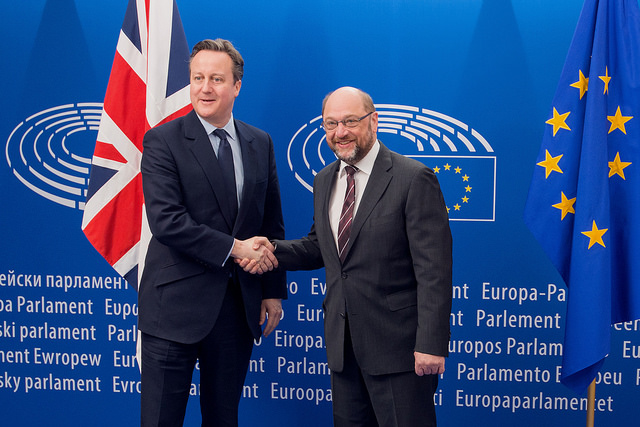
Editorial of March 2016

24947332642_045d3ea406_z
by Allan F. Tatham, Professor at Facultad de Derecho, Universidad CEU San Pablo
 ▪

New Deal for the UK in Europe: Rewarding British particularism or Making Exceptionalism Acceptable?

And so British Prime Minister David Cameron, standing outside No. 10 Downing Street last Saturday, announced to a waiting nation (and Union) that he had wrested for the United Kingdom  almost all of the concessions he had been negotiating on with his EU Member State partners. What had once seemed as an almost Herculean task to achieve and an unprecedented one at that, has led to agreement with his fellow colleagues (no doubt grudgingly for some) in the European Council. Yes, Cameron was thus able to recommend to the British people on 20th February 2016 to accept the results of his “historic” renegotiation and vote for “Bremain” this summer; yes, the European Council has expressly recognized the constitutional and legal existence of a two- or multi-speed Europe[ii]; and, yes, the EU has accepted the existence – once again but in a much stronger version this time – of British particularism, in other words “in Europe but not of Europe” so to speak.

In the months leading up to the February European Council meeting, commentators canvassed the various options open to the UK were PM Cameron to have instead recommended a “Brexit” following negotiations and which might still happen if the popular vote in the 23rd June 2016 referendum were to show a majority in favour of leaving the EU.[iii] Among the possibilities considered have been: (1) UK membership of the European Economic Area (“EEA”) through reapplying for membership of the European Free Trade Association (“EFTA”) which would create the scenario of “back to the future” for the country as it was an original founding EFTA state in 1960, leaving to join the then European Economic Community in 1973; (2) a series of bilateral agreements between the UK and the EU, following Switzerland, each agreement being separately negotiated although the format is subject reconsideration by the EU; and (3) the Turkish model including a customs union, free movement of goods, and limited movement of workers as well as forming a strategic partnership in areas of mutual interest. Yet all three options would leave the UK woefully exposed internationally and in a very much weakened bargaining position outside the EU although probably still within the World Trade Organisation.

Continue reading “Editorial of March 2016”