Summaries of judgments: Openbaar Ministerie | BPC Lux 2 and Others

Summaries of judgments made in collaboration with the Portuguese judge and référendaire of the CJEU (Nuno Piçarra and Sophie Perez)

 ▪

Judgment of the Court (Grand Chamber) of 22 February 2022, X and Y v Openbaar Ministerie, Joined Cases C-562/21 PPU and C-563/21 PPU, EU:C:2022:100

Reference for a preliminary ruling – Urgent preliminary ruling procedure – Judicial cooperation in criminal matters – European arrest warrant – Framework Decision 2002/584/JHA – Article 1(3) – Surrender procedures between Member States – Conditions for execution – Charter of Fundamental Rights of the European Union – Second paragraph of Article 47 – Fundamental right to a fair trial before an independent and impartial tribunal previously established by law – Systemic or generalised deficiencies – Two-step examination – Criteria for application – Obligation of the executing judicial authority to determine, specifically and precisely, whether there are substantial grounds for believing that the person in respect of whom a European arrest warrant has been issued, if surrendered, runs a real risk of breach of his or her fundamental right to a fair trial before an independent and impartial tribunal previously established by law

Facts

Two European arrest warrants (‘EAWs’) were issued in April 2021 by Polish courts against two Polish nationals for the purposes, respectively, of executing a custodial sentence and of conducting a criminal prosecution. The persons concerned were in the Netherlands and did not consent to their surrender.

The Rechtbank Amsterdam (District Court, Amsterdam, Netherlands) noted that, since 2017, there have been in Poland systemic or generalised deficiencies affecting the right to a fair trial, and in particular the right to a tribunal previously established by law, resulting, inter alia, from the fact that Polish judges are appointed on application of the Krajowa Rada Sądownictwa (the Polish National Council of the Judiciary; ‘the KRS’). The referring court furthermore noted that, according to the resolution adopted in 2020 by the Sąd Najwyższy (Supreme Court, Poland), the KRS, since the entry into force of a law on judicial reform on 17 January 2018, is no longer an independent body. In so far as the judges appointed on application of the KRS may have participated in the criminal proceedings that led to the conviction of one of the persons concerned or may be called upon to hear the criminal case of the other person concerned, the referring court considered that there was a real risk that those persons, if surrendered, would suffer a breach of their fundamental right to a tribunal previously established by law.

Continue reading “Summaries of judgments: Openbaar Ministerie | BPC Lux 2 and Others”
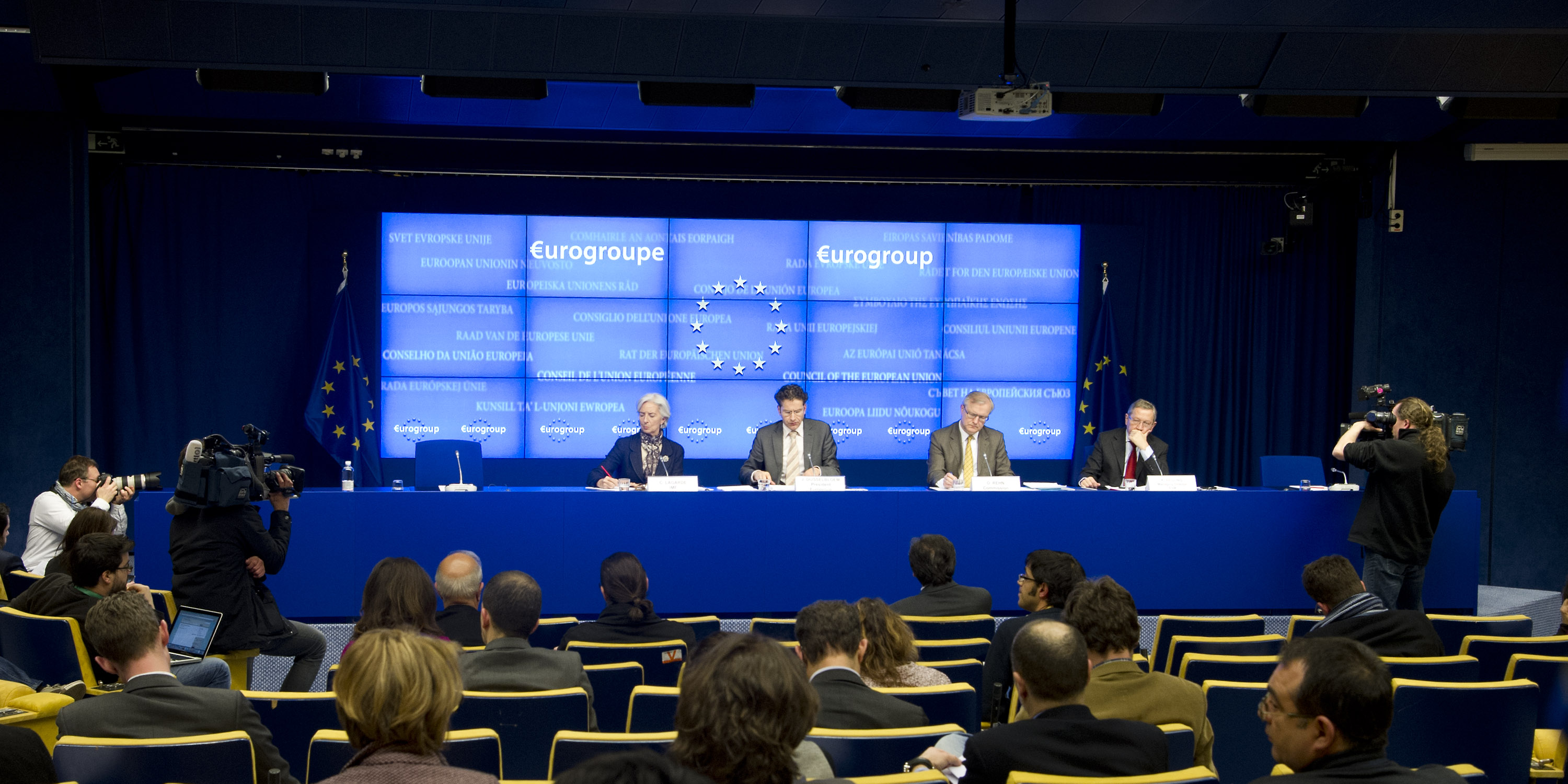
Editorial of October 2016

8630266615_336d5056ec_o

by Sophie Perez Fernandes, Junior Editor

Engaging EU liability within the European Stability Mechanism framework

Last September 20th, the European Court of Justice (ECJ) delivered two judgments regarding the role of the European Commission and, to a lesser extent, the European Central Bank, in the negotiation and signing of the Memorandum of Understanding concluded between the Republic of Cyprus and the European Stability Mechanism (ESM) during the 2012-2013 financial crisis, and, in particular, in the restructuring of the banking sector in Cyprus imposed as a condition for the grant of financial assistance.

In Mallis and Malli (Joined Cases C-105/15 P to C-109/15 P), actions were brought against the European Commission and the European Central Bank for the annulment of the Eurogroup’s statement of 25 March 2013 concerning, inter alia, the restructuring of the banking sector in Cyprus. In turn, in Ledra Advertising (Joined Cases C-8/15 P to C-10/15 P), depositors of two large Cypriot banks brought actions against the European Commission and the European Central Bank for the partial annulment of the Memorandum of Understanding of 26 April 2013 adopted jointly by the ESM and the Republic of Cyprus and also for compensation for damages allegedly suffered following the request for financial assistance and the ensuing restructuring of the two banks in question.

The ECJ had already been called upon to rule on judicial protection questions raised by the ESM framework. Created in order to provide, where needed, financial assistance to the Member States whose currency is the euro, the ESM was instituted through an international agreement between euro area Member States – the Treaty establishing the ESM, concluded in Brussels the 2th February 2012, in force since the 27th September 2012. Thus, the ESM Treaty is not part of the EU legal order, as confirmed by the ECJ in the famous Pringle judgment (C-370/12). As a consequence, when creating the ESM, or acting within its framework, Member States do not act within the scope of application of EU law for the purposes, in particular, of Article 51(1) CFREU. Individuals seeking to challenge Member States’ measures adopted pursuant the conditions laid down in a Memorandum of Understanding would not, therefore, find in the preliminary ruling mechanism an indirect means of access to the ECJ in order to assess their compliance with EU law and, in particular, the CFREU as the former was not in question and the latter was hence out of reach.

What the above mentioned judgments, and especially Ledra Advertising, emphasize is the link nonetheless existing between the ESM framework and the EU legal order. Quoting Alicia Hinarejos (EU Law Analysis), in order to carry out its functions, the ESM “borrows” two EU institutions, the European Commission and the European Central Bank, two thirds of the infamously known Troika. The question is whether (and, if so, when) EU institutions’ actions within the ESM framework might be reviewed and, when harmful, give rise to compensation under EU law and, in particular, in light of the CFREU.

Continue reading “Editorial of October 2016”