Democratic Integrity in the Era of Digital Disinformation

Eduardo Paiva  (Master in Law and Informatics - UMinho) 
           

The healthy unfolding of democratic electoral processes – and of democratic life in general – has been threatened by the dissemination of disinformation (defined as “false or misleading content that is spread with an intention to deceive or secure economic or political gain, and which may cause public harm”) by agents who do not uphold the same principles.[1] Under these circumstances, a climate of manipulation and deceit is fostered, which is extremely and particularly malign for crucial moments of political decision,[2] as attempts are made to strip them of their inherent relevance and validity, constituting one of the most dangerous forces deteriorating our democratic foundations.[3]

 In this sense, the role of major digital platforms, as holders of vast power to control and influence communication and information channels on a global scale, is chronic and central in this issue. Taking this into account, they should be compelled to engage in self-criticism towards a certain openness in applying changes to the operational models of their businesses.[4] The enormous capacity of these technological platforms in amplifying and micro-targeting content makes them extremely attractive for the precise propagation of information on a large scale, thus making them systematically targeted for hybrid activities in the field of disinformation. Amidst this web of opaque information, it is more important than ever to know which profiles and posts are genuinely concerned with conveying the reality of facts in an impartial and well-founded manner.

Continue reading “Democratic Integrity in the Era of Digital Disinformation”

Editorial of May 2021

Alessandra Silveira, Joana Covelo de Abreu, Pedro Madeira Froufe (Editors) and Tiago Sérgio Cabral (Managing Editor)

Conference on the future of Europe and the defence of European values

On March 10th, 2021, following a long negotiation, the Presidents of the European Parliament, the Council of the EU and the European Commission signed the “Joint Declaration” on the “Conference on the Future of Europe”, holding its joint presidency.[1] The Conference will be officially launched on May 9th, 2021 in an inaugural session in Strasburg and it will be extended until the Spring of 2022. It aims at creating a new public forum for an open, inclusive, transparent and structured debate with Europeans around the issues that matter to them and affect their everyday lives. A new Special Eurobarometer, published one day before the signing of the Joint Declaration, focuses on the Conference and measures attitudes towards it and some of the key themes to be covered.[2]

Three-quarters of Europeans consider that the Conference will have a positive impact on democracy within the EU: 76% agree that it represents significant progress for democracy within the EU, with a clear majority supporting this view in every EU Member State. The very vast majority of Europeans (92%) across all Member States demand that citizens’ voices are “taken more into account in decisions relating to the future of Europe”. While voting in EU elections is clearly regarded (by 55% of respondents) as the most effective way of ensuring voices are heard by decision-makers at EU level, there is very strong support for EU citizens having a greater say in decisions relating to the future of Europe. 45% of Europeans declare themselves “rather in favour of the EU but not in the way it has been realised so far”. Six in ten Europeans agree that the Coronavirus crisis had made them reflect on the future of the EU while 39% disagree with this.

Continue reading “Editorial of May 2021”

A short introduction to accountability in machine-learning algorithms under the GDPR

30212411048_96d9eea677_o

 by Andreia Oliveira, Master in EU Law (UMINHO)
 and Fernando Silva, Consulting coordinator - Portuguese Data  Protection National Commission

Artificial Intelligence (AI) can be defined as computer systems designed to solve a wide range of activities, that are “normally considered to require knowledge, perception, reasoning, learning, understanding and similar cognitive abilities” [1]. Having intelligent machines capable of imitating human’s actions, performances and activities seems to be the most common illustration about AI. One needs to recognise AI as being convoluted – thus, machine learning, big data and other terms as automatization must hold a seat when discussing AI.  Machine learning, for example, is defined as the ability of computer systems to improve their performance without explicitly programmed instructions: a system will be able to learn independently without human intervention [2]. To do this, machine learning develops new algorithms, different from the ones that were previously programmed, and includes them as new inputs it has acquired during the previous interactions.

The capabilities of machine learning may put privacy and data protection in jeopardy. Therefore, ascertaining liability would be inevitable and would imply the consideration of inter alia all plausible actors that can be called upon account.

Under the General Data Protection Regulation (GDPR), the principle of accountability is intrinsically linked to the principle of transparency. Transparency empowers data subjects to hold data controllers and processors accountable and to exercise control over their personal data. Accountability requires transparency of processing operations, however transparency does not constitute accountability [3]. On the contrary, transparency acts as an accountability’ helper – e.g. helping to avoid barriers, such as opacity.
Continue reading “A short introduction to accountability in machine-learning algorithms under the GDPR”

Eurogroup and secrecy

8466751401_5c1212cd98_o

by Andreia Barbosa, PhD student at the Law School of UMinho

It is clear from Article 1 of Protocol No 14, annexed to the Treaty on the Functioning of the European Union, that Eurogroup meetings take place informally.

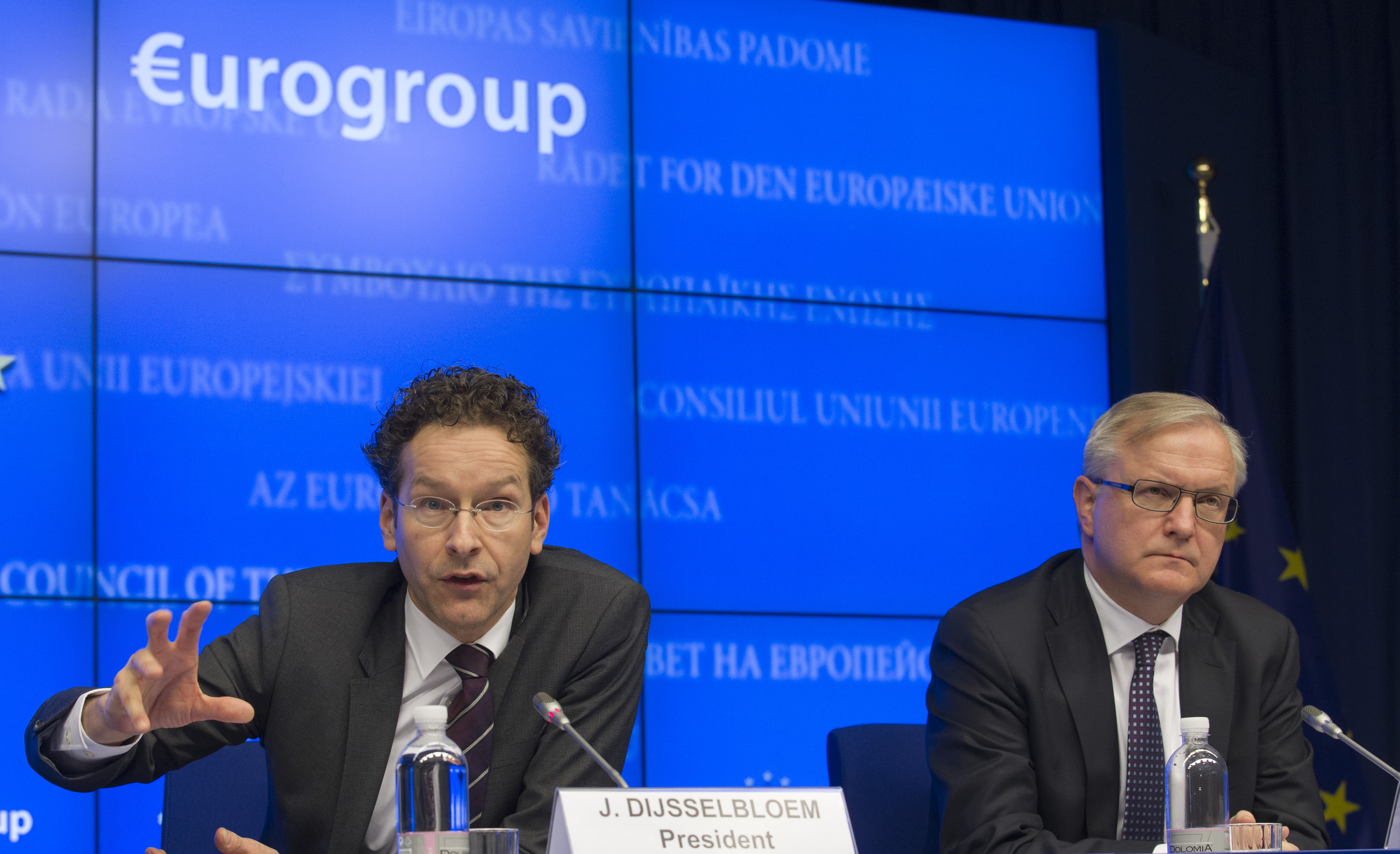
Informality is reflected in two aspects. First, according to the terms in which the meetings are held, that is, as to the procedure adopted therein. In fact, there is no set of rules defining the procedure to be followed, for example, to ensure the involvement of all actors and to determine the order in which such interventions can be carried out and the duration they may have. Secondly, the terms in which «decisions» are taken and how they are made known to the public. It is through press conferences that the outcome of the meetings is presented to citizens of the Union (and when they are).

It should be noted that we refer to «decisions» as a result of Eurogroup meetings, even though we know that the formal, final, and binding decision on the subject is actually taken at the Ecofin meeting. However, we are also aware of the fact that the votes made at Ecofin express the outcome of the previous Eurogroup meeting. The final decision of Ecofin was born in the Eurogroup.

So, the informality resulting from Article 1 of Protocol No 14 actually means «opacity». Contrary to the idea of necessary transparency and publicity in all decision-making centers, no minutes or documents are signed in the Eurogroup, there are no transcripts or records relating to the respective meetings. No database has ever been set up to add up the «decisions» taken. The proposals under discussion, the presented votes, the conflicts of interest that have arisen and the commitments made are not known. Moreover, the acts of the Eurogroup can not be syndicated before the Court of Justice of the European Union, even though they are not documented, neither on paper nor in audio or video.

Although a certain procedural informality is admitted (but still susceptible of criticism), it does not seem to admit an opacity in the decisions. In abstract, a procedure can be informal and simultaneously transparent. In particular, the functioning of the Eurogroup may be informal, but its «decisions» should not be opaque. And the lack of transparency that exists goes beyond mere confidentiality.

Continue reading “Eurogroup and secrecy”