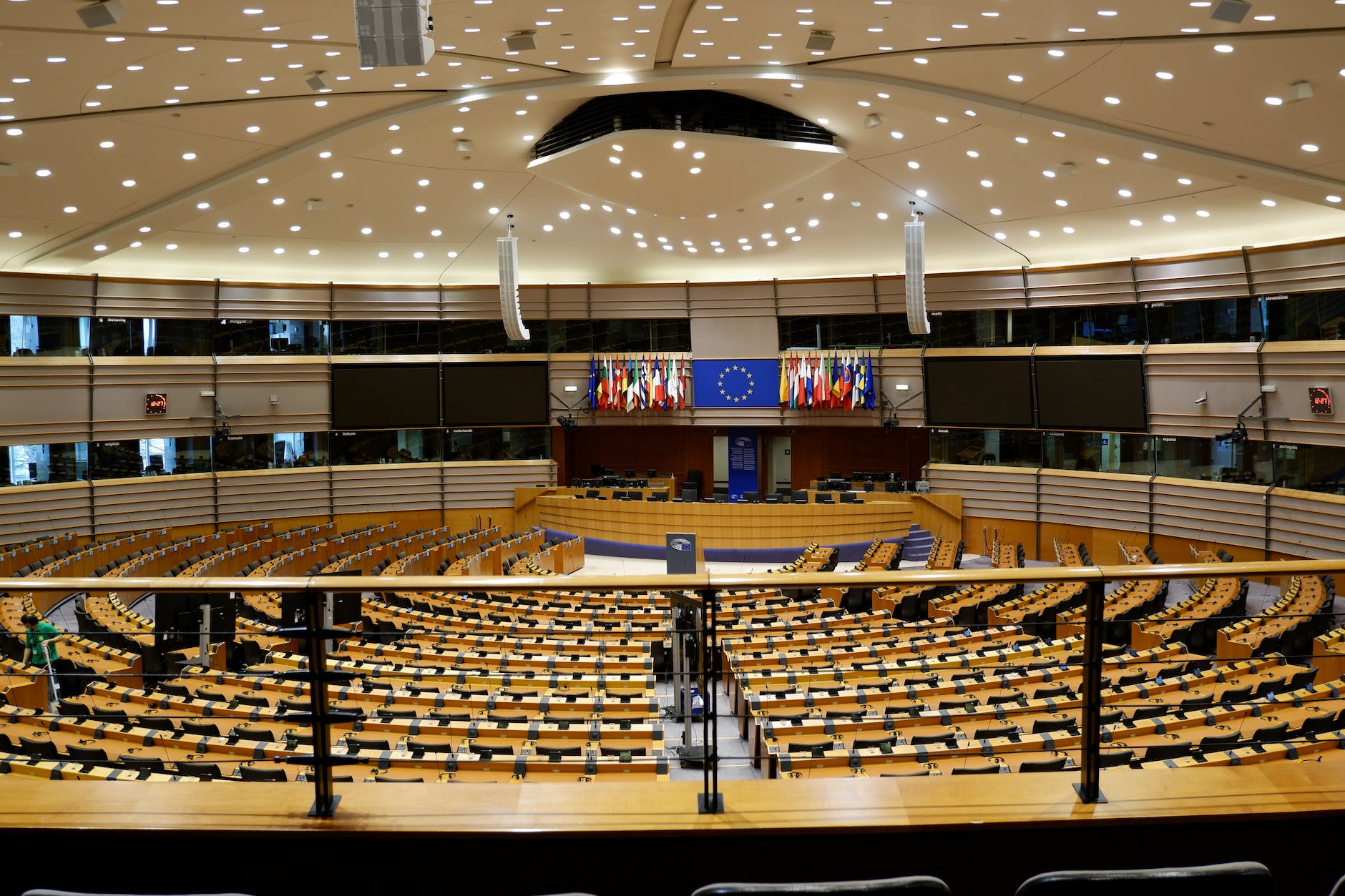
Editorial of October 2024

By the Alessandra Silveira (Editor)

On peace and sustainability

Between 27 and 29 September 2024, the University of Minho hosted “Greenfest” – the largest sustainability event held in Portugal and one that has been running for 17 years.[1] I had the honour of speaking on the panel dedicated to “Peace” – which addressed issues related to the promotion of peaceful, just and inclusive societies – essential for sustainable development and social cohesion. 

In legal sciences, sustainability is understood as a process through which we pursue a global society capable of perpetuating itself indefinitely over time in conditions that ensure human dignity. From this perspective, anything that contributes to this process would be sustainable, while anything that deviates from it would be unsustainable. [2] For this reason, constitutionalists such as Peter Häberle or Gomes Canotilho consider sustainability to be the structural principle of a new secular paradigm – along the lines of those that followed in the development of modern constitutionalism: humanism in the 19th century, sociality in the 20th century, sustainability in the 21st century.

In any case, talking about peace at a “Greenfest” necessarily brings us back to Kant and what he described as “Perpetual Peace” – a philosophical proposal on how peace can be achieved – especially as 2024 marks the 300th anniversary of the philosopher’s birth.  Kant’s question was not whether perpetual peace would be feasible or utopian, but to devise the means to achieve this end. In other words, to adopt stable institutions that make it possible to avoid war – and thus achieve a peace that represents more than the absence of war.

Continue reading “Editorial of October 2024”
Summaries of judgments: OT v Council of the European Union | Abramovich v Council

Summaries of judgments made in collaboration with the Portuguese judges and référendaire of the General Court (Maria José Costeira, Ricardo Silva Passos and Esperança Mealha)
 ▪

Judgment of the General Court (First Chamber, Extended Composition), 10 April 2024, Case T-301/22, Petr Aven v Council of the European Union

Common foreign and security policy – Restrictive measures taken in view of actions undermining or threatening the territorial integrity, sovereignty and independence of Ukraine – Freezing of funds – List of persons, entities and bodies covered by the freezing of funds and economic resources – Inclusion and maintenance of the applicant’s name on the lists – Concept of ‘support for actions or policies’ – Article 2(1)(a) of Decision 2014/145/CFSP – Article 3(1)(a) of Regulation (EU) No 269/2014 – Concepts of ‘material or financial support for Russian decision-makers’ and ‘benefit’ from those decision-makers – Article 2(1)(d) of Decision 2014/145 – Article 3(1)(d) of Regulation No 269/2014 – Error of assessment

Facts

The Council of the European Union (‘the Council’) adopted, following the military aggression carried out by the Russian Federation (‘Russia’) against Ukraine on 24 February 2022, several measures by which it added the applicant’s name to the lists of persons, entities and bodies supporting actions undermining or threatening the territorial integrity, sovereignty and independence of Ukraine (“the lists at issue”), adopted by the Council since 2014.

On 28 February 2022, the Council imposed on the applicant, Mr. Petr Aven, an oligarch of Russian and Latvian nationality, the freezing of his banking funds and assets, in accordance with Article 2(1) and (2) of Decision 2014/145/CFSP of 17 March 2014[1].

The Council took such actions on the ground that he is a major shareholder of the Russian conglomerate ‘Alfa Group’, one of Russia’s main banks. As such, the applicant is one of the most influential persons in Russia and has links with the Russian President, Vladimir Putin, supporting the Russian regime. According to the Council, the Russian President rewarded the Alfa Group for its loyalty to the Russian authorities by promoting the group’s investment plans abroad.

Continue reading “Summaries of judgments: OT v Council of the European Union | Abramovich v Council”

Editorial of May 2024

By the Alessandra Silveira (Editor)

“Europe is mortal”: recovering the original impetus for loyal co-operation of Article 4(3) TEU

Last April 25, while the Portuguese were celebrating the 50th anniversary of their democracy, French President Emmanuel Macron delivered a speech at the Sorbonne University urging the European Union (EU) to urgently rethink its economic and defence models, otherwise it will become irrelevant on the world stage value-wise – that is the meaning of the metaphor according to which the Europe we have come to know could die.[1] The rules of the game have changed on several fronts – including geopolitics, economy, trade and culture – and in this context, the “European way of life” is under threat and could fall into decay. Moreover, fighting Western values is the more or less declared plan of those who want a new illiberal international order.

Russia’s invasion of Ukraine marks the beginning of a new phase for European integration, the shape of which is not yet fully understood. But one thing is certain: in this new phase, loyal co-operation between European institutions and Member States – as well as their loyalty to each other – is particularly important. This is not a time for friction or dispute between Europeans and their representatives, because in the face of the barbarity of war, what is at stake is always of an existential nature. In other words, it is always a matter of life and death, also for European values and their relevance in the world. Against this backdrop, it is important to identify the new winds that are blowing across the relations of articulation and interdependence between the legal-constitutional order of the EU and the legal-constitutional order of the Member States.

Continue reading “Editorial of May 2024”

Summaries of judgments: OT v Council of the European Union | Abramovich v Council

Summaries of judgments made in collaboration with the Portuguese judges and référendaire of the General Court (Maria José Costeira, Ricardo Silva Passos and Esperança Mealha)
 ▪

Judgment of the General Court (First Chamber, Extended Composition), 15 November 2023, Case T-193/22, OT v Council of the European Union

Facts

Following the military aggression perpetrated by the Russian Federation (‘Russia’) against Ukraine on 24 February 2022, the Council of the European Union (‘the Council’) adopted several acts by which it added the applicant’s name to the lists of persons, entities and bodies supporting actions undermining or threatening the territorial integrity, sovereignty and independence of Ukraine, adopted by the Council since 2014.

The Council imposed on the applicant, OT, a businessman of Russian nationality, the freezing of his banking funds and assets, in accordance with Article 2(1) (d) and (g) of Decision 2014/145/CFSP of 17 March 2014[1], on the ground that, he is a major shareholder of the Russian conglomerate ‘Alfa Group’, one of Russia’s largest taxpayers. As such, the applicant is considered to be one of the most influential persons in the country and has links with the Russian President. According to the Council, Vladimir Putin rewarded the Alfa Group for its loyalty to the Russian authorities.

Continue reading “Summaries of judgments: OT v Council of the European Union | Abramovich v Council”

Dr. Strangelove or: What Lights Sheds Kubrick on Today’s Union

Gonçalo Martins de Matos (Master in Judiciary Law by the University of Minho) 
           

Dr. Strangelove or: How I Learned to Stop Worrying and Love the Bomb, Stanley Kubrick’s political satire black comedy film, completed, in the past Monday, 60 years of age since its release on 29th January 1964. Often considered one of the best comedies ever made and, arguably, the best political satire of the 20th century[1], the depths of human stupidity are surgically dissected by the keen, sagacious mind of Stanley Kubrick. More than that, Kubrick’s cautionary tale about nuclear apocalypse exposes humans in what they tragicomically have more contradictory, hypocritical and idiosyncratic.

Encompassing a wide spectrum of themes, Dr. Strangelove remains very present, shedding, like all great Art, some light on contemporary issues and events. More so in recent years, with Russia’s invasion of Ukraine, bringing to the Old Continent the dark fog of war again. Since Russia is a nuclear power, the fear of nuclear escalation invaded once again people’s hearts, reminding the great powers of the Cold War’s Mutually Assured Destruction (MAD – a fittingly ironic name, as well) doctrine. NATO members have been (well) cautious, as to avoid a backslide to the obscurity of the Cold War. Obscurity is the right word to describe the surroundings of war: freedom is suffocated, barricades are erected, and truth is the first victim.

Continue reading “Dr. Strangelove or: What Lights Sheds Kubrick on Today’s Union”

Editorial of October 2023

By the Editorial Team 

“Answering the call of history” – on the 2023 “State of the Union” speech (SOTEU) by President Ursula von der Leyen

On 13 September 2023, the President of the European Commission, Ursula von der Leyen, gave a speech summing up her term in office – perhaps even anticipating re-election. To this end, she presented results, arguing that her Commission had managed to implement more than 90 per cent of the political guidelines it presented in 2019.

The motto of the “State of the Union” (SOTEU) 2023 speech was “Answering the call of history”. In what sense? In the sense that history is happening while Russia is waging a full-scale war against the founding principles of the United Nations (UN) Charter. The President of the Commission tried to explain to what extent the European Union (EU) is up to this challenge. But Ursula von de Leyen also demonstrated the extent to which history demands the deepening of the integration process, its “becoming”.

Continue reading “Editorial of October 2023”

Editorial of May 2023

By Pedro Madeira Froufe (Editor) 

30 years after “Maastricht”: the past and the future of integration (marking Europe’s Day)

1. November 2023 will mark the 30th anniversary of the Treaty on European Union – the Maastricht Treaty. “Maastricht” marks the beginning of a then new era in the integration process which, in a sense, may now be coming to an end. The “post-Maastricht era”, its assumptions and political meaning (guiding European integration), will most likely be different after the war in Ukraine. From this perspective, we can say that European integration has so far had two major phases: an initial phase, a path traced and, at the same time, built, from 1951 (Treaty of Paris, ECSC) to the birth of the European Union (Maastricht Treaty, 1992); and, on the other hand, an era already marked by the existence of the Union, i.e. from 1992/1993 to the present day (a “post-Maastricht” phase). The war in Ukraine heralds the inevitability of a third stage in the integration process which may to some extent redefine (widen?) the very understanding of integration – at least in a political and geostrategic sense. We will most likely be at the dawn of a third phase of “post-war” European integration in Ukraine.

Continue reading “Editorial of May 2023”

Union in a time of war: On the Judgment “Violetta Prigozhina”, Case T-212/22

Pedro Madeira Froufe (Editor)
           

I

On 8 March 2023, the General Court delivered a judgment in the case of Violetta Prigozhina (Case T-212/22),[1] whose applicant is an octogenarian lady and mother of the well-known Russian “war entrepreneur” who leads the pro-Kremlin mercenary group called the “Wagner Group”.

The European Union (EU) has always had a sufficiently clear and assertive position towards the invasion of Ukraine by the military forces of the Russian Federation, which began on 24 February 2022. Support for Ukraine stems from many factors, not least the Ukrainian people’s desire to move closer to the European way of life. The so-called “Euromaidan revolution” that began in Kiev in 2014 reacted against the former President Víktor Yanukóvytch for having refused to sign the agreements on trade cooperation and, in general, greater openness to the EU, apparently under pressure from Moscow.[2] On the other hand, the military action (aggression) unleashed in 2022 by Russia against Ukraine calls into question the international order and the assumptions of peace built up after the Second World War. From the perspective of the EU (and the political and civilisational bloc currently referred to as the “West”, associated with the framework of the democratic rule of law), this is a serious violation of international law.

Continue reading “Union in a time of war: On the Judgment “Violetta Prigozhina”, Case T-212/22″

Summaries of judgments: RT France v Council (T-125/22)

Summaries of judgments made in collaboration with the Portuguese judges and référendaire of the General Court (Maria José Costeira, Ricardo Silva Passos and Esperança Mealha)
 ▪

Judgment of the General Court (Grand Chamber), 27 July 2022

Case T-125/22[1] RT France v Council

Common foreign and security policy — Restrictive measures adopted in view of Russia’s actions destabilising the situation in Ukraine — Temporary prohibition of dissemination and suspension of authorisations for the dissemination of certain media content — Inclusion on the list of entities to which the restrictive measures apply — Competence of the Council — Rights of the defence — Right to be heard — Freedom of expression and information — Proportionality — Freedom to conduct a business — Principle of non-discrimination on grounds of nationality

1. Facts

Following the military attack perpetrated by Russia against Ukraine on 24 February 2022, the Council of the European Union adopted, on 1 March 2022, new restrictive measures against Russia, namely Decision 2022/351[2] and Regulation 2022/350[3].

The purpose of those acts is the temporary prohibition of actions for propaganda of that military assault by means of certain media under Russian control. Thus, any operator established in the European Union is prohibited from broadcasting content produced by legal persons, entities or bodies set out in the annexes to the abovementioned acts.

Continue reading “Summaries of judgments: RT France v Council (T-125/22)”

Editorial of September 2022

By Alessandra Silveira and Pedro Madeira Froufe (Editors) 

The (near) future of the European Union: Remarks on the “State of the Union” Address, September 14, 2022

On September 14, 2022, Ursula Von der Leyen, President of the European Commission, delivered her third “State of the Union” address in Strasbourg. The two previous addresses by the President of the Commission were marked by the pandemic. Another kind of crisis conditioned this year’s “State of the Union” address: war. One key idea emerged from the address and was underlined by the President of the Commission: the war we face – which gives rise to many of the problems the Union and its citizens will have to deal with – was caused by Russia’s invasion of Ukraine.

Quite clearly, there is a direct perpetrator of the war being waged in Europe and, in a similar vein, an indirect culprit for the subsequent economic crisis, inflation, and the social and migratory crisis triggered by the war and which the Union will have to overcome: the Russian Federation and the Russian power centered and personalized in Putin. In other words, there was an assertion of political principle at play here; an attempt to make the Union’s geopolitical position clear. Similarly, Ursula von der Leyen proclaimed the impossibility of the European Union (i.e., the historical and values-based framework of integration) being defeated: “this is about autocracy against democracy.” In that sense, unless we relativise the preconditions of integration and the “Union of law”, there is an irreconcilability in conceptual and civilizational perspective that determines the proclamation that Ukraine cannot succumb in these terms.

Continue reading “Editorial of September 2022”