Summaries of judgments: Presidente del Consiglio dei Ministri and Others (European arrest warrant issued against a third-country national) | Lin

Summaries of judgments made in collaboration with the Portuguese judge and référendaire of the CJEU (Nuno Piçarra and Sophie Perez)

 ▪

Judgment of the Court (Grand Chamber) of 6 June 2023, Presidente del Consiglio dei Ministri and Others (European arrest warrant issued against a third-country national), Case C‑700/21, EU:C:2023:444

Reference for a preliminary ruling – Judicial cooperation in criminal matters – European arrest warrant – Framework Decision 2002/584/JHA – Grounds for optional non-execution of the European arrest warrant – Article 4(6) – Objective of social rehabilitation – Third-country nationals staying or residing on the territory of the executing Member State – Equal treatment – Article 20 of the Charter of Fundamental Rights of the European Union

Facts

On 13 February 2012, the Judecătoria Brașov (Court of First Instance, Brașov, Romania) issued a European arrest warrant (EAW) against O.G., a Moldovan national, for the purposes of executing a custodial sentence.

Finding that O.G. had proof that met the legal standard necessary to demonstrate his stable family and employment situation in Italy, the Corte d’appello di Bologna (Court of Appeal, Bologna, Italy) raised before the Corte costituzionale (Constitutional Court, Italy) questions as to the constitutionality of Article 18a of Law No 69/2005 (GURI No 98 of 29 April 2005).

Continue reading “Summaries of judgments: Presidente del Consiglio dei Ministri and Others (European arrest warrant issued against a third-country national) | Lin”

VAT and customs duties in COVID-19 times in the European Union – do the ends justify all means?

VAT text on coins

 by Andreia Barbosa, PhD Candidate at the University of Minho

Given the international public health emergency, it is paramount to adopt measures to mitigate the global spread of the virus and its underlying impacts at different levels – including at the international trade level.

The adaptation of the tax regime related to international exchanges of goods has already begun to be made, given the need to facilitate (through the reduction of taxation) the acquisition of equipment for the prevention and combat of COVID-19. The European Commission itself has addressed a note to the General- Directors of Tax and Customs Administrations of the Member States (and the United Kingdom), clarifying what exceptional instruments are available to help disaster victims and which can be used to tackle this health crisis without precedents.

In Portugal, the VAT exemption already enshrined in the transmission of goods free of charge, for later distribution to people in need, made to the Portuguese State agencies or other philanthropic organizations [in accordance with the provisions of in articles 51 to 57 of Council Directive 2009/132/EC of October 19th, 2009, which determines the scope of Article 143 (b) and (c) of Directive 2006/112 / EC], was assumed as an instrument capable of promoting aid to the victims of the COVID-19.
Continue reading “VAT and customs duties in COVID-19 times in the European Union – do the ends justify all means?”

Indirect taxation on 3D printing – A new challenge for the European Union

IFA 2015

 by Andreia Barbosa, PhD candidate at UMINHO

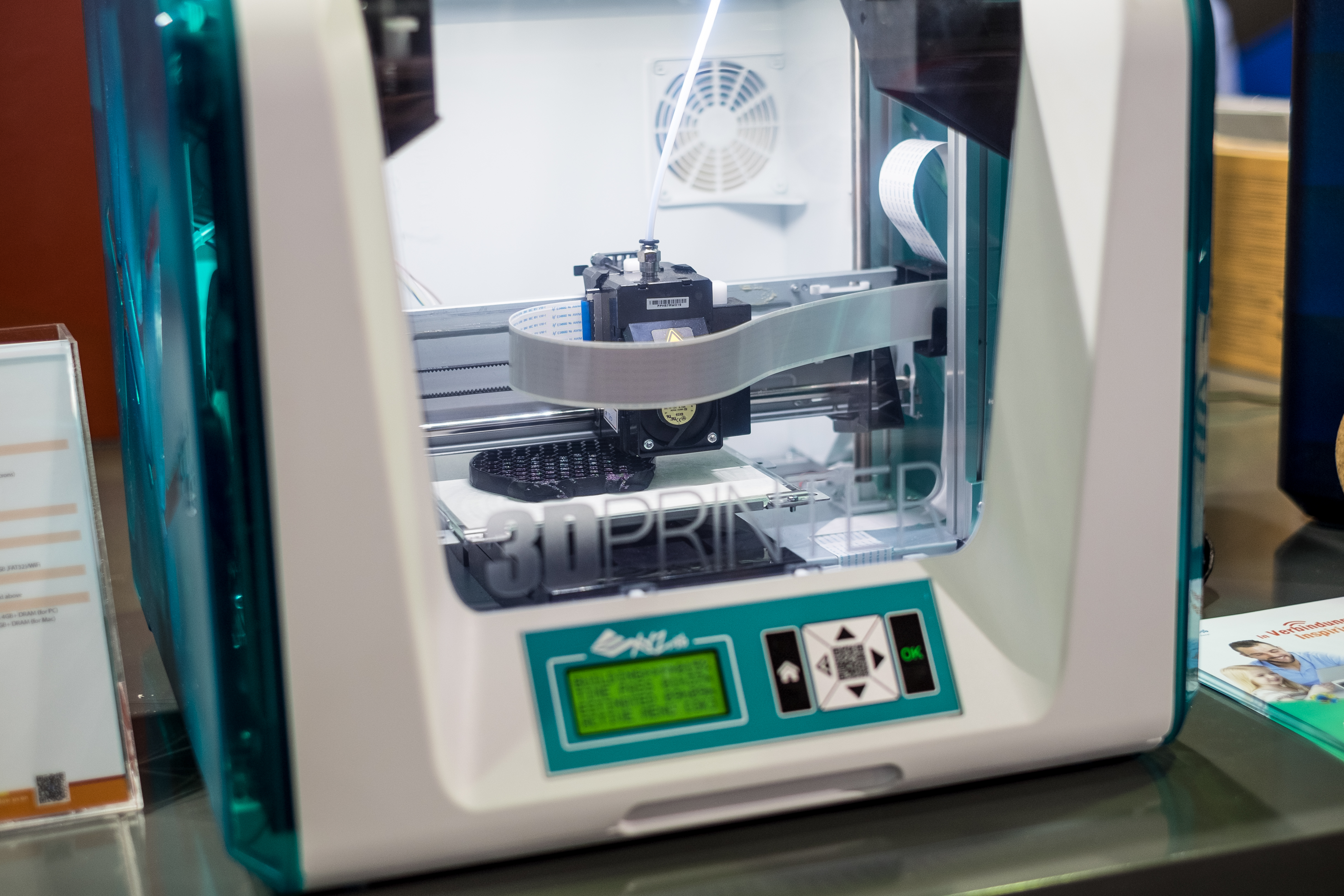
3D printing (or rapid prototyping) is a form of additive manufacturing technology through which a three-dimensional model (height, depth and width, maxime, embossed) is created by successive layers of material. Think of the production of a computer mouse. The traditional production of this property implies that, in the first instance, the respective components are separately produced and subsequently assembled, giving rise to the mouse. Differently, through 3D printing the mouse for the computer will be printed as a whole, layer by layer – making the assembly process obsolete – and with the possibility of the product being customized, according to the model that has been developed.

That said, it is easy to conclude that in the case of models for 3D printing there is no corporeality to which we refer, so that, then, there will be no merchandise, which will only assume this quality when it is actually printed. That is to say, the 3D printing model, which is the subject of an international transaction, will not be regarded as a ‘good’ for customs purposes. Consequently, as customs duties constitute charges imposed on goods on the ground that they have crossed a customs line, no customs duties may be levied by the transmission of the model to be printed (which will be carried out electronically).
Continue reading “Indirect taxation on 3D printing – A new challenge for the European Union”