
Ana Carolina Ribeiro Alves (master’s student in Administrative Law at the School of Law of the University of Minho)
From 2024 to today: amendment of Regulation (EU) 2021/1119 (European Climate Law)
On 5 March 2026, the Council formally adopted the amended European Climate Law, introducing a binding intermediate climate target for 2040 of 90% of reduction in net greenhouse gas emissions compared to 1990 levels. It entered into force 20 days after its publication in the Official Journal of the European Union, applying directly in all EU countries. This milestone strengthens the EU’s trajectory towards climate neutrality. The present article provides a timeline of key political and legislative events that led to the adoption of this amendment.
Regulation (EU) 2021/1119[1] established the EU’s climate targets for 2030 and 2050, creating the framework known as the European Climate Law. Article 4(3) requires the setting of an intermediate Union-wide climate target for 2040 to provide Member States with predictability and a clear transition pathway.
On 6 February 2024,[2] the Commission published a Communication on the 2040 EU climate target, outlining a path from the agreed 2030 intermediate goal. Informed by the scientific advice of the European Scientific Advisory Board on Climate Change and through a detailed impact assessment, it recommended a 90% net reduction in greenhouse gas emissions by 2040 relative to 1990.
On 2 July 2025,[3] a proposal for the regulation of the European Parliament and of the Council amending the Regulation (EU) 2021/1119 establishing the framework for achieving climate neutrality was published, to review relevant Union legislation to enable the achievement of the 2040 target and the climate neutrality objective. In this context,[4] the main focus of the review was to ensure that, from 2036 onwards, up to 3% of the Union’s net emissions in 1990 would be covered by high-quality international credits under Article 6 of the Paris Agreement, as official units, each representing one tonne of CO₂- equivalent, consisting of real, additional and verifiable emission reductions or removals of greenhouse gases generated through international cooperation between countries. These units can be transferred from one country to another, allowing the buyer country to count them toward its climate targets, without double-counting and maintaining high environmental integrity.
Moreover, particular attention is paid to the role of domestic permanent carbon removals (processes that involve capturing carbon dioxide from the atmosphere and storing it durably) under the Union Emissions Trading System (EU ETS) in offsetting residual emissions from hard to abate sectors. In addition, the Commission will ensure greater flexibility between sectors and instruments, to support the achievement of targets in an economically advantageous and socially equitable way.
Implementation policies for this target will be guided by solidarity and equity to ensure a just transition for all Member States and citizens. Coordinated Union action enables consideration of varying capacities across Member States and regions, leveraging the single market as a driver of cost-efficient transformation. Such coordination also strengthens the EU’s international climate action, particularly taking into account that the EU and all its Member States have rectified the Paris Agreement. The initiative’s objective was to establish an intermediate Union-level target for 2040 toward 2050 neutrality, as mandated by Article 4(3) of the European Climate Law. A regulation was deemed the most appropriate instrument to preserve consistency with the existing legislative framework.
Essential elements to keep the EU on track for 2050 neutrality include transparent and regular reporting by Member States, robust Commission assessments, and mechanisms to evaluate progress. Before proposing the 2040 target, the Commission considered multiple factors, with equity and solidarity among and within Member States being the main focus. Given the transboundary nature of climate change, a 2040 Union-wide target cannot be sufficiently achieved by Member States alone but can be better realised at Union level due to its scale and effects. The Union may therefore act in accordance with the subsidiarity principle, as laid down in Article 5 TEU.
On 13 November 2025,[5] the Parliament reached a decision and adopted its position stating that it supported the proposal to amend the European Climate Law, in which a binding EU climate target for 2040 of reducing net greenhouse gas emissions by 90% compared to 1990 levels was set. It stressed that looking ahead to the post-2030 period, the Commission would review relevant EU legislation to enable the achievement of both the 2040 target and climate neutrality. As part of this review, the Commission reiterated that, as of July 2025, high-quality international credits under Article 6 of the Paris Agreement may account for up to 5%, rather than 3%, of the Union’s net emissions in 1990. Furthermore, the matter was referred back to the Committee responsible for interinstitutional negotiations.
On 10 February 2026,[6] the European Parliament adopted a legislative resolution on the proposal for a regulation of the European Parliament and of the Council amending Regulation (EU) 2021/1119 establishing the framework for achieving climate neutrality. As part of this review, the Commission will need to ensure, from 2036 onwards, an adequate contribution towards the 2040 climate target of high-quality international credits of up to 5% of 1990 Union net emissions, corresponding to a domestic reduction of net greenhouse gas emissions by 85% compared to 1990 levels, meaning that at least 85% of emissions reductions must be achieved within the European Union.
On 5 March 2026,[7] the Act was formally adopted by the Council, introducing a binding intermediate climate target for 2040 of a 90% reduction in net greenhouse gas emissions. This amended climate law also changes the date for the EU emissions trading system for road transport, building and other sectors (ETS2) to become fully operational in 2028. This marks the final step in the legislative process, establishing directly applicable rules to all EU Member states. Apart from the previous additions, this amended regulation also provides for a review of the European Climate Law every two years.
The overall framework thus comprises a 55% reduction by 2030, 90% by 2040 (relative to 1990), and climate neutrality by 2050.
The background: European Green Deal and European Climate Law
In 2019, the European Commission unveiled the European Green Deal strategy. As the Commission explains,[8] it responds to an urgent call from citizens, especially young people, for decisive climate action. The European Green Deal comprises a set of strategic initiatives that steer the European Union toward a genuine ecological transition, outlining a comprehensive plan to make the economy, energy, transport, and industry sustainable.
Its overarching goal is to reduce greenhouse gas emissions by at least 55% by 2030 and 90% by 2040, achieving climate neutrality by 2050. The Green Deal[9] stresses that every policy area must contribute to combating climate change, supporting targeted measures across all sectors. A central objective is to position the EU as the world’s first climate-neutral continent by 2050, while mitigating pollution and restoring healthy natural and ecosystem balances.
Achieving this requires simultaneous drastic emissions cuts, adoption of a circular economy model (reusing, repairing, and recycling products to minimise waste and preserve resources), promotion of cleaner, more sustainable, and energy-efficient industries, nature restoration plans aiming for zero pollution to secure a healthy environment for future generations, more ecological farming practices that protect the environment while delivering healthier and more affordable food, and a just and inclusive transition plan.
Despite being a soft-law instrument, the European Green Deal gave the political setting so a constitutional grounding could be presented and adopted in the European Union, acting as a complex and ambitious strategy based on a wide range of initiatives, namely (but not limited to) those that demand great investment on climate and environmental action. Insofar, the European Climate Law (Regulation (EU) 2021/1119 of 30 June 2021) codifies the Deal’s objectives, targeting a sustainable Europe that attains climate neutrality by 2050. Its primary focus remains the reduction of greenhouse gas emissions by at least 55% by 2030 relative to 1990. According to the Commission,[10] its core aims are to set a long-term strategic direction toward 2050 neutrality, establish an ambitious 2030 EU target, creating a robust progress-monitoring system, providing predictability for investors and economic actors, and ensuring the transition to neutrality is irreversible.
It includes in its key elements a legally binding net-zero greenhouse gas emissions target by 2050. EU institutions and Member States are required to adopt necessary measures at both Union and national levels, prioritising equity and solidarity among Member States. At the national level, this is implemented by administrative bodies functioning as a “functionally European public administration,” guided by core EU principles such as sincere cooperation.
In this regard, and bearing in mind the new version of the European Climate Law and its potential to harmonise the applicable legal framework, this can be seen both as a consequence of the principle of sincere cooperation – which has provided the appropriate setting for the European Union to regulate this environmental dimension – and as a further instrument for actively reaffirming the need for further integration. The principle of sincere cooperation – laid down in Article 4(3) TEU – entails interinstitutional coordination, while imposing significant obligations on Member States: they must adopt all appropriate general and specific measures to ensure compliance with EU primary and secondary law obligations, thereby giving effect to the European Climate Law, while securing an European role in achieving this normative act’s goals.
Conclusion: diluting ambition
While the formal adoption of a 90% net greenhouse gas emissions reduction target for 2040 appears to strengthen the EU’s climate framework, the simultaneous extension of the timeline and the introduction of international carbon credits under Article 6 of the Paris Agreement reveals a concerning dilution of ambition. In practice, this mechanism lowers the required domestic reductions allowing Member States to compensate for residual emissions through international credits rather than accelerating the necessary deep decarbonisation in sectors that are most challenging. Such flexibility raises serious doubts about whether the EU is truly on track to meet its 2030 targets or if it is merely postponing difficult and political and economic choices through extended deadlines and creative accounting. This ultimately relies on the principle of sincere cooperation (Article 4(3) TEU), which demands loyal and effective action from both Member States and EU institutions. However, if this principle is used as an excuse to accommodate delays and compensate for deficiencies through international credits rather instead of enforcing rigorous domestic efforts, it may undermine the credibility and overall effectiveness of the European Climate Law, casting doubt on the EU’s leadership in global climate action.
[1] Regulation (EU) 2021/1119 of the European Parliament and of the Council of 30 June 2021 establishing the framework for achieving climate neutrality and amending Regulations (EC) No 401/2009 and (EU) 2018/1999 (‘European Climate Law’), available at https://eur-lex.europa.eu/eli/reg/2021/1119/oj/eng, accessed on 11.03.2026.
[2] Communication from the Commission to the European parliament, theCouncil, the European Economic and Social Committee and the Committee of the Regions, Securing our future Europe’s 2040 climate target and path to climate neutrality by 2050 building a sustainable, just and prosperous society, available at https://eur-lex.europa.eu/legal-content/EN/TXT/?uri=celex:52024DC0063, accessed on 11.03.2026.
[3] Proposal for a Regulation of the European Parliament and of the Council amending Regulation (EU) 2021/1119 establishing the framework for achieving climate neutrality, available at https://www.europarl.europa.eu/RegData/docs_autres_institutions/commission_europeenne/com/2025/0524/COM_COM(2025)0524_EN.pdf, accessed on 11.03.2026.
[4] European Parliament, Framework for achieving climate neutrality, 2025/0524(COD), 2 July 2025, available at https://oeil.europarl.europa.eu/oeil/en/document-summary?id=1826240, accessed on 11.03.2026.
[5] European Parliament, Framework for achieving climate neutrality.
[6] European Parliament, Framework for achieving climate neutrality.
[7] Council of the EU, “2040 climate target: Council gives final green light”,Press Release, 5 March 2026, available at https://www.consilium.europa.eu/en/press/press-releases/2026/03/05/2040-climate-target-council-gives-final-green-light/, accessed on 11.03.2026
[8] European Commission, “The European Green Deal. Striving to be the first climate-neutral continent”, available at https://commission.europa.eu/strategy-and-policy/priorities-2019-2024/european-green-deal_en, accessed on 07.01.2026.
[9] Council of the EU, “European Green Deal”, available at: https://www.consilium.europa.eu/en/policies/european-green-deal/, accessed on 07.01.2026.
[10] European Commission, “European Climate Law”, available at https://climate.ec.europa.eu/eu-action/european-climate-law_en, accessed on 07.01.2026.
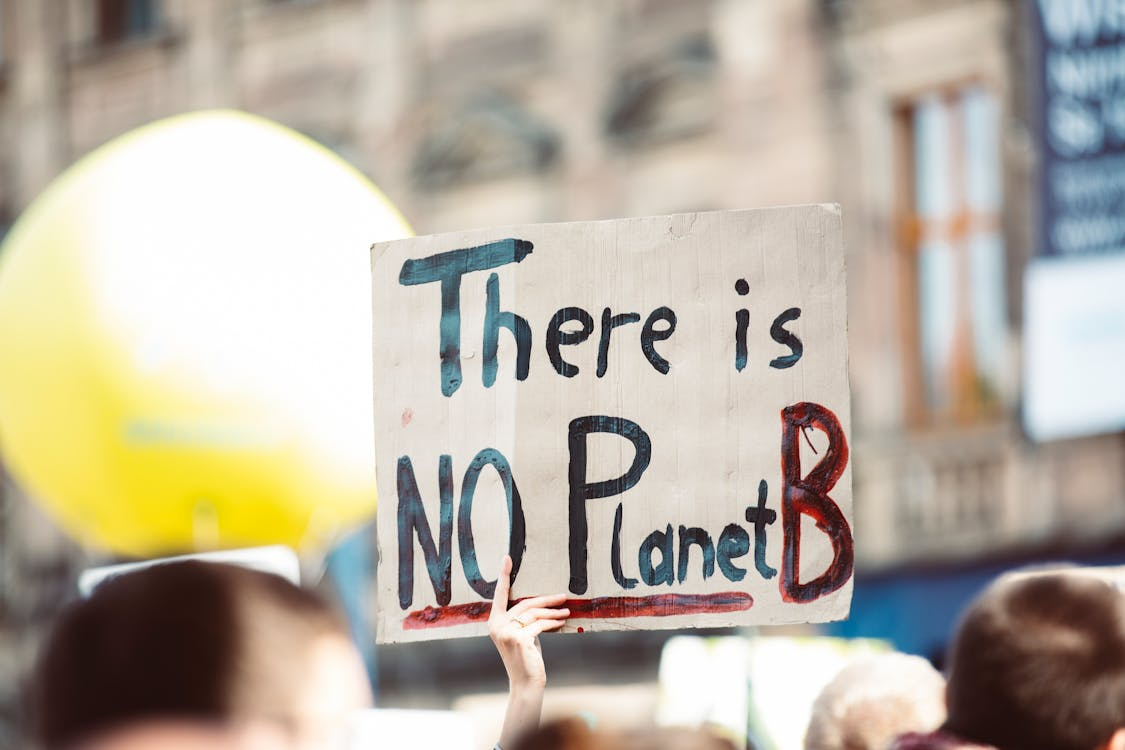
Picture credit: by Markus Spiske on pexels.com.

