A Union based on the rule of law beyond the scope of EU law – the guarantees essential to judicial independence in Associação Sindical dos Juízes Portugueses

noticia1407401124

 by Alessandra Silveira, Editor 
 and Sophie Perez Fernandes, Junior Editor


On 27 February 2018, the European Court of Justice (ECJ) delivered its judgment in the Associação Sindical dos Juízes Portugueses case (C-64/16), a judgment which, for its relevance for effective judicial protection and the rule of law in the EU, is already compared with Les Verts (here).

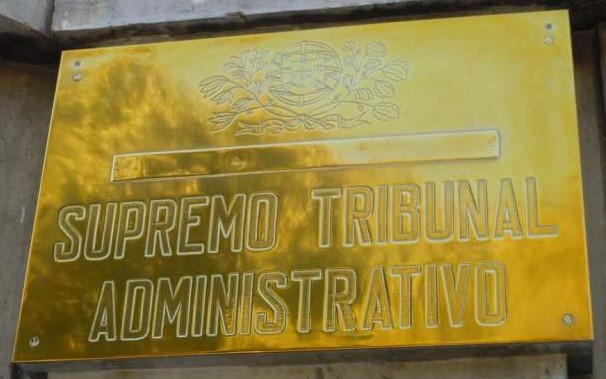
At the origin of the request for a preliminary ruling is a special administrative action brought before the Supremo Tribunal Administrativo (Supreme Administrative Court, Portugal) seeking the annulment of salary-reduction (administrative) measures of the judges of the Tribunal de Contas (Court of Auditors, Portugal). These measures were adopted on the basis of a Portuguese law of 2014 putting in place mechanisms for the temporary reduction of remuneration (and the conditions governing their reversibility) of a series of office holders and employees performing duties in the public sector, including members of the judiciary. As the Advocate General Saugmandsgaard Øe pointed out (here), the ECJ was in essence asked to “determine whether there is a general principle of EU law that the authorities of the Member States are required to respect the independence of the national judges and, more particularly – in the light of the circumstances of the main proceedings – to maintain their remuneration at a constant level that is sufficient for them to be able to perform their duties freely.”

Continue reading “A Union based on the rule of law beyond the scope of EU law – the guarantees essential to judicial independence in Associação Sindical dos Juízes Portugueses”

Editorial of April 2018

3971747520_6190976f48_o

 by Joana Whyte, Associate Lawyer at SRS Advogados and member of CEDU


Fashionistas rejoice, it’s the end of Geo-Blocking!

In a vote of 557 for and 89 against, Regulation 2018/302 of the European Parliament and the Council of 28 February 2018, which addresses unjustified geo-blocking and other forms of discrimination based on customers’ nationality, place of residence or place of establishment within the internal market, was approved. The new set of rules will apply from December 2018.

The end of Geo-Blocking has been a priority for the EU in the creation of a digital single market. This Regulation aims to address unjustified geo-blocking by removing certain barriers to the functioning of the internal market.

This is good news not only for fashion consumers but also for consumers of other services/ industries. The new set of rules also applies to the offline provision of services by hotels and car rental companies and the online sale of event tickets, as well as to the provision of electronic services (cloud services, data storage, website management).

Put simply, Geo-blocking is the practice that prevents consumers in one Member State from buying a good or service sold online in another Member State. This practice has been harming fashion consumers by preventing them from purchasing from websites and apps from other Member States and also by the application of different general conditions of access to goods and services to customers from other Member States – e.g. refusal to deliver abroad, to accept payment, rerouting and website access blocks.
Continue reading “Editorial of April 2018”

Insular regionalism and its presence on the European federative model: island regions and their autonomic role and challenges on the European construction

EU_OCT_and_OMR_map_en

 by Rui Vieira, student of the Master's degree in EU Law of UMinho

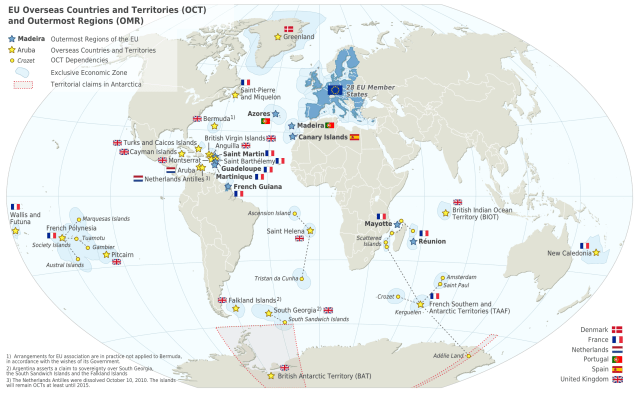
The European integration, from its early stages, has always been seen as a federative construction with its supranational elements being seen as a result of the reshaping of the traditional notion of the nation State. In fact the idea of a European Federation was one of the inspirational ideas of the Schuman Declaration of 9th May of 1950, although it has always been a sensitive issue since then. In any case, throughout the last centuries, there has been an increase of federative forms of political structuring, the largest and most populated States in the planet have some form of federative arrangement. Nowadays, nearly 80% of the world’s population is living in countries with some forms of federal commitment[i].

Some view the European integration as a supranational entity shaped by the agglomeration of its continental nation States, a peculiar form of a federative State, similar to the idea of a United (Nation-)States of Europe. However, despite this view of a macro-political entity has always been insufficient and too limited to address all the Post-Modern socio-political transformations. The European construction did not have only supranational repercussions, but also infra-national effects with the recent uprising of regionalism, decentralization and autonomic pretentions and forms of political structuration.

Continue reading “Insular regionalism and its presence on the European federative model: island regions and their autonomic role and challenges on the European construction”

The evolution of European agencies’ competences in civil aviation

10017602123_aac2071ea4_o

 by José Ricardo Sousa, member of CEDU

Over the last years, the European Union (EU) has dealt with a structural metamorphosis to face the new contemporary challenges, together with the will to continue the idea of Europe conceived by Jean Monnet, Konrad Adenauer or Altiero Spinelli. This situation can be seen pretty well on the economic area, where interactions between EU institutions and Member States (MS) have been rising in the last decades in order to accomplish the economic goals set for both parties and to protect and to ensure the EU single market.

The process of agencification established in the late 90’s of the previous century by Romano Prodi, former President of the EC, is a good example of Governance and Multi-Level Administration inside EU. The so-called “Prodi Reform” began as a response to the polemic involved with Bovine Spongiform Encephalopathy (BSE) disease that showed how inefficient EU’s role were in supervise all economic sections and guarantee the high-standard of security for all goods that were produced and sold to all EU citizens, due to the overload of workings. Moreover, the foreseen EU enlargement to the East was seen as another reasonable motive to reform all the European Commission (EC) workings. So, EC, as the EU institution responsible for safeguarding the principles and rules of the EU Treaties, has the duty to assess (together with DG Comp) the single European market and to evaluate cases that are incompatible with provisions of the Treaties, as well as other legislative acts emanating from it, as set out in Article 17(1) TEU. For that reason, EC felt the need to decentralise its competences and sub-delegate some of the powers to non-democratic bodies which carries out all tasks needed to accomplish the proposed objectives, such as regulatory power, inspective powers, inter alia.
Continue reading “The evolution of European agencies’ competences in civil aviation”

The EU and the challenges of the digital economy

Bitcoin Cryptomoney Cryptocurrency Btc Cryptography

 by Iva Guterres, PhD student at the University of Leeds

In 1995 Don Tapscotts coined the term Digital Economy in his book, “The Digital Economy: Promise and Peril in the Age of Networked Intelligence”. At the time, he was far for imagining just how the future would be dictated by the internet and technological development (then still in its infancy). In the meantime, the internet has become a huge part of the global economy.  Tapscotts’ book established the connection between the internet and the way economic models would change the way business was done and seen from there onwards.

At the beginning of the 1990s one major question rose on the legal landscape. What would the challenges be for global e-commerce and the tax rules or even global digital taxation? In 1996, David Tillinghast[i] wrote an article in which he questioned how traditional tax rules or policies would react to cross-border e-commerce.

Since then, history has witnessed radical changes in society and in the economy, which took Klaus Schwas, founder and chairman of the World Economic Forum, to write the book, “The fourth Industrial Revolution in 2016”.

In recent years, the EU and the OECD have been keeping an eye on business activities, especially since 2013, through the BEPS project (The Base Erosion and Profit Shifting). This was motivated by the behaviour of multinationals attempting to avoid paying tax in their home countries by taking their businesses abroad to low and no-tax jurisdictions. This generated practices and behaviors of schemes indicting aggressive fiscal planning.
Continue reading “The EU and the challenges of the digital economy”

Editorial of March 2018

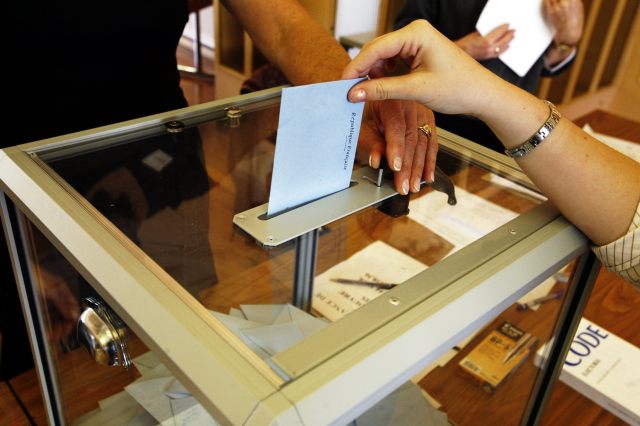
Election_MG_3455

 by Tiago Cabral, member of CEDU

Homeopathic Democracy: The European Power Struggle over the Spitzenkandidaten

1. According to article 17(7), TEU “taking into account the elections to the European Parliament and after having held the appropriate consultations, the European Council, acting by a qualified majority, shall propose to the European Parliament a candidate for President of the Commission. This candidate shall be elected by the European Parliament by a majority of its component members”. There are several issues in this article, some of them we even had the opportunity to discuss before.

2. In fact, when talking about the President of the European Commission (EC) it is quite a stretch to state that there is an “election” by the European Parliament (EP). Politically inspired wording notwithstanding, the truth is that the European Council (ECON) holds most of the cards in the selection of EC’s President and the balance of power tends to favour this institution. There are also some notorious similarities between the position of the EP in relation to the ECON in the selection of the President of the EC and the position of the EP in relation to the Council in the consent legislative procedure. While it is possible to argue that there is an “indirectly-indirect election”[i], we believe that it would be more accurate to state that the Parliament approves and has veto power over the ECON’s choice.

3. However, the 2014 elections to the EP brought with them a rather interesting innovation: the Spitzenkandidaten (leading candidate). This procedure aims to give “direct” or at least “quasi-direct” democratic legitimacy to the President of the EC by tying the nomination to the EP’s elections. First the political parties choose their leading candidate, then the people vote, then the ECON and EP obey their will by confirming candidate chosen by the citizens[ii]. There is some debate on who should be nominated by the ECON and approved by the EP, the candidate from the party who won the most seats in the elections or the candidate from the coalition best placed to guarantee a passing majority. Under the current Spitzenkandidaten rules the second choice seems to make the most sense. Nevertheless, it seems likely that in the current European political climate the candidate from the biggest party will also be the best positioned to achieve a solid majority.
Continue reading “Editorial of March 2018”

The EU and the adoption of Free Trade Agreements (FTAs): heading towards a vetocracy?

Symbolic One Against All All Against One Discussion

 by Francisco Pereira Coutinho, Professor at the NOVA Law School, UNL

Few would disagree that signing free trade agreements (FTAs) is one of the raisons d ´être of the European Union (EU). As the United Kingdom will probably discover after leaving the EU, the bargaining power of a State, even a member of the G8, is far inferior to that of the world largest economy, which is also the one that most imports, exports, receives and sends foreign direct investment. Ever since the Rome Treaty (1957) granted ius tractum to the European Economic Community, dozens of FTAs were adopted. The latter are pivotal to the European economy: around 31 million employments in the EU (1/7 of the total) depend, direct or indirectly, from the external trade.

The Lisbon Treaty broadened the legal capacity of the EU to adopt ‘new generation’ FTAs, which are trade agreements which contains, in addition to the classical provisions on the reduction of customs duties and of non-tariff barriers to trade in goods and services, provisions on various matters related to trade, such as intellectual property protection, investment, public procurement, competition and sustainable development (ECJ, Opinion 2/15, para. 17).

The Comprehensive Economic and Trade Agreement (CETA) is a ´new generation’ bilateral FTA that was signed on 30 October 2016 between Canada, of one part, and the EU and the Member States, of the other part. It is expected to increase EU-Canada trade in goods and services by 23% and boost EU GDP by about €12 billion a year.
Continue reading “The EU and the adoption of Free Trade Agreements (FTAs): heading towards a vetocracy?”

The EU and its neighbourhood: engagement without enlargement?

35193838343_38353cfafb_o

 by Sandra Fernandes, Professor at UMinho/Researcher of the CICP

Taking a rapid glance at the EU immediate neighbourhood, both Eastward and Southward, the prospects do not look very positive. Since the annexation of Crimea by the Russian Federation in March 2014 and the ongoing conflict in Ukraine, both the relations with Moscow and with the countries of the Eastern Partnership (EaP) have not produced the desired results. The EaP was designed in 2009 to boost the 2004 European Neighbourhood Policy (ENP) and improve convergence with the EU standards, offering approximation without a clear enlargement schedule. On the Southern border of the Mediterranean, the unfulfilled expectations of the Arab Springs and the war in Syria have exposed the lack of effects of the Barcelona Process and have put under serious crisis the ability of the Union to respond to unprecedented migration flows. The Process launched in 1995 has been updated since then into the Euro-Mediterranean Partnership (Euromed) and later, in 2008, into the Union for the Mediterranean. The ENP added to this political format from 2004 onwards.

Bulgaria has just assumed the Presidency of the Council of the EU for the next six months, as a Southern member state having EU external borders with both the Balkans and Turkey. Taking into considerations some of this Presidency’s priorities, we explore here the major challenges that the EU external action has to face in order to impact on stabilisation in its European vicinity, looking at both the Balkan countries and the Eastern neighbours. For that purpose, we put under perspective the effectiveness of EU past and present policies and the current state-of-play in these neighbourhing countries.
Continue reading “The EU and its neighbourhood: engagement without enlargement?”

Past a “Great Perhaps”, the transnational lists for the European Parliament Election become a great doubt

5521340354_a3cf9a1a95_o

by Sergio Maia, Managing Editor

Considering the “Great Perhaps” – as Rabelais stated in his very last words when passing away to the final destination – surrounding Brexit, one great doubt has just emerged. Yesterday, the European Parliament voted and approved in plenary (431 x 182. There were 61 abstentions) the report on the new seats distribution of MEPs for the period after the UK withdrawal. Yet, the inclusion of a joint constituency comprising the entire territory of the Union, the well-known transnational lists topic, was rejected. Previously and long evaluated, the Constitutional Affairs Committee (AFCO) had approved (17 x 8) the future structure in Jan., 24th. That would mean that in the next elections, besides the usual ballot, there’d be one separate “section” in which the European citizens and residents would vote for representatives not on a Member State-by-Member State basis, but on a general basis instead. Such “section” would have 27 seats (ideally with preannounced runners) to be fulfilled by the most voted candidates in the ballots across the whole Union without national divisions. The Council still would have to unanimously agree on the issue before the new system entered into force (and the Parliament would need to vote again confirming) but the proposal is in this part (for) now off the table.

The general seat change has happened because the composition of the EP needed to go through modifications given the MEPs from the United Kingdom end their terms in 2019 and will not be candidates again following Brexit.
Continue reading “Past a “Great Perhaps”, the transnational lists for the European Parliament Election become a great doubt”

Editorial of February 2018

5202454842_700dc53a37_o

 by José Igreja Matos, President of the European Association of Judges/Vice-President of the International Association of Judges

Populism and Judiciary

Judicial independence faces today, particularly in Europe, new threats emerging from populist political regimes.

Accepting the fundamental axiom that in a State based upon the Rule of Law, it is always up to the Courts to guarantee the effectiveness of human rights, and there is a strong operative connexion between the exercise of human rights – or the correspondent imposition of duties – and the mission conducted by the judicial systems.

This detected closeness explains the present decline of judicial independence in different regions, particularly within EU geographical space.

One the most interesting findings when analysing those countries deriving to populist and authoritarian policies is the immediate option, since the very early stages, for an vigorous attack on the independence of the judiciary propelled by surgical legislative reforms in the area of Justice. Recently in Poland, for instance, three different laws discussed in Parliament focused in nuclear foundations of judicial careers – Supreme Court, High Judicial Council and Presidents of First Instance Courts.
Continue reading “Editorial of February 2018”