European Union and Turkey: judicial independence at a crossroads

4966403134_fa2a7be955_o

by José Igreja Matos, President of the European Association of Judges

“In the little world in which children have their existence”, says Pip in Charles Dickens’s Great Expectations, “there is nothing so finely perceived and finely felt, as injustice.” (…) But the strong perception of manifest injustice applies to adult human beings as well. What moves us, reasonably enough is not the realization that the world falls short of being completely just – which few of us expect – but that there are clearly remediable injustices around us which we want to eliminate.” – Amartya Sen, “The idea of Justice” (preface).

As V. Skouris [former President of the Court of Justice of the European Union (CJEU)] brilliantly explained in his speech at the conference Assises de la Justice (November 21, 2013), when analysing matters related to judicial independence, there is a traditional distinction between personal independence and substantive or functional independence. The former essentially refers to the personal qualities of the judge and is destined to ensure that in the discharge of his or her judicial function, a judge is subject to nothing but the law and the command of his or her conscience. The latter of this is the functional independence which refers also to the judicial institution as a whole; it means that the terms and conditions of judicial service are adequately secured by law so as to ensure that individual judges are not subject to any executive control. Judicial independence within the European Union legal order concerns not only the CJEU but also national courts at all levels, since national judges are also what we call in French “juges de l’Union du droit commun“.

Unfortunately, the situation in Turkey is characterized by an affront towards basic standards of judicial independence. Turkey was one of the first countries, in 1959, to seek close cooperation with the then very recent European Economic Community. This cooperation was realised in the framework of an “Association Agreement”, known as the Ankara Agreement, which was signed on September 12, 1963. The CJUE was already called to focus precisely on this Association Agreement for instance in relation to the issue of their limits (Judgement Dereci and others v Bundesministerium für Inneres, Case C-256/11, EU: C:2011:734). This associative status implies that European Union naturally concerns about matters involving Turkey, and what happens with the Turkish citizens concerns the EU citizens. However, the idea “a judge is subject to nothing but the law and the command of his or her conscience” – to use the language of V. Skouris – is today completely marginalized in Turkey as pointed out by different European entities. Some concrete examples can be provided in this regard:

I) In December 8, 2016 the European Network of Councils of Judiciary (ENCJ) decided, in General Assembly, to suspend, with no Council voting against, the observer status of the Turkish Judicial Council (HSYK). Thus the HSYK is now excluded from participation in ENCJ activities. The reasoning of the ENCJ was impressive: “it is a condition of membership, and for the status of observer, that institutions are independent of the executive and legislature and ensure the final responsibility for the support of the judiciary in the independent delivery of justice. (…) taking into account the failure of the HSYK to satisfy the ENCJ that its standards have been complied with, the statements of the HSYK, as well as information from other sources including the reports and statements of the European Parliament, the European Commission, the Human Rights Commissioner of the Council of Europe and Human Rights Watch and the Venice Commission, the ENCJ decided that the actions and decisions of the HSYK, and therefore the HSYK as an institution cannot be seen to be in compliance with European Standards for Councils for the Judiciary. Therefore, the HSYK does not currently comply with the ENCJ Statutes and is no longer an institution which is independent of the executive and legislature ensuring the final responsibility for the support of the judiciary in the independent delivery of justice.” Security of tenure of office is a core element of the independence of a judge and the dismissal of judges should be used only in case of misuse of the exercise of office (e.g. UN Basic principles on the Independence of Judiciary, Opinion para 95, 92, 63, Rec para 49 and 50). However, HSYK adopted a decision with only 62 pages of reasoning sufficient to dismiss thousands of judges. The decision is totally inadequate when the criminal investigations used as motive to sack those judges are still in a pre-trial stage; the principle of the presumption of innocence, which is enshrined in Article 5 of the European Convention for Human Rights (ECHR), was consequently completely ignored, if not violated.

Continue reading “European Union and Turkey: judicial independence at a crossroads”

The Almaraz debate – it’s not in Spain, it’s not in Portugal, it’s all around…

5482316852_b61239d2ab_o

by Sophie Perez Fernandes, Junior Editor

The risk society is a non-knowledge society. Ulrich Beck has long demonstrated that the explosion of the nuclear reactor at Chernobyl (26 April 1986) coincided with an «explosion of non-knowledge» in an entanglement that requires a rethinking of the conceptual and institutional constants of the modern world, such as the concepts of rights and human dignity, as well as those of sovereignty and state government[i].

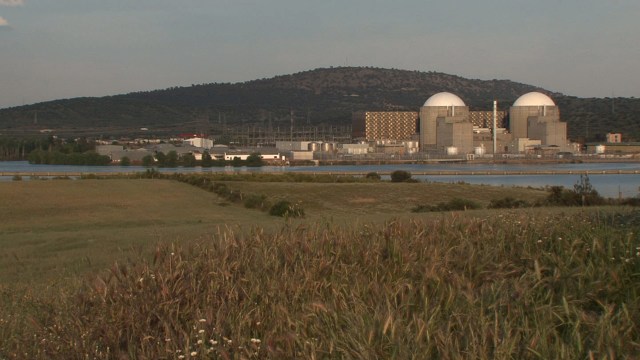
On January 16, the Portuguese government filed a complaint to the European Commission against Spain concerning the construction of a nuclear waste storage facility at the Almaraz nuclear power plant (the news can be found here). Operating since the early 1980s, the Almaraz nuclear power plant is located along the Tagus River about 100 kilometres from Portugal, bordering the districts of Castelo Branco and Portalegre. The construction of the storage facility is intended to extend the operation of the Almaraz nuclear power plant, which has been presenting several problems, especially security problems. Portugal claims that there has been a violation of the EIA Directive, in addition to requesting the suspension of the construction of the Almaraz nuclear waste storage facility.

The EIA Directive – Directive 2011/92/EU of the European Parliament and of the Council of 13 December 2011 – applies to the assessment of environmental effects of certain public and private projects which are likely to have significant effects on the environment. It updates 4 earlier directives (Directives 85/337/EEC, 97/11/EC, 2003/35/EC and 2009/31/EC) and applies from 17 February 2012. Furthermore, Directive 2011/92 has been amended in 2014 by the Directive 2014/52/EU of the European Parliament and of the Council of 16 April 2014. The revised EIA Directive entered into force on 15 May 2014 and Member States shall bring into force the laws, regulations and administrative provisions necessary to comply with it by 16 May 2017. It should also be mentioned that safety of nuclear installations is also regulated by EU law, namely by the Council Directive 2009/71/Euratom of 25 June 2009 establishing a Community framework for the nuclear safety of nuclear installations (transposition deadline expired since 22 July 2011), amended by the Council Directive 2014/87/Euratom of 8 July 2014 (transposition deadline expires the 15 August 2017).

As stated above, Portugal claims that there has been a violation of the EIA Directive. The EIA procedure laid down in this directive can be summarized as follows: i) the developer (the applicant for authorisation for a private or public project which falls within the scope of application of the EIA Directive) may request the competent authority to say what should be covered by the EIA information to be provided (scoping stage); ii) the developer must provide information on the environmental impact (EIA report); iii) the environmental authorities and the public (and, as will be explained below, the eventually affected Member States) must be informed and consulted; iv) the competent authority decides, taken into consideration the results of consultations. The public is then informed of the decision taken and can challenge it before the courts.

Continue reading “The Almaraz debate – it’s not in Spain, it’s not in Portugal, it’s all around…”

Lost in the Nacional Parliament’s Hallways: The Directive 2005/36/EC and the difficult path until its proper application in Portugal

aaaaaaaaa

by Rita de Sousa Costa, law student at UMinho
and Tiago Sérgio Cabral, law student at UMinho

The precedence of EU law over the law of the Member States is one of the fundamental principles of the Union. The Member States must comply with the European dispositions and shall not issue legislation contradicting EU law. To do so would be a breach of the principle of loyalty (art. 4(3) TEU). However, the states do not always legislate with the proper rigour and responsibility and when this occurs the principle of direct effect is key to assure a uniform application of the European Law and the protection of the European citizens.  In this short essay we shall study how the Portuguese legislator after correctly implementing the Directive 2005/36/EC of the European Parliament and of the Council of 7 September 2005 on the recognition of professional qualifications (through the Law n. 9/2009, of 4th March) proceeded to change the Portuguese legal framework (through the Law n. 31/2009, of 3rd July[i]) putting our law in direct contradiction with the Directive and how the solution, still in force, came in the form of the direct application of the Directive’s provisions.

Introduction – The Legal Framework

The Directive establishes the rules  “according to which a Member State which makes access to or pursuit of a regulated profession in its territory contingent upon possession of specific professional qualifications (…) shall recognise professional qualifications obtained in one or more other Member States (referred to hereinafter as the home Member State) and which allow the holder of the said qualifications to pursue the same profession there, for access to and pursuit of that profession”.

Continue reading “Lost in the Nacional Parliament’s Hallways: The Directive 2005/36/EC and the difficult path until its proper application in Portugal”

Editorial of February 2017

29568920442_e06e2c24d7_o

by Alessandra Silveira, Editor
 ▪

On the Southern EU countries summit – challenges of democracy in times of austerity and dismay

Last Saturday, 28 January 2017, seven Member States from the south of Europe (Cyprus, France, Greece, Italy, Malta, Portugal and Spain) gathered in Lisbon to send the message of their national public opinions to the public opinions of the other Member States of the Union: surely the EU has to fight terrorism and to adopt a cohesive migration policy but such issues cannot bypass the attention towards the economic problem. It is a clamour of the Southern Europe in the regard that economic convergence becomes priority in the EU’s strategy through policies that create financial capacity in the euro zone and the development of European programmes to support investment. In the horizon, there would be solutions which involve a larger risk sharing – as the adoption of common taxes, an European system of bank deposit guarantee, common debt issue (eurobonds) as well as policies of positive discrimination in favour of indebted Member States that fulfil the adjustment rules.

The message of the citizens from the south of Europe holds that they advanced in the structural reforms and budgetary consolidation as much as it was possible (and the results in Spain and Portugal, mostly, are clear). But under the current circumstances of strong indebtedness and high unemployment it’s impossible to carry on without some relief from the financing constraints. Otherwise the Mediterranean societies will be driven to a situation of social rupture with unpredictable consequences, considering the populisms that lurk around. All that is inserted in a broader debate that the European institutions are facing on how to produce more jobs and better economic performance so that the European citizens can again see the European integration as an asset in their lives. It wasn’t for a different reason that in the first session of January the European Parliament approved a report on the Social Pillar (here). In the same regard, in March the European Commission will submit proposals aiming at reinforcing the social rights – that is, the access to minimum wage and minimum insertion allowances, access to a compulsory health insurance, extinction of unpaid internships, etc. In a year in which there are elections in several Member States, the strengthening of social protection means a European strategy to hinder the adhesion to populist movements.

Continue reading “Editorial of February 2017”

Brexit, The Supreme Court (UK) and the principle of loyalty: on the question of irrevocability of a withdrawal notice

Supreme Court December 2016 - 01

by Alessandra Silveira, Editor

Article 50, TEU is silent on several issues concerning the withdrawal of a Member State from the European Union. Such article establishes that the Member State shall notify the European Council of its withdrawal intention in accordance with its own constitutional requirements. But it does not provide for, for instance, about the hypothesis of revoking the notification of the withdrawal intention, perhaps – before the certainty of revocability – to prevent the Member States of being tempted to influence the destiny of the EU through a false threat of exit. Therefore the doubts raised by article 50, TEU will have to be solved in the light of the principles of the EU law, in special the principle of loyalty [Article 4(3), TEU]. According to this principle of friendly conduct, inherent to all known federative systems, the EU and the Member States respect and assist each other mutually in the fulfilment of the missions resulting from the Treaties.

In 24 January 2017, The Supreme Court issued its expected ruling on whether a notice withdrawing the UK from the EU Treaties can, under the UK’s constitutional arrangements, lawfully be given by Government ministers without prior authorisation by an Act of Parliament.[i] Probably to justify the absence of a reference for a preliminary ruling on the question of irrevocability of a withdrawal notice pursuant to Article 50 TEU, The Supreme Court  highlights that UK’s constitutional requirements are a matter of domestic law should be determined by UK judges. Moreover, The Supreme Court asserted that the issues in those appeals have nothing to do with political issues such as the merits of the decision to withdraw, the timetable and terms of so doing, or the details of any future relationship between the UK and the EU.

Continue reading “Brexit, The Supreme Court (UK) and the principle of loyalty: on the question of irrevocability of a withdrawal notice”

The concept of (economic) sovereignty: the Apple/Ireland case

by Ana Filipa Afonseca, student of the Master´s degree in EU Law of UMinho

If we know the economic policy behind the article 107.º and 108.º of TFEU we will know better ourselves as European Union. Here, the sovereinty have a modern aproach because it deals with a new reallity, witch is the heart of EU: the idea of a single, free and fair market throught the Member States. That necessarilly increases a deep discussion about the institutional and Member State’s power to take attractive measures to grow up their own economy throught tax benefits, such as the case in analysis.

But, in fact, the Member States are now new states because they are regulated by common politics emerged by a supra national organ, which did not exist: the EU itself. When we say “new States” we are not calling for a conceptual reform in the international law as the elements of the 1st article of Montevideo’s Convention remain. It must be noted that the requirement of an effective Government does not take into account the way/fashion in which state policy is implemented but, symbolically, it is important to point out that there is a new set of rules that inevitably transform the path of State economic policy in the Member States of the EU.

In this way, if every competition rule in the TFEU as well as the economic freedoms ones are important to the new economic formula, the prohibition of State aid under Article 107 and 108 has an added symbolic force: it is addressed directly to the Member States, imposing a stand still position before their peers.

Continue reading “The concept of (economic) sovereignty: the Apple/Ireland case”

Editorial of January 2017


board-673013_1920

by Joana Covelo de Abreu, Junior Editor
 ▪

New year’s resolutions: digital single market in 2017 – the year of interoperability

Digital Single Market is one of the major political goals for EU and its Member States since digital tools have shaped, for the past last decade, how economy behaves and how economic growth is relying on IT tools. In fact, digital economy can create growth and employment all across our continent. On the other hand, digital mechanisms cover almost every economic field, from transportation to clothes, from movies to sports since online platforms have the ability to create and shape new markets, challenging traditional ones.

The Digital Agenda for Europe (DAE) is one of the initiatives under Europe 2020 Strategy and it aims to promote economic growth and social benefits by achieving the digital single market. So it is named as one of the secondary public interests that must be pursued by European administration – both national public administrations (when they apply EU law and act as European functioning administrations) and European institutions and, in that sense, especially national public administrations must feel engaged to promote this end and objective, otherwise if those are the ones to firstly resist to innovation, Internal Market adaptation to new framework standards will suffer and economic prosperity in Europe can be undermined.

Therefore, EU has created several mechanisms to foster interoperability solutions that would bring together institutions, national public administrations, companies and individuals. In this context, interoperability stands for “the ability of disparate and diverse organizations to interact towards mutually beneficial and agreed common goals, involving the sharing of information and knowledge between organizations, through the business processes they support, by means of the exchange of data between their respective ICT systems”. It demands and implies an effective interconnection between digital components where standardization has an essential role to play in increasing the interoperability of new technologies within the Digital Single Market. It aims to facilitate access to data and services in a protected and interoperable environment, promoting fair competition and data protection.

Continue reading “Editorial of January 2017”

An EU regulation on administrative procedure in the forge

25280107859_24c1ba6d6a_o

by Sophie Perez Fernandes, Junior Editor

The EU still lacks a coherent and comprehensive set of codified rules of administrative law, especially of administrative procedural law. Without prejudice to a number of provisions scattered in the Treaties, the applicable rules are mainly enshrined in EU secondary law and are therefore essentially sectoral in scope. The gradual inclusion of procedural rules alongside the substantive regulation of a given subject has thus contributed to the fragmentation of the applicable rules, which affects the coherence of the standards of interpretation and control applicable to the exercise of administrative functions within the EU and its accessibility from the point of view of individuals. In light of the “almost silence” of EU primary law and of the predominantly sectoral nature of EU secondary law, the case-law of the ECJ was soon revealed and continues to be an essential source of general principles of constitutional and administrative law within the EU legal order.

The debate on the codification of fundamental principles of administrative law and basic rules of administrative procedure to be observed in the application of EU law began in the 1980’s and has been fueled by the development of the EU’s fields of competence and successive enlargements. The debate has known a knew impetus since the entry into force of the Treaty of Lisbon due to the addition of Article 298 TFEU according to which «[in] carrying out their missions, the institutions, bodies, offices and agencies of the Union shall have the support of an open, efficient and independent European administration», to which end the European Parliament and the Council shall establish provisions «acting by means of regulations in accordance with the ordinary legislative procedure». The inclusion of a «right to good administration» in the CFREU also feeds the debate. Article 41 CFREU has been pointed out as serving as a starting point or guideline for such codification. As such, the adoption of a regulation/codification of administrative procedure by the EU would serve the dual purpose of promoting open, effective and independent administration (Article 298 TFEU) and protecting the rights of individuals in their relations with it (Article 41 CFREU).

Continue reading “An EU regulation on administrative procedure in the forge”

Editorial of December 2016

European Parliament in Greece on May 18, 2016

by Mariana Canotilho, Editor
 ▪

‘Listen! Your brother’s blood cries out to me from the ground’

The 6th EASO Consultative Forum Plenary took place in Athens on 28-29 November 2016. I took part in it, as an academic, interested in EU law, and a volunteer working with refugees. A feeling of deep frustration seemed to be shared by most of the attendants (academics, NGO’s workers, EU and UN agencies’ representatives). What is being done is not enough. It is too slow, too bureaucratic; the legal framework is either insufficient or absurd and counterproductive.

EASO is the European Asylum Support Office. It plays a central role in the implementation of the EU Migration agenda and the new hotspot approach. It is the European agency more focused on the specific problems of refugees, trying to strengthen the practical cooperation among Member States on the many aspects of asylum, and providing practical and technical support to Member States and the European Commission, especially to those whose asylum and reception systems are under particular pressure.

However, it can only do so much. The meagre means don’t help, but neither does the competence set, nor the legal framework being applied. The most worrisome feature, repeatedly questioned by NGOs, UN agencies and volunteers is the ‘safe country of origin’ criteria. As part of the European Agenda on Migration, the Commission proposed on 9 September 2015 to establish a common EU list of safe countries of origin that would enable fast-tracking of asylum applications from citizens of these countries, which are considered ‘safe’ according to the criteria set out in the Asylum Procedures Directive and in full compliance with the principle of non-refoulement. This might seem a reasonable idea. However, the criteria are so strict, that countries like Turkey and Afghanistan are considered safe based on their ‘stable democratic system and compliance with international human‐rights treaties’. As this does not stop people from fleeing war and human rights violations, it only aggravates the problems, creating a group of ‘second-class refugees’, who cannot even apply to the relocation mechanism.

Continue reading “Editorial of December 2016”