Neutrality or covert discrimination? A brief review of the decisions of the Achbita and Bougnaoui cases

3277743638_c2b47b5815_o

by Cláudia Moreira, masters student at University of Minho

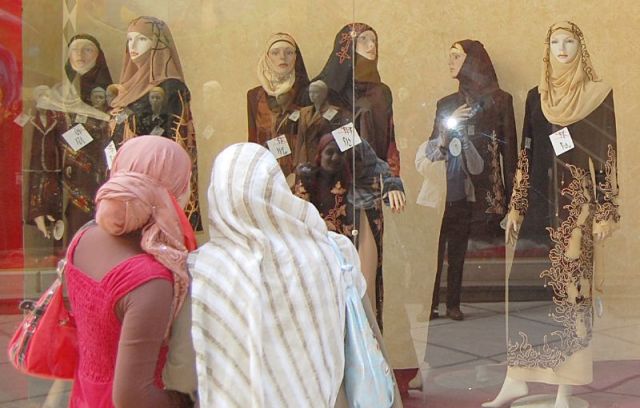
The ban on wearing religious symbols, like the hijab or headscarf, the niqab and burka, is nowadays at the centre of controversies over which limits can be legitimately established for religious manifestations. In recent years, there have been many European countries which, given the strong Islamic presence in their territory, have understood that they should find legal solutions to the heated discussions about the use of women’s religious clothing. Belgium was the first European country in 2010 to ban the wearing of the burka in public spaces. It was followed by France, which, even though it had already adopted a law banning the use of religious clothing or symbols in public schools in 2004, based on the State secularity principle, only more recently extended the ban to the use the burka and niqab in public spaces.

The wide discretion that the European Court of Human Rights (ECHR) has been providing to Member States, in cases concerning religious symbols[i] and their usage limitation may, as well asserted Martinez-Tórron[ii], be the result of the ‘fear’ of propagating of radical ideals, which are harmful to European freedom. This fear, however, does not legitimize the adoption, under false aegis of principles, such as justice or equality of measures restricting religious manifestations.

Continue reading “Neutrality or covert discrimination? A brief review of the decisions of the Achbita and Bougnaoui cases”

Editorial of May 2017

OLYMPUS DIGITAL CAMERA

by Pedro Madeira Froufe, Editor

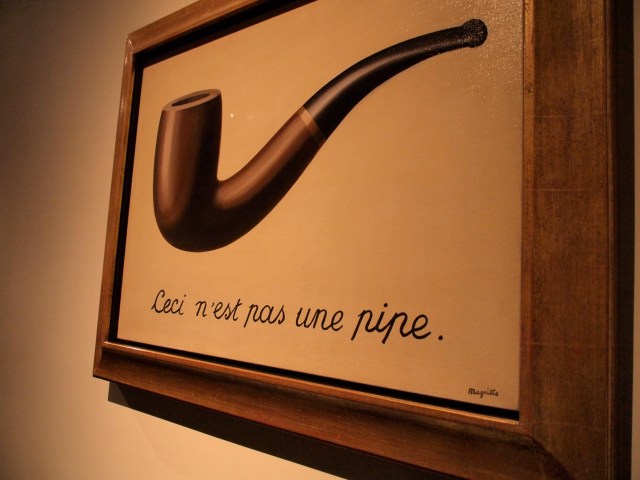
Europe: “Ceci c’est pas une pipe!”

Populism has manifested itself not only in the form of public (or at least published) streams of public opinion, but also through the result of (naturally) democratic and legitimate electoral acts. And such cases of populisms materialised in the exercise of representative democracy, generated in the democratic institutional functioning in the context of the rule of law, begin to not be unusual. Deep down, we have seen expressions of populism that acquire power and influence (sometimes determining), with an anti-democratic tendency, created by democracy itself.

Populism appears nowadays as especially adjusted, attractive and intellectually comfortable for a considerable part of the European and American population (in other words, for a large amount of the electorate). There are, as I see it, several reasons, mostly articulated, that cause this relative outbreak now with direct political consequences – that considerably surpass the juridical-constitutional dimension. Those causes are not exclusively attributable to dysfunctions in the dynamics of the democratic institutions.

Such reasons are rooted also in something deeper and concrete than the legal abstraction or the political activity and representation: it has to do, to a great extent, with our current way of life and cosmovision in the context of the technical societies of information and – why not say it – abundance. It should be noted that the intention is not to disregard the existence of reasons attributable to the bad juridical architecture and the bad political functioning (or even the bad performance of politicians); but they are not the only explanatory causes for populist phenomena that disturb democracy….

I won’t reflect or develop, at this occasion, the issue of the causes non-directly juridical, or institutional, of populism. They might also be sociological and cultural tendencies; they could be as well a reaction to extremisms, relativisms and the loss of collective references resulting from the erosion of gregarious institutions, social and natural. That erosion has a lot to do with the overvaluing and a revival of tendencies (neo)hedonist and (neo)utilitarianist which have been potentialized particularly well with the economic growth, modernity (especially in the post-war) and, lately, with the immediacy (created by technology and consequent globalisation). From the legal perspective, such relativism makes it difficult to understand normatively the basic principle of equality, turning it into a principle of the existential relativism: everything is equal to its opposite, blurring and even disabling normative senses, decisions and value options, as everything is equivalent.

Continue reading “Editorial of May 2017”

Tensions between European Union Law and Private International Law – impact on cross-border mobility of companies

business-254583_1920

by Jorge Ribeiro, PhD candidate at Universidad de Vigo

Introduction

This essay intends to give a brief analysis on the relationship between European Union Law and Private International Law, particularly the impact on cross-border mobility of companies in the European space[i].

The Treaty on the Functioning of the European Union (TFEU) explicitly recognises freedom of establishment for companies. However, nowadays, a number of obstacles still persist regarding companies’ mobility as a result of the coexistence of the incorporation and the real seat doctrine. This is also due to the way in which the European Court of Justice (ECJ) case law has dealt with the free movement of companies.

It is argued that it would be welcome if the European legislator could take action, mitigating national private international law contrary to European fundamental freedoms[ii].

Dualism of rules

To determine which company law is applicable to a particular company, there are two existing theories: the real seat theory and the incorporation theory.

The real seat theory[iii] provides that the personal law of the company is the law of the country where it has its real seat (its principal place of business). Instead, according to the incorporation theory[iv] the company and its relationships are subjected to the law of the country where it has been incorporated, i.e. registered.

The major difference between the two theories is their effect on the cross-border transfer of the company seat, both from the home and host state perspective. The real seat theory brings limitations to the cross-border transfer of the real seat by making the company subject to different national legal order each time its real seat moves to another state[v]. Likewise a company from an incorporation state that wishes to move its administrative seat to a real seat state may not be recognized as a company in this host state, without dissolution in the home state.

Continue reading “Tensions between European Union Law and Private International Law – impact on cross-border mobility of companies”

The Directive 2000/43/EC and the possibility of indirect discrimination by association: an analysis of the judgment CHEZ Razpredelenie Bulgaria (Case C-83/14)

3028515993_643dbbd022_o

by Mariana Schafhauser Boçon, masters' student at University of Minho

The Judgment of the Court of Justice of the European Union (Grand Chamber) in Case C-83/14, delivered on 16 July 2015, concerned a request for a preliminary ruling under Article 267 TFEU from the Administrativen sad Sofia-grad, about the interpretation of Article 1 and Article 2(1) and (2)(a) and (b) of Council Directive 2000/43/EC of 29 June 2000 implementing the principle of equal treatment between persons irrespective of racial or ethnic origin and of Article 21 of the Charter of Fundamental Rights of the European Union (‘the Charter’).

The dispute in the main proceedings relates to the fact that, between 1999 and 2000, the CHEZ Razpredelenie Bulgaria AD – CHEZ RB, a Bulgarian electricity distribution company, installed the electricity meters of all the consumers of the ‘Gizdova mahala’ district, of the town of Dupnitsa (Bulgaria), inhabited mainly by persons of Roman origin, on the concrete pylons forming part of the overhead electricity supply network at a height of between six and seven metres, whereas in the other districts the meters installed by CHEZ RB are placed at a height of 1.70 metres, usually in the consumer’s property, on the façade or on the wall around the property.

In December 2008, Anelia Georgieva Nikolova, owner of a grocery store in the ‘Gizdova mahala’ district, lodged an application with the Komisia za zashtita ot dikriminatsia – KZD (Bulgarian Commission for Protection against Discrimination) alleging that she was suffering direct discrimination on the grounds of nationality due to the practice at issue of CHEZ RB.

Firstly, KZD ruled that the practice at issue constituted an indirect discrimination prohibited on grounds of nationality. However, after that decision was annulled by a judgment of the Varhoven administrativen sad (Supreme Administrative Court), KZD decided that Anelia Nikolova had suffered a discrimination because of her “personal situation” and ordered CHEZ RB to bring discrimination against her to an end and to refrain from such discriminatory behaviour in the future.

Against that decision, CHEZ RB brought an appeal before the Administrativen sad Sofia-grad (Administrative Court, Sofia), which decided to stay proceedings and to refer ten questions to the Court of Justice of the European Union (ECJ) for a preliminary ruling. These questions were also examined by Advocate General Juliane Kokott in her Opinion.
Continue reading “The Directive 2000/43/EC and the possibility of indirect discrimination by association: an analysis of the judgment CHEZ Razpredelenie Bulgaria (Case C-83/14)”

Humanitarian Visas and the X and X v. Belgium judgment (Case C-638/16 PPU)


by Teresa Alves, masters' student at University of Minho

The judgment in Case C-638/16 PPU, delivered by the Court of Justice of the European Union, on 7th March 2017[i] could represent a milestone in the history of the European Union, opening the door to an important legal path of access to international protection in the Member States and improving the Europe’s asylum policy. Particularly in a context of migration crisis that the European Union is trying to solve, adopting different measures. These measures include strengthening border controls, preventing human trafficking and trying to dismantle illegal forms of access to Member States’ borders through organized networks. Another measure is the EU-Turkey Statement that, despite some legal doubts, intends, not only, but also, to create a legal path of access to international protection in the Member States.

The story dates back to October 2016, when a Syrian family (mother, father – married to one another – and their three young children, from Aleppo) applied for a humanitarian visa at the embassy of Belgium in Lebanon. They hoped, with this, to legally enter in Belgium and to request asylum. They claimed that one of them had been abducted by an armed group, beaten and tortured, before being released on payment of a ransom. They emphasized, specially, the deterioration of the security situation in Syria, in general, and in Aleppo, in particular, as well as the fact that, as Orthodox Christians, they were at risk of persecution because of their religious beliefs. This family added that they could not register as refugees in neighboring countries, particularly in view of the fact that the Lebanese-Syrian border had been closed in the meantime.

The competent Belgian authorities promptly rejected the request, explaining that (i) the applicants planned to remain in Belgium for more than 90 days, and under the Visas Code, in accordance with Article 1, the issue of transit visas or visas within the territory of the Member States shall not exceed 90 days in a period of 180 days; (iii) in addition, Article 3 of the ECHR, according to which «no one shall be subjected to torture or inhuman or degrading treatment or punishment», shall not require States Parties to admit «persons living a catastrophic situation» and, lastly, they considered that (iii) Belgian diplomatic posts are not part of the authorities to which a foreigner may apply for asylum. For the reason that, authorizing an entry visa to the applicants in the main proceedings, for the purpose of submitting an application for asylum in Belgium, would be equivalent to allowing them to request this application for asylum in the diplomatic post.

The family appealed against the decision before the Conseil du Contentieux des Étrangers (Council for asylum and immigration proceedings, Belgium), which decided to refer to the Court of Justice questions relating to the granting of humanitarian visas. That is, «must Article 25(1)(a) of the Visa Code be interpreted as meaning that, subject to its discretion with regard to the circumstances of the case, a Member State to which an application for a visa with limited territorial validity has been made is required to issue the visa applied for, where a risk of infringement of Article 4 and/or Article 18 of the Charter or another international obligation by which it is bound is established?», «Does the existence of links between the applicant and the Member State to which the visa application was made (for example, family connections) affect the answer to that question?».
Continue reading “Humanitarian Visas and the X and X v. Belgium judgment (Case C-638/16 PPU)”

Editorial of April 2017

32184158904_a465f8431b_o

by Alessandra Silveira, Editor

What future do we want for ourselves, for our children and for our Union? (as for the 60 years landmark of the Treaty of Rome: please open the fridge!)

Two weeks ago I went to Rome at the European’s Commission invitation for the celebrations of the 60 years of the constitutive treaties of the current European Union. The Commission had decided to gather a group of Jean Monnet chairs from 34 nationalities for a seminar with the title “The future of Europe: a commitment for You(th)” and for a meeting with the EC Vice President, Federica Mogherini, and the (rotating) President of the Council of the EU, Joseph Muscat (Prime-Minister of Malta). It is my duty to share on this blog what I have heard there.

The EC is moving forward with a series of proposals about the management of globalisation and the future of the European finances, but also tending to develop the European social dimension. And, mostly, proposals tending to conclude the Economic and Monetary Union – that takes monetary and exchange sovereignty from the Member States whilst keeps their financial and fiscal sovereignty, what provokes clear imbalances between the more and the less robust economies of the euro zone. Moreover, the Commission presented on 1 March 2017 a White Paper on the future of Europe[i]  – which prospects the changes we will be subject to over the course of the next 10 years and presents 5 scenarios to face the challenges.

After a large debate – that will take place at the European level in the next months and in which the European Parliament, national parliaments, local and regional authorities and the society in general will participate – President Jean-Claude Juncker will address his considerations on the occasion of the speech of the State of the Union, in September 2017, hence contributing with the European Council for reaching its first conclusions by the end of the year and deciding about the actions to take over the period that precedes the European Parliament’s elections, in June 2019.

Naturally, the outcome will also depend on the electoral results in France and Germany – it couldn’t be any different. Not exactly for the narrative of the “French-German axis”, but because 40% of everything that is built with European funds is money from the French or the German tax payer. Is it not of the most elementary coherence that who pays the most should have a word? Anyhow, the European citizens from the other Member States may not be unrelated to the definition of their future – that’s why they need to know the proposals and pressure political decision-makers towards better choices. The European Union is not made by aliens – it’s our representatives who are there: in the Parliament, in the Council, in the Commission.

Continue reading “Editorial of April 2017”

Europe and the train of the Digital Single Market

8499172270_0b8595a694_o

by Isabel Espín, Professor at the Law School of Universidade de Santiago de Compostela

The European Union must not miss the train of a true digital single market that will keep the momentum of its important digital content industry and make it more competitive without losing the essence of European cultural identity.

The Communication from the Commission on a strategy for the Single Digital Market in Europe of 6 May 2015 takes account of this and calls for a comprehensive legislative reform in order to combat fragmentation and barriers in the European digital market, a situation that has been affecting Europe’s leadership capacity in the global digital economy.

The basis for such regulatory initiatives are Article 4 (2) (a) and Articles 26, 27, 114 and 115 of the Treaty on the Functioning of the European Union. There are many topics involved in a comprehensive and integrated single market initiative: data protection, e-commerce, consumer protection, access (broadband and interoperability), competition law, taxation, etc.

From the point of view of copyright, the Commission’s communication on promoting a European economy founded on fair, efficient and competitive copyright in the digital single market, of 14 September 2016, is the instrument that point out the initiatives concerning the protection of copyright in the digital single market. Such initiatives are: the Proposal for a Regulation regulating copyright and related rights for online television broadcasts and rebroadcasts on online TV and radio programs; Proposal for a Regulation governing the exchange of accessible copies between the EU and third countries part of the Marrakesh Treaty; Proposal for a Directive to facilitate access to public works for blind and or visually impaired persons (Marrakech Treaty).

Continue reading “Europe and the train of the Digital Single Market”

Eurogroup and secrecy

8466751401_5c1212cd98_o

by Andreia Barbosa, PhD student at the Law School of UMinho

It is clear from Article 1 of Protocol No 14, annexed to the Treaty on the Functioning of the European Union, that Eurogroup meetings take place informally.

Informality is reflected in two aspects. First, according to the terms in which the meetings are held, that is, as to the procedure adopted therein. In fact, there is no set of rules defining the procedure to be followed, for example, to ensure the involvement of all actors and to determine the order in which such interventions can be carried out and the duration they may have. Secondly, the terms in which «decisions» are taken and how they are made known to the public. It is through press conferences that the outcome of the meetings is presented to citizens of the Union (and when they are).

It should be noted that we refer to «decisions» as a result of Eurogroup meetings, even though we know that the formal, final, and binding decision on the subject is actually taken at the Ecofin meeting. However, we are also aware of the fact that the votes made at Ecofin express the outcome of the previous Eurogroup meeting. The final decision of Ecofin was born in the Eurogroup.

So, the informality resulting from Article 1 of Protocol No 14 actually means «opacity». Contrary to the idea of necessary transparency and publicity in all decision-making centers, no minutes or documents are signed in the Eurogroup, there are no transcripts or records relating to the respective meetings. No database has ever been set up to add up the «decisions» taken. The proposals under discussion, the presented votes, the conflicts of interest that have arisen and the commitments made are not known. Moreover, the acts of the Eurogroup can not be syndicated before the Court of Justice of the European Union, even though they are not documented, neither on paper nor in audio or video.

Although a certain procedural informality is admitted (but still susceptible of criticism), it does not seem to admit an opacity in the decisions. In abstract, a procedure can be informal and simultaneously transparent. In particular, the functioning of the Eurogroup may be informal, but its «decisions» should not be opaque. And the lack of transparency that exists goes beyond mere confidentiality.

Continue reading “Eurogroup and secrecy”

Unveiling the meaning of freedom of religion in the workplace – or, unveiling the Achbita and Bougnaoui judgments

45391729_07d61fd721_o

by Sophie Perez Fernandes, Junior Editor

Our editorial of November 2016 related to two preliminary references proceedings at the time pending before the Court of Justice of the European Union (ECJ) concerning the question of religious expression at work and, particularly, the highly sensitive issue of the wearing of Islamic headscarves (and not the full veil) in the workplace. The issues raised in both cases required the interpretation of the concept of ‘discrimination on the grounds of religion or belief’ within the meaning of the Anti-Discrimination Directive – the Directive 2000/78[i]. Let us recall the fundamental questions at issue: is a private employer allowed to prohibit a female employee of Muslim faith from wearing a headscarf in the workplace?; is the dismissal of an employee who refuses to comply with such rules restricting the wearing of religious symbols at work unlawful?

On 14 March 2016, the Grand Chamber delivered both the Achbita (C-157/15) and the Bougnaoui (C-188/15) judgments, two significant decisions in relation to discrimination in employment on grounds of religion. The facts at the origin of each case were slightly different.

In the first case, Ms Achbita started to work for G4S as a receptionist in 2003 and complied with the rule according to which workers could not wear visible signs of their political, philosophical or religious beliefs in the workplace, an unwritten rule at the time. In 2006 Ms Achbita informed her employers that she intended, in future, to wear an Islamic headscarf at work and, in reply, was informed that such intention was contrary to G4S’s position of neutrality. Shortly afterwards, the above mentioned unwritten rule was written down: the workplace regulations thus stipulated that «employees are prohibited, in the workplace, from wearing any visible signs of their political, philosophical or religious beliefs and/or from engaging in any observance of such beliefs». Shortly after the amendment was approved, Ms Achbita was dismissed on account of her continuing insistence that she wished to wear the Islamic headscarf at work.

In the second case, Ms Bougnaoui was informed at a student recruitment fair by a representative of Micropole that the wearing of an Islamic headscarf might pose a problem when she was in contact with customers of the company. When Ms Bougnaoui began to work at Micropole in 2008 as an intern, she was initially wearing a bandana and subsequently an Islamic headscarf. Micropole nevertheless employed her at the end of her internship. Almost a year later, Ms Bougnaoui was dismissed. A customer of Micropole’s with whom Ms Bouganoui had worked informed her employers that her wearing the headscarf had upset some of their employees and requested that there should be «no veil next time». Despite the request of her employers, Ms Bouganoui refused to agree not to wear the headscarf in the future and was thus fired in 2009.

Continue reading “Unveiling the meaning of freedom of religion in the workplace – or, unveiling the Achbita and Bougnaoui judgments”

Editorial of March 2017

3757735326_c1b6681fb9_o

by Pedro Madeira Froufe, Editor

The future (in White Paper) of Europe, according to Juncker

The European Commission has presented the White Paper on the Future of Europe precisely now in the year of the milestone celebration of 60 years of integration[i] and when it is taking place the technical and diplomatic operation of materialising Brexit.

It is always good and never inopportune to launch a debate on the future of integration, especially when the Union faces a political, economic and social turbulence and, at the external level, the geopolitical indetermination which makes this debate an existential issue. Incidentally, by promoting this debate, it is indispensible that it is rapidly consequent.

The White Paper was then presented at the European Parliament, on 1st March, by the President of the Commission who intended to propose options to strengthen the Union in the post-Brexit. Juncker wanted to highlight, by all means and with certainty before the context and the dark and hesitant note with which the integration and the EU have been marked, a sign/memory of hope: “Our darkest days are still far brighter than any spent by our forefathers imprisoned in Ventotene” [the Italian prison where Altiero Spinelli and Ernesto Rossi were kept during the II World War].

The intention of the Commission and its President is understandable (in fact, he has already announced he won’t be running for a second term). Indeed, this motivating intention of the newly presented White Paper was explicitly affirmed: as we face a Europe post-Brexit, the integration of 28-1 and with risks of not being able to stem possible propensities for new withdrawals, we must quickly define a new path. A definition that will mean necessarily a commitment of deepening the integration, among all. The question is precisely knowing/defining how to advance to this deepening. Furthermore: what does it mean, realistically and consequently today, such deepening? That is, which path to define to the future (nearly) immediate of the Union?

Continue reading “Editorial of March 2017”