Editorial of September 2016

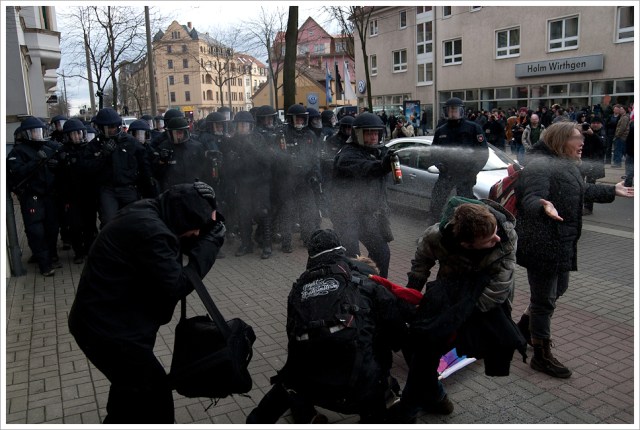
Pepper Police @ Dresden Nazi Frei

by Mariana Canotilho, Editor
 ▪

Democracy at the crossroads

A little over one month ago, the European Commission advanced its disciplinary procedure against Poland, after accusing Warsaw of failing to address concerns over democracy and the rule of law in the country. The Polish government reacted harshly, stating that this is not the kind of presence in the EU they have agreed on, and affirming that the procedure goes beyond the Treaties and the Commission’s competences.

The situation in Poland is serious but it is not unique. Hungary was the precursor in the authoritarian drift. The Tavares report on the country, published in 2013, denounces the weakening of checks and balances, especially the actions against the Constitutional Court, the Parliament and the Data Protection Authority, the undermining of the independence of the judiciary, the restrictions to the rights of persons belonging to minorities and the interference with the media and the right to freedom of opinion and expression.

The Union has strong reasons to fear the dissolution of the rule of law in the East. But the process of re-engagement with it is long, difficult and complex. One of the more obvious difficulties, from a constitutional law point of view, is that the EU’s own track record concerning democracy and the rule of law during the last ‘crisis years’ is at least fuzzy.

The ongoing crisis has been used to contest the steps taken during the last 15 years towards the parliamentarisation of the EU. In fact, there is a remarkable institutional change within the Union – both at national and European levels – promoted in the framework of an ‘emergency politics’ that tends to enhance the powers of executive authorities and of informal, non-accountable, decision mechanisms, in detriment of democratic representative institutions.

Furthermore, the EU has promoted necessity over democratic consent and effectiveness over deliberative reason as decision’s criteria. It has allowed, justified and sometimes even actively furthered the weakening of constitutional mechanisms that control and limit the exercise of power. This has clearly limited the space for well-minded critics, for alternative proposals, for self-reflection and correction of mistakes. Paradoxically, it has also, as the cases of Hungary and Poland sadly demonstrate, opened the floor for the true enemies of European integration and European democratic values. Will the Union still be able – and willing – to save them?

Picture credits: Pepper Police  by MonteCruz Foto.

Editorial August 2016

27935993072_c39f178720_b

by Katarzyna Gromek-Broc, Senior Lecturer, 
Senior Advisor for Academic Matters,
University of York

[The Editorial team is pleased to annouce that this Editorial and following two articles resume perspectives from British schoolars on Brexit].

Brexit

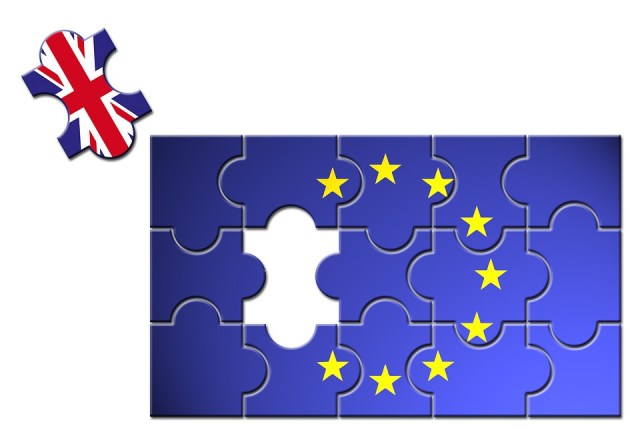
The 23rd of June 2016 marks an unprecedented moment in British and European history.  A moment that everybody feared, but nobody really believed would actually happen. The moment is heart-breaking: British people decided to abandon the European Project. The results of the referendum of the 23rd of June ‘to leave the EU’ – expressed by 51.9% to 48.1% out of 72.2% of the electorate – symbolised the end of an era lasting 44 years of the UK in the EU.[1] Birkinshaw declared that ‘in the morning after the referendum the country was is in a state of shock’, intensified by the initial calculations of the results, which indicated a slightly pro-Europe advantage.[2]  Although the shift in outcome was predictable since the first results available were from the City of London – a bastion of pro-Europe campaign – backed up by some other dynamic cities, including Glasgow, Edinburgh, Aberdeen, Brighton, Manchester and Bristol, with notably high concentrations of intellectual minded adults, as well as young people. The referendum divided Britain geographically and broke the link between the generations. The younger people were in majority in the ‘Remain campaign’.  My region – Yorkshire – sadly voted overwhelmingly to leave.[3] Almost all of the key cities, including Sheffield, Hull, Bradford, Hambleton, North Lincolnshire, Rotherham and Selby, decided to withdraw from the EU, with just a few exceptions, such as Harrogate (51%) and York (58%).[4]

Continue reading “Editorial August 2016”

Editorial of July 2016

brexit-1477615_960_720

by Professor Alessandra Silveira, Editor

Every cloud has a silver lining. On the referendum able to push forward the unity of the Europe and the disunity of the Kingdom

Modern democracy, with which the West has lived since the liberal revolutions, is representative – exceptionally accompanied by moments of semi-direct democracy through referenda or popular consultations. Such exceptionality is based on the very survival of democracy as referenda hardly ever manage to escape high doses of manipulation and abuse. When Hans Kelsen was asked once about the rightfulness of popular consultation, he allegedly answered that, despite they make sense in certain situations, it should not be forgotten that an uninformed population preferred Barabbas over Jesus Christ. This metaphor illustrates one of the main assumptions of the democratic theory (which no one described as brilliantly as Norberto Bobbio): the excess of democracy may kill it.

This becomes crystal clear in the referenda (supposedly) on European issues, tendentiously instrumentalized by national political elites that convert them in arenas to internal disputes. The day the world awaked in astonishment with the results of the British referendum, the top questions at the social networks and search engines in the United Kingdom on the European Union since the Brexit result was officially announced were: “What is the European Union? What does it mean to leave the European Union?” That reveals that many British have voted without really knowing what the EU is or what it stands for in their daily life.

And so 17 million British, deceived by the most despicable demagogy, decided about the destinies of 500 million European, subverting the most elementary democratic rule of a polity – the one of majority will. They did so openly for the worst reasons – fear, hostility, xenophobia, all wrapped in the sovereignty narrative –, offering weapons for the Leftist and Rightist populisms all over Europe to wield a speech against the Brussels’ technocracy. The same technocracy that will stop paying grants to British agriculturists, that will cease supporting research in the British universities, that will discontinue the stimulation for the movement of British Erasmus students, that will interrupt law-making towards promoting equality and non-discrimination among the British.
Continue reading “Editorial of July 2016”

Editorial of June 2016


6914441342_775b4ab9a7_o

by João Marques, Lawyer and member of the 
Portuguese Data Protection National Commission

The right to be remembered – Directive 95/46/CE begins its twilight and makes way for the new General Data Protection Regulation (GDPR)

It was on May the 4th that the EU paradigm regarding personal data protection started to write its chapter in the common book of legal unification. As the Regulation (EU) 2016/679 [together with Directive (EU) 2016/680] finally got published in the Official Journal of the EU, a new era is jumpstarted. The first “victim” of the new paradigm is the old Directive 95/46/CE, which for the past 20 years has served European citizens honourably.

Although it faced a challenging task, Directive 95/46/EC was generally capable of protecting EU citizens against the predatory instincts of our world regarding their personal data. A suitable testament in this regard is the fact that the principles enshrined in Chapter 2 of the Directive have been, for the most part, kept almost unchanged. Lawful processing, purpose specification and limitation, data quality, fair processing and accountability remain as the bedrock of data protection under the new legal framework.

As ever, the CJEU case-law has been of paramount importance in the consolidation of a European perspective in which the citizen’s fundamental rights are at the forefront of the Union’s responsibilities, with the recent case C-362/14 (Schrems V. Data Protection Commissioner and Digital Rights Ireland Ltd) being yet another example of the approach for which the court is well known.

Continue reading “Editorial of June 2016”

Editorial of May 2016

11322953266_db29ce0659_z


by Pedro Madeira Froufe, Editor
and Joana Covelo de Abreu, Junior Editor

Competition, Public Procurement and Citizenship

Last 18th April 2016, the transposition deadline for new public procurement Directives passed: Directives 2014/23/EU, 2014/24/EU and 2014/25/EU. The first one deals with the award of the concession contracts and the latter have to do, respectively, with public procurement (and repealing Directive 2004/18/CE) and procurement by entities operating in the water, energy, transport and postal services sectors (repealing, for that matter, Directive 2004/17/CE).

Public procurement has a fundamental role in the European Union, namely in the EUROPE 2020 Strategy context, since it appears as an internal market instrument that is adequate to promote a sustainable development, an intelligent and inclusive growth, aiming, equally, a more reasonable use of public funding. Besides, public procurement regulation, in the European context, always prosecutes competition’s preservation and reinforcement – the background where internal market edification was set.

With those new Directives, there were some aspects of the previous regime that were revised, namely the European thresholds (which define the scope of application of European rules on public procurement). Those were supposed to be updated every two years if necessary. Still, a new proceeding was created: the innovation partnership established between the contracting entity and the participants, which allows setting successive stages and intermediate objectives. E-procurement gains a more relevant role.

According to information provided by European Institutions, public procurement contracts have a significant weight in Member-States economies, representing about 16% of the Union’s GDP. But before public procurement had been regulated by the European Union, only 2% of economic operators that had won public contracts were non-national companies. In this perspective, application of Internal Market rules (namely freedom to provide services and free competition) allowed a better usage of public resources and a better and more fruitful competition, demanding economic operators in the European context to improve their services and to provide them to a lower price (to a more competitive price). With public procurement Europeanization there was also a reinforcement of transparency and equality principles’ respect and a diminishing of fraud and corruption’s risk.

As stated, competition policy always ends up to be in the base (even when indirectly) of the functioning dynamic’s type that we aim to the Internal Market and to the economic integration. Besides, to a large degree, the creation of a competition culture in Europe is the result of integration. Actual challenges are connected, in a great extent, by the balanced markets’ regulation, by the implementation of an economy that is always competitive but also socially aware. New technologies set today new realities not always easy to ordain, safeguarding, in a balanced way, economic efficiency (more competition) and what we can call, in a detailed way, common interest manifestation (and, therefore, of a socially balanced regulation). In the “common economy” field, difficulties of that balance are particularly evident and immediate. Let’s consider an illustrative example: the tension between a (very closely) regulated sector of providing services – taxi services – and the emergence, also in Europe and with great success, of the UBER phenomenon. This is something to follow with interest. It is also a challenge to the densification of European citizenship (economic, directly connected to European consumers).

Picture credits: Numbers and Finance  by Reynermedia.

Editorial of April 2016

24312096883_c2188bed3b_z

by Emília Castro, Researcher at Faculty of Law, Universität Hamburg

The EU-Turkey deal and the migration crisis – or how far refugees are from an equal and dignified treatment

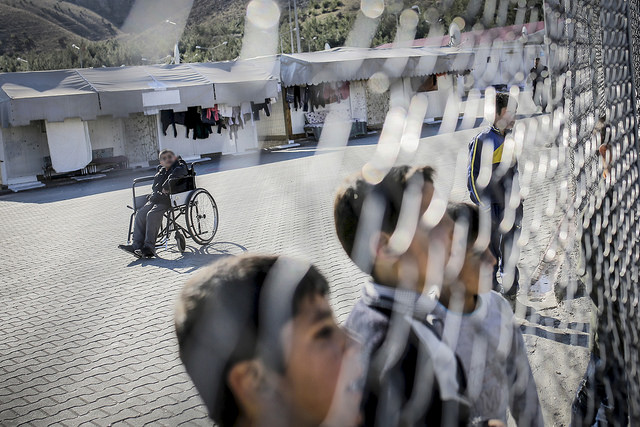
The ever-increasing flow of people around the globe is an unarguable consequence of the globalization process, which we have undergone, mainly as of the twentieth century. However, the world seems to have been drawing its attention to the movement of people around the globe not in the very last century, but mostly in the last two years. The nowadays called “migration crisis” has been showing the international society how difficult it is to struggle against some dire situations some people experience in their home countries.

Mainly because of its strong economy and its tradition of human rights, the European Union has been figuring as the main destination of refugees: more than a million migrants and refugees crossed into Europe in 2015 – and there are no signs these numbers are reducing in 2016.

In March 2016, however, the European Union seemed to have taken a step back on refugees’ Human Rights protection. The EU-Turkey Joint Action Plan was put into practice on March 20th  for the sake of managing the refugee crisis. In a nutshell, some of the main aspects of this deal (called by the EU as “principles”) consider[i]:

1) The return of all new irregular migrants and asylum seekers crossing from Turkey into the Greek islands with the costs covered by the European Union;

2) The resettlement of Syrian nationals: for every irregular Syrian returned from the Greek islands and readmitted by Turkey, another regular Syrian will be resettled to the EU Member States directly from Turkey. In order to achieve this goal, EU Member States should make a sufficient number of resettlement places available.

Some principles of this Joint Action Plan draw Turkey and the EU together. In compensation for the return and resettlement scheme – and apart from the obviously needed disbursement of funds under the Facility for Refugees in Turkey, which will be sped up – the Commission and Member States are working on advancing the accession negotiations with Turkey. Moreover, by the end of April 2016, the European Commission should make a legislative proposal to lift the visa requirements for Turkish citizens who want to enter the EU territory.

Continue reading “Editorial of April 2016”

Editorial of March 2016

24947332642_045d3ea406_z
by Allan F. Tatham, Professor at Facultad de Derecho, Universidad CEU San Pablo
 ▪

New Deal for the UK in Europe: Rewarding British particularism or Making Exceptionalism Acceptable?

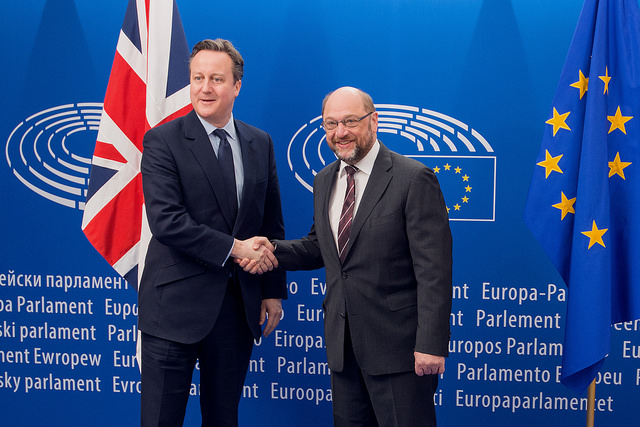
And so British Prime Minister David Cameron, standing outside No. 10 Downing Street last Saturday, announced to a waiting nation (and Union) that he had wrested for the United Kingdom  almost all of the concessions he had been negotiating on with his EU Member State partners. What had once seemed as an almost Herculean task to achieve and an unprecedented one at that, has led to agreement with his fellow colleagues (no doubt grudgingly for some) in the European Council. Yes, Cameron was thus able to recommend to the British people on 20th February 2016 to accept the results of his “historic” renegotiation and vote for “Bremain” this summer; yes, the European Council has expressly recognized the constitutional and legal existence of a two- or multi-speed Europe[ii]; and, yes, the EU has accepted the existence – once again but in a much stronger version this time – of British particularism, in other words “in Europe but not of Europe” so to speak.

In the months leading up to the February European Council meeting, commentators canvassed the various options open to the UK were PM Cameron to have instead recommended a “Brexit” following negotiations and which might still happen if the popular vote in the 23rd June 2016 referendum were to show a majority in favour of leaving the EU.[iii] Among the possibilities considered have been: (1) UK membership of the European Economic Area (“EEA”) through reapplying for membership of the European Free Trade Association (“EFTA”) which would create the scenario of “back to the future” for the country as it was an original founding EFTA state in 1960, leaving to join the then European Economic Community in 1973; (2) a series of bilateral agreements between the UK and the EU, following Switzerland, each agreement being separately negotiated although the format is subject reconsideration by the EU; and (3) the Turkish model including a customs union, free movement of goods, and limited movement of workers as well as forming a strategic partnership in areas of mutual interest. Yet all three options would leave the UK woefully exposed internationally and in a very much weakened bargaining position outside the EU although probably still within the World Trade Organisation.

Continue reading “Editorial of March 2016”

Editorial of February 2016


hqdefault

Pedro Madeira Froufe, Editor
 ▪

Budgetary control, integration, sovereignty.

The budgetary control that the rules of the monetary Union demand from the Member States has given risen to some tension among some of the national Governments and Brussels. The most recent case (and let’s forget about what happened, and still happens, with Greece) regards Portugal. The new socialist Government, supported in the Parliament by Parties that always dealt uncomfortably with the idea and the dynamics of the integration process, is facing its first challenge with Brussels and the European Commission, regarding the Portuguese Draft Budgetary Plan for 2016.

As a matter of fact, the budgetary control (even if only understood as common supervision or monitoring of the internal budgetary decision is, effectively, a control) has the goal, in accordance with Article 126 TFEU, of “avoiding excessive deficits”. One should consider that, in the framework of monitoring that is attributed to the Commission by the same Article, this entity should intervene (and it should be stressed, within its “monitoring” role only) to identify and avoid, in terms of budgetary evolution and public debt, important deviations, within the criteria set out in Article 126(2)(a) and (b) TFEU. In the end, everything is built around the comparison between the programmed deficit and a certain benchmark rate in the relation between public debt and the national GDP (the “famous” 60% of that GDP in terms of public debt).

The Union is a “Union based on the rule of Law”. It pretends to be so with the (final) protection of rights and guarantees, as ensured by the European Court of Justice (ECJ). A Union of Law implies, evidently, the respect and the guarantee that the existent rules are effectively applied. In the case of the Union, the respect of the Primary Law, the Secondary Law, the fundamental praxis and legal acquis that support the dynamics of the integration. However, the reverse results in generating rules, also reasonable, within the context of the permanent balance relation between the Union and the Member States and, naturally, among those (and between each other). These relations must safeguard balance (isonomy) and ponderation, bearing in mind the goals of the integration process. In the end, there is a permanent negotiating process, a consensus dynamics that – even in the framework of the effective application of legal rules – is, naturally, in the foundations of a material “Union based on the rule of Law”.

That said, all actors have indeed to abide by the rules and this shall be done in good-faith (loyalty) even if, in extremis, those rules have to be feasible and balanced.

It is not whichever rule, regardless of the circumstances (and, in this case, the concrete Portuguese reality) that has to be implemented blindly and by hook or by crook. This also blocks the idea and dynamics of the “Union based on the rule of Law” and endangers the integration process. It is, however, inadmissible that some resort to the argument of “the national sovereignty” to criticise existent rules and to say even that the Portuguese Constitution “undoubtedly prevails” over the rules of the Treaties.

It is clear that, in the end, all will come to a solution through the dynamics of the negotiation, through the creation of balances, of bridges of consensus. No one will lose his face in political terms and the idea of respect of the existing legal framework will prevail. That is, ultimately, one of the lessons learned from the History of European Integration.

Picture credits: via this Youtube video [EU Commission’s opinion on the Portuguese Draft Budgetary Plan].

More on the Portuguese Draft Budgetary Plan for 2016 here.

Editorial of January 2016

OLYMPUS DIGITAL CAMERA

by Mariana Canotilho, Editor
 ▪

‘The inclusion of the other and the fall of the Empire’

The word of the year 2015 was ‘refugee’. It is quite amazing how seven letters can actually encompass the sea of problems the European Union is facing, which will almost certainly be prevalent throughout 2016.

Aylan Kurdi died at our doorstep in the beginning of September. Before him, thousands of other migrants had already drowned in the Mediterranean, but it took the powerful image of a dead child lying on the sand for the Europeans to address the problem. Hundreds of volunteers mobilized to help their fellow humans, who ran away from war and misery. But although individuals acted, according to their possibilities, the EU institutions seem helpless, almost paralyzed. The Union struggled to reach an agreement about the reception and support to the refugees; some Member states refused the proposed quotas’ system. Hungary’s parliament voted to deploy troops to repel refugees from its border, deepening divisions with the rest of the EU. The common mechanisms negotiated have proven almost useless until now. Very few refugees have been resettled. 2016 began with yet another picture of a dead child, while trying to reach safety and peace, and with the alert from the former United Nations High Commissioner for Refugees, António Guterres: the EU has failed, and only traffickers are managing the migrants’ influx.

There is a growing and worrying incapacity, within the Union, to “include the other”, to use a classical expression of J. Habermas. In fact, the refugees’ crisis is only the worst, more serious symptom, of a larger problem: the loss of the European social project, the abandonment of an idea of Europe as an inclusive and plural community of equals. With this phenomenon comes the loss of hope in the Union’s institutions, trapped between the unwillingness of some and the incapacity of others to find reasonable political solutions to people’s problems.

Under this scenario, citizens are turning to other, quite unsettling, options. Extreme right-wing parties are gaining followers and votes all over Europe (France, Hungary and Poland are good examples of this), without a decisive institutional reaction from the EU, even in common matters, and in a striking contrast with the way the Greek crisis was handled.

Nationalism and separatism are rising. No later than 2017, the UK will hold an in-out referendum about the Union. An “out” vote will have unpredictable consequences and may be the end of the European project as we knew it: the “fall of the Empire”. Therefore, the biggest challenge for the time to come is to reinvent the EU. To build European politics based on hope and on values such as solidarity, diversity and rule of law, rather than fear and exclusion. Only Europe can save itself. Will it succeed?

Picture credits: Michael Gubi

[We also invite you to take a look at the Portuguese elections aftermath as commented by Sérgio Maia Tavares Marques, here.]

Editorial of December 2015

‘ Paris and Europe, between a rock and hard place’


by Pedro Madeira Froufe, Editor
 ▪

The French Government informed the Council of Europe that, from now on, it would assume the risk of disrespecting the European Convention of Human Rights (ECHR) regarding the required measures to fight terrorism.

Point made: France, in a “state of emergency” (declared in November 14 by the French Government) admits the derogation of some of the rights enshrined in the ECHR. Article 15 ECHR allows the legitimate possibility for the Contracting States to derogate from the rights provisioned in the Convention “in time of war or other public emergency threatening the life of the nation any High Contracting Party (…) to the extent strictly required by the exigencies of the situation, provided that such measures are not inconsistent with its other obligations under international law”. Note, however, that, according to paragraph 2 of Article 15, in any case, derogations of Article 2 (right to life), Article 3 (prohibition of torture), Article 4/1 (no one shall be held in slavery or servitude) and Article 7 (principle of legality) will be admitted.

Within this context, it is important and only natural to question the decision of the French Government in the light of the underlining obligations of the European integration. Article 4/2 TEU states that “The Union shall respect the equality of Member States before the Treaties as well as their national identities, inherent in their fundamental structures, political and constitutional, inclusive of regional and local self-government. It shall respect their essential State functions, including ensuring the territorial integrity of the State, maintaining law and order and safeguarding national security”. This provision must be, however, articulated with Article 7/1 TEU: there is always the possibility, in the institutional and functional framework of the EU, that the Council, acting by the 4/5 majority of its members, verifies the existence of “clear” risk of violation of the values mentioned in article 2 (TEU) among which it is stated the backbone of the European construction “respect for human rights, including the rights of persons belonging to minorities”.

Well, there is, therefore, (formal) legal legitimacy in order to adopt the derogatory measures of some of the rights protected by the ECHR. And, beyond that (always insurmountable) legal legitimacy, there is a general recognition – in particular in the international community – that France has all the legitimacy to react and engage a war of State, both internally and externally, against groups of organized killers, as the ones who perpetrated the terrorist attack in Paris, on November 13, and the self-proclaimed “Islamic State”. Moreover, for the first time after the II World War, there is in regard to those groups a consensus “post November 13” among the permanent members of the UN Security Council. For the first time, in many years, there is a joint action and clear legitimacy, in the light of international law, regarding an armed intervention and the need of a unison action. Between September 11 of 2001 and November 13 of 2015, the will to deal with terrorism together without condition or reserve (considering the terms in which it operates and refines its barbaric nature nowadays) matured, and was less an acknowledgment of a necessity.

It has been understood – I believe – that the erroneous nature of the (pseudo) justifications that so often were given, based on circumstantial interests and political affections, always ended (even if that was not the intention) benefiting the terrorist agenda: the condemnations followed by “but”, the justifications intellectually inconsequent based on a socio-tributary analysis of the “class struggle”, the justifications based on economic reasons, on the flawed integration of immigration, of the “problem of the West”.

In the French case, I was always perplex with this type of condescending narrative based on the environment of the Parisian “Hlm” (social housing with moderated costs), when the Portuguese (as well as the Spanish) emigrants, in the decades of the 60s and 70s, integrated themselves from the “bidonville”. Like someone once said, we have to face the problem as organized and global banditry. Period. Even the qualification/denomination of what happen as terrorism opens the door to a glimmer of a justification to a vaguely understandable (although not admissible) cause. Therefore, there is no room for any possible justification or excuse to what Paris lived and experienced on November 13.

Resuming, however, to observations of a more obvious legal nature, it is important to highlight the risk that we face: we are between a rock and a hard place in terms of the fundamental balance between the adoption of the necessary and efficient measures to fight terrorism, at a global scale, and the preservation of the rule of Law which, in the end, justifies that same fight.

The media exposed some examples of the measures undertaken by the Parisian authorities, making clear in what that risk might translate into. For instance, a local authority from the North of France justified the adoption of a measure that bans the sale of alcoholic beverages in glass bottles, between 8 pm and 8am, with the state of emergency and the terrorist attacks.

A recurring question: the possible suspension of “Schengen”. At the bottom of this issue, the possible setback in terms of the free movement of persons and, necessarily, in one of the mains traits of the road towards the concretization of the European citizenship…

It is important to face this question (which already generated hasty reactions). The reinforcement of the cooperation and efficiency of the action of the European intelligence is of the utmost importance. But this does not imply, necessarily, a setback – at least in terms of principles – on the free movement of persons, of citizens among Member States. When the main operational bases of terrorism (banditry) are placed in European territory and are perpetrated by citizens from Member States it is important to avoid hasty reactions always … and especially when we are between a rock and a hard place.