On the world of yesterday, witches and ghosts


by Professor Alessandra Silveira, Editor

(text in the memory of Jo Cox, British MP, 41, upholder of refugees’ rights and the continuation of United Kingdom in the EU, who was appallingly killed on 16th June).

Jo Cox’s murder was a senseless attack on democracy itself“, via The Telegraph.

Jo Cox MP death: David Cameron and Jeremy Corbyn unite in tributes“, via BBC.

Jo Cox death: ‘The well of hatred killed her,’ Corbyn says – latest updates“, via The Guardian.

Jo Cox’s tragic death may halt pro-Brexit momentum, analysts say“, via CNBC.

The price of caring“, via The Economist blog.

Jo Cox’s death should make us reflect on our polluted, abusive politics“, via Mirror.

After Jo Cox’s Killing (…)“, via The Wall Street Journal.

Before the adversities we have been facing in Europe lately – financial speculation, migratory boom, terrorism, Euroscepticism, populism, intolerance, Brexit, etc. – sometimes it seems it could not get worse. A sort of perfect storm, as it is said. But it can always get worse. In fact, it was worse in the past. We can acknowledge that by simply reading Stefan Zweig’s memoirs, The World of Yesterday. In it the author gives us a nostalgic picture of a missing world, the one of Europe pre-1914 which is opposed to heinous period of the wars, interleaved by a short time of peace and hope in the European renaissance. It was during the exile in England, and then Brazil, where the Jewish Austrian wrote his memories – as well as the iconic Brazil, land of the future, in deep demonstration of gratitude to the country that hosted him.

At this time of profound consternation due to the harrowing assassination of Jo Cox, this “world of yesterday” described by a war refugee in the end of the 1930s proves that there is still space for a normative approach of the European integration process, inclined to create solutions that help neutralize the fragmentation forces against which the Union is being confronted, and mobilize its cohesion forces.

Continue reading “On the world of yesterday, witches and ghosts”

National Parliaments’ yellow card to posted workers reform

Social rights are at the core of current debates on the EU, from budgetary deficit limits to mechanisms fighting unemployment, passing by the “Brexit/Bremain” referendum.

Recently, some national parliaments have expressed their opinions about one relevant aspect to the social model of the EU, the posted workers’ rights which may undergo a revision after the Commission issued a proposal.

Here is a sample of how the parliaments consider the matter.

Eleven EU member states have shown a yellow card to the European Commission over its recent proposal to warrant equal pay to posted workers“, via euobserver.


According to several European diplomats, the national parliaments of 11 countries, including Poland, Denmark, the Czech Republic and Slovakia, have enough votes under EU rules to trigger the “yellow card” procedure against the Commission’s revised new text on so-called “posted workers. It would be only the third time the yellow card procedure has been used since it was set up under the Treaty of Lisbon“, via politico.eu.


An attempt by the European Commission to revise the contentious Posted Workers directive is likely to fail, as the national parliaments of at least ten member states from Central and Eastern Europe are reported have used a yellow card to stop the legislation“, via euractiv.

Google vs. EU antitrust proceedings

136777729_ffa183362f_o

by Ana Filipa Afonseca, student of the Master´s degree in EU Law of UMinho

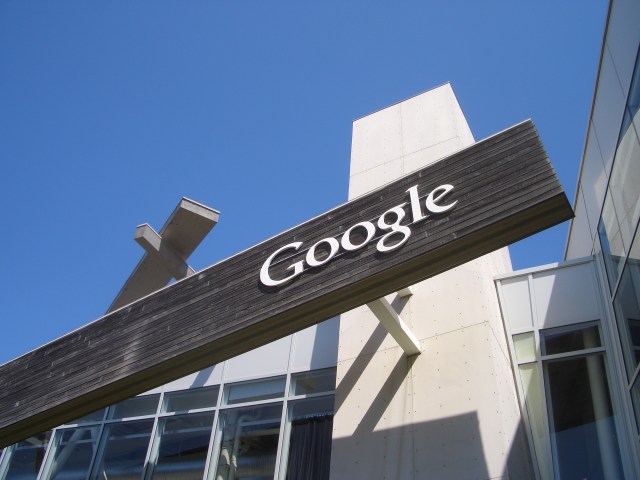
In Portugal (and not only in Portugal), the prefix “Dr.” is usually attached to the name and confers a kind of inherent credibility to someone, as form of courtesy, sometimes for the sake of politeness even if it’s used wrongly. All over Europe, Google is referred as the most powerful search engine on the internet. Some may even address it as “Dr.”. Is it possible that we’re the main contributors for its overvaluation in the market? The fact is that Google acquired a dominant position in the market. But is this a mere case of success?

The European Commission believes that this is not the case and has accused Google of abusiving its dominant position for imposing to the device manufacturers and mobile service providers the installation of Google’s search engine by default on all the devices, through payments and exclusivity contracts.

In fact, competition between other search engine providers on the market and Google is practically nil, in accordance with the definition of a free market as one in which companies, independent of one another, operate in the same business sector and compete with each other to attract consumers. In other words, in free market each company is subject to the competitive pressure of one another. Not dispelling that the market power will always be regarded as a sort of cat and mouse game, and naturally, someone has to be the cat, that is the natural order of the market.

Continue reading “Google vs. EU antitrust proceedings”

EU finance rules – changes in the horizon

5857366257_3457e2726e_o

by Joaquim Rocha, Professor at the Law School of University of Minho

The rules of the Stability and Growth Pact (SGP) for the European Union may yet again undergo some changes. The SGP — whose first version started being implemented in 1997 and since day one has been criticised for vagueness, complexity and juridical fragility — has gone through several amendments seeking to avoid infractions and deviations. Most recent revisions were related to excessive deficit situations into which a number of Member States have been dragged (including Portugal). Following political blockages and negotiation impasses, those revisions were taken to an “extra-Union” solution (conventional/classic international law) via the so-called Treaty on Stability, Coordination and Governance in the Economic and Monetary Union.

At this time, a solution within the EU law framework is pursued. The idea aims to simplify the rules and make them easily manageable by policymakers, public authorities, politicians in general, namely those accountable in the finances. The major line of action revolves around the introduction of a public expenditure’s control index. Simply put, the goal of the financial mechanisms would be transferred from cutting deficit in general to imposing an expenditure limit to the States, which could not override the growth rates of the economy in the mid-term.

It should be a virtuous solution as the fiscal focus has been kept on income, loans and taxes for too long, mistakenly discrediting and setting aside the essential cornerstone of finances: the expenditure.

According to the President of the Eurogroup, Jeroen Dijsselbloem, “We did not discuss how to change the Pact, just how to choose the indicators to assess the compliance with the Pact. (…) It is directly in the hands of finance ministers. It gives us more guidance in the process of designing the budget. It says in advance what you have to do, and you have the control in your hands. There was general agreement that we need an indicator that takes out all the cyclical elements and one-offs but preferably it should be more stable and not change all the time, and we could put more emphasis on indicators that we can actually directly influence as finance ministers“, via Reuters.

On the matter, the Vice President of the European Commission officially addressed after the informal ECOFIN:

Our intention is to focus more on what is really in the hands of the Ministers of Finance, namely the evolution of primary expenditure and new revenue measures. This does not mean that we will put aside the deficit and the debt objectives. It is rather about making it clear what governments are expected to do to achieve these objectives. There was I would say broad support to pursue the work in this direction.(…)  At the same time, we need to be realistic in our expectations, as many underlined that there is no perfect method of calculating the out-put gap, it will always be an approximation“, via European Commission Press Release.

The changes had been anticipated:

EU to consider single “expenditure rule” to cut through budget morass, via Reuters.

Picture credits: Money Scales  by Images Money.

Solidarity with Brussels, the EU Capital

CeJGU3_WIAAESuW

The Official Blog of UNIO joins the sentiment expressed worldwide towards Belgium after the heinous attacks today in Brussels, the European Union administrative de facto capital. Our thoughts go out to the victims, their families and every single person – EU citizens or not – who suffers from intolerance and violence. Integration and assimilation are even more needed at these times to affirm pluralism and intercultural tolerance. As our emotions meet the High Representative of the Union for Foreign Affairs and Security Policy’s ones, we must never forget nor abandon the values of our fundamental rights.

Picture credits: Untitled by Axel Darut.

Eco and EU Culture. “The language of Europe is translation”

3381749342_ccbd0177c7_o

by Sérgio Maia Tavares Marques, Managing Editor
 ▪

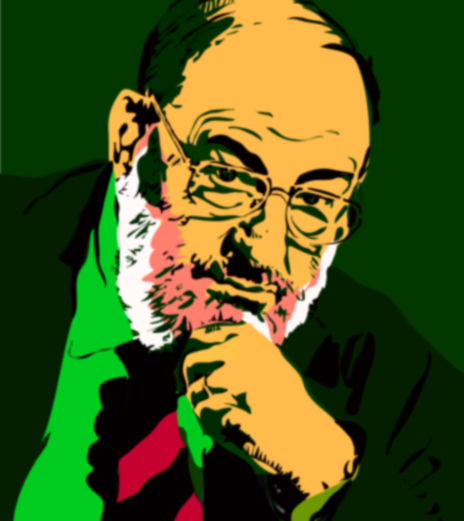
Umberto Eco passed away this week but his words shall remain very much alive. Apart from his literary and semiology brilliance, Eco was an accurate observer of the European reality. For him, the Erasmus Programme is a sexual revolution that makes us all Europeans. A sort of spirit we can sense from – and that moved Bertolucci into his piece – The Dreamers.

He was supportive of the integration since his early days as he believed in the fundamental unity of the European culture. Moreover, he stated: “it´s culture that cements European identity”.

– How exactly? One may ask imaginarily.
– “We have too many languages and cultures, indeed (…)Europe is a continent that was able to fuse many identities (…) We know there are books we have yet to read that will help us reflect on cultures different from our own. Little by little: that is how our European identity will become more profound.”

Lyrically enough, instead of emphasizing the euro-crisis (and he highly regarded the values of the internal market), he suggested to print the faces of Dante, Shakespeare, Balzac or Rosselini in our Euro notes.

Umberto Eco’s lifetime reminds us all that, we do live under a Union based on the rule of law, we do benefit from an internal market and, essentially, we must live up to being surrounded by multilingualism, by a plural culture. This is what our existence is about – enabling ourselves to endless possibilities through the others. Through translating ourselves – beyond communicating, we translate to perceive, to know, to feel, to comprehend. Through at last achieving tolerance as we have been underlining this February on UNIO’s blog.

Afterall, la lingua dell’Europa è la traduzione, la langue de l’Europe, c’est la traduction, die sprache Europas ist die übersetzung, a língua da Europa é a tradução…

Picture credits: Umberto Eco  by giveawayboy.


European cinematographic culture… and interculturally defending tolerance through art

6901741107_bb83e08284_b

by Sérgio Maia Tavares Marques, Managing Editor
 ▪

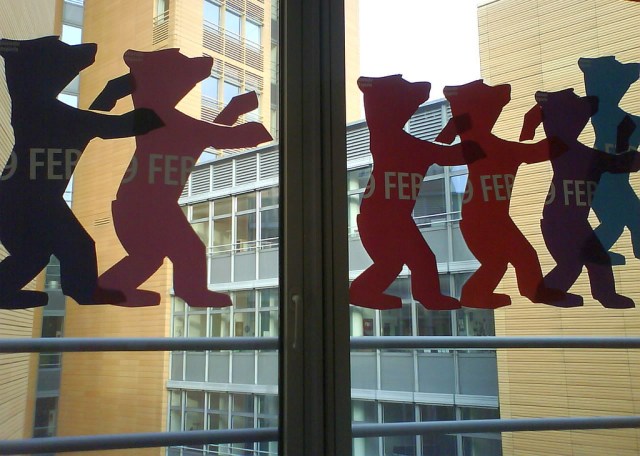
From 11th to 21st, Feb. 2016, Berlin will be the European (and not only) movie capital as the 66th Berlinale Festival takes off. 128 countries, more than 400 films presented, over 30000 people involved and more than 330000 tickets sold. However, apart from that commercial, industry façade of the Festival, a deeper artistic side has also its seat on Berlinale. Sections such as Panorama, Forum, Culinary Cinema and NATIVe offer a different view of the seventh art: independent movies, new comers, experimental art and indigenous people story-telling, for instance. Berlinale Talents section intriguingly revolves around “The Nature of Relations”.

Each programme brochure can be found here.

Nevertheless, the most impressive message of this year´s edition of the Festival is described by the Berlinale Director, Dieter Kosslick. He declares that the Festival is devoted to the refugees. In his words, “since the festival was launched in 1951, we have only had positive experiences with what is today known as “a culture of welcome”. Moreover the Berlinale would not exist if it were not for foreigners. The eleven days of the festival at Potsdamer Platz demonstrate how cultural diversity can celebrate a peaceful fest with great energy and verve.”

According to him, it is vital to follow Steinmeier´s principle of six eyes. “Each of us has our own perception of things, our own two eyes, and with each of them we should try to see the view of the other, to find a joint view, so to speak, so as to achieve, through a shift of perspective, a view shared by both sides (…). In the cinema the principle of six eyes is a matter of course. We look through a screen like we do through an open window into another world or we are right in the middle of it.”

Cinema and all arts are platforms to explore societal issues. They are a narrative of our lives and our time. His editorial urges us all to not misunderstand themes and that refugees arrival can carry out social tolerance (UNIO Blog’s motto for the time being, by the way. As should remain EU law’s. In fact, legal systems as a whole can take in many lessons.).

Picture credits: La Berlinale s’en va!  by Charlotte Noblet.

EU referendum(s)

Some interesting news on the results of Denmark’s referendum:

PM: Danish Vote Shows ‘Considerable Skepticism’, via The New York Times.

Five burning questions after Denmark’s EU ‘no’, via The Local

And about the possible outcome of the one taking place in the United Kingdom:

David Cameron may be ‘reliant on Labour members in EU referendum’, via The Guardian

‘EU referendum result to be declared in Manchester’, via the BBC.


To read other news that we shared, on highly debated topics in the EU, please click here. You can also share other links that you might find interesting for thinking&debating Europe, in the comments section.

Paris attacks – test on EU values or the chance to rebuild a more united and welcoming Union?

Please find bellow some interesting news on the reactions across EU in the aftermath of the Paris attacks that took place on Friday 13, 2015 .

Paris attacks: European leaders link terror threats to immigration, via The Guardian

Europe’s response to the Paris attacks is different this time, via The Economist 

Paris Attacks Shift Europe’s Migrant Focus to Security, via The New York Times

To read other news that we shared, on highly debated topics in the EU, please click here. You can also share other links that you might find interesting for thinking&debating Europe, in the comments section.