The rule of law and the defense of citizens against any power: on the case C-650/18 Hungary v European Parliament

by Alessandra Silveira (Editor) and Maria Inês Costa (Master´s student in Human Rights at the University of Minho)

The expression rule of law means that the exercise of public power is subject to legal norms and procedures – legislative, executive, judicial procedures –, which allow citizens to monitor and eventually challenge the legitimacy of decisions taken by the public power. The basic idea of the value of the rule of law is to submit power to law, restraining the natural tendency of power to expand and operate in an arbitrary manner – be it the traditional power of the State, or the power of novel political structures such as the European Union, be it the power of private organizational complexes – such as market forces, internet forces, sports forces, etc.

The procedure provided by Article 7 TEU is the most emblematic political instrument to defend the rule of law in the European Union. Article 7(1) TEU constitutes the initial phase in the procedure in the event of a clear risk of a serious breach by a Member State of the common values enshrined in Article 2 TEU. Article 7(2) TEU governs the next stage in which a serious and persistent breach by a Member State of the values laid down in Article 2 TEU can be established. Article 7(3) TEU ultimately provides for the issuing of sanctions against the Member State concerned.

Article 7(1) TEU provides that on a reasoned proposal by the European Parliament, the Council acting by a majority of 4/5 of its members may determine that there is a clear risk of a serious breach by a Member State of the common values of the Union referred to in Article 2 TEU. Moreover, Article 7(5) TUE provides that the voting arrangements applicable to the European Parliament are laid down in Article 354 TFEU – which provides that the European Parliament shall act by a 2/3 majority of the votes cast, representing the majority of its component Members.

Continue reading “The rule of law and the defense of citizens against any power: on the case C-650/18 Hungary v European Parliament”

Judicial review of EPPO procedural acts and decisions: a disruptive and resilient architecture?

Crime Scene

by Luis de Lemos Triunfante, Judge-Second National Expert at Eurojust Portuguese Desk

“The creation of a European Public Prosecutor’s Office will enable us to have the missing tools: kick investigations across the Union and exchange of information in real time. The European Public Prosecutor will work together with the Deputy Prosecutors of each of the 17 participating countries and congregate national expertise by coordinating them at EU level. The objective is to create a strong, independent and effective body that develops expertise in the fight against financial crime throughout the EU. The 17 Member States concerned will now move the process forward, hoping that others will join soon. The Commission has always defended the interest of all Member States and this initiative is open to all”, Sharing sovereignty to combat financial crime – Jean-Claude Juncker.

DH-CII (Human Rights Centre for Interdisciplinary Research), in collaboration with CEDU (Centre of Studies in EU Law) and the Union of Magistrates of the Public Prosecutor’s Office, organised, on 18 May at the Law School of the University of Minho, an International Criminal Law Congress about “The new challenges of Judicial and police cooperation in the European Union and the implementation of the European Public Prosecutor’s Office”.

The aim of that initiative was to bring to the discussion the main issues that lie today in judicial and police cooperation, mutual recognition, harmonization and the protection of human rights in the European Union. It also intended to analyse the challenges surrounding the implementation of the European Public Prosecutor’s Office (EPPO). In a special way, a critical and prospective look was taken on the Proposal for a Council Regulation establishing the EPPO under discussion, taking into account the current state of negotiations, the main aspects of substantive criminal law and substantive Criminal proceedings; the Statute and the institutional design of the EPPO (matters of institutional law) and the relations between the EPPO, Eurojust and OLAF.

One of the main issues of the EPPO is the judicial review.
Continue reading “Judicial review of EPPO procedural acts and decisions: a disruptive and resilient architecture?”

Editorial of October 2016

8630266615_336d5056ec_o

by Sophie Perez Fernandes, Junior Editor

Engaging EU liability within the European Stability Mechanism framework

Last September 20th, the European Court of Justice (ECJ) delivered two judgments regarding the role of the European Commission and, to a lesser extent, the European Central Bank, in the negotiation and signing of the Memorandum of Understanding concluded between the Republic of Cyprus and the European Stability Mechanism (ESM) during the 2012-2013 financial crisis, and, in particular, in the restructuring of the banking sector in Cyprus imposed as a condition for the grant of financial assistance.

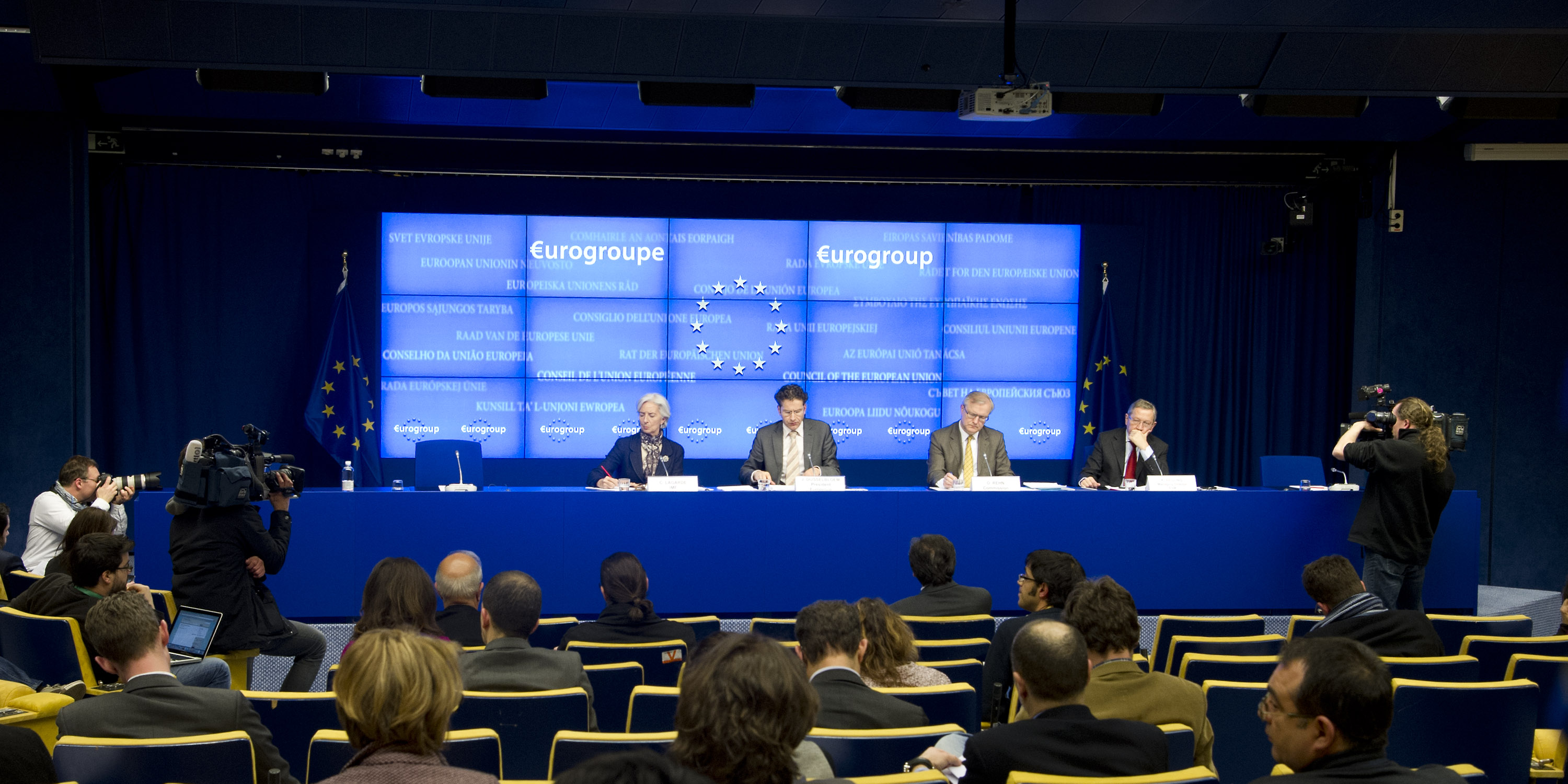
In Mallis and Malli (Joined Cases C-105/15 P to C-109/15 P), actions were brought against the European Commission and the European Central Bank for the annulment of the Eurogroup’s statement of 25 March 2013 concerning, inter alia, the restructuring of the banking sector in Cyprus. In turn, in Ledra Advertising (Joined Cases C-8/15 P to C-10/15 P), depositors of two large Cypriot banks brought actions against the European Commission and the European Central Bank for the partial annulment of the Memorandum of Understanding of 26 April 2013 adopted jointly by the ESM and the Republic of Cyprus and also for compensation for damages allegedly suffered following the request for financial assistance and the ensuing restructuring of the two banks in question.

The ECJ had already been called upon to rule on judicial protection questions raised by the ESM framework. Created in order to provide, where needed, financial assistance to the Member States whose currency is the euro, the ESM was instituted through an international agreement between euro area Member States – the Treaty establishing the ESM, concluded in Brussels the 2th February 2012, in force since the 27th September 2012. Thus, the ESM Treaty is not part of the EU legal order, as confirmed by the ECJ in the famous Pringle judgment (C-370/12). As a consequence, when creating the ESM, or acting within its framework, Member States do not act within the scope of application of EU law for the purposes, in particular, of Article 51(1) CFREU. Individuals seeking to challenge Member States’ measures adopted pursuant the conditions laid down in a Memorandum of Understanding would not, therefore, find in the preliminary ruling mechanism an indirect means of access to the ECJ in order to assess their compliance with EU law and, in particular, the CFREU as the former was not in question and the latter was hence out of reach.

What the above mentioned judgments, and especially Ledra Advertising, emphasize is the link nonetheless existing between the ESM framework and the EU legal order. Quoting Alicia Hinarejos (EU Law Analysis), in order to carry out its functions, the ESM “borrows” two EU institutions, the European Commission and the European Central Bank, two thirds of the infamously known Troika. The question is whether (and, if so, when) EU institutions’ actions within the ESM framework might be reviewed and, when harmful, give rise to compensation under EU law and, in particular, in light of the CFREU.

Continue reading “Editorial of October 2016”