Produce more with less: CAP and digital divide

26702919681_f4b7d0a6f6_o

by Isabel Espín, Professor at the Law School of Universidade de Santiago de Compostela


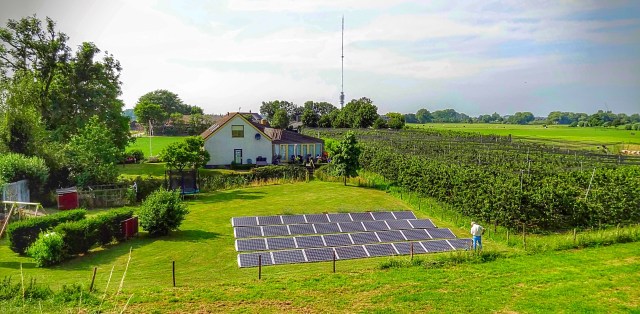
1. In a global perspective, the FAO Agenda calls attention to the increase in the world’s population, the rise in average income and the new consumer habits that will result in a greater demand for food in the coming decades, while the impact of climate change on natural resources makes it necessary to reduce the ecological footprint of our food production system. This sends the message that it will be necessary to improve both the productivity and the sustainability of the agricultural sector, which means that farmers will have to “produce more with less”.

Like any other productive sector, global agriculture is undergoing profound transformations related to new digital technologies and artificial intelligence, which gave rise to the concept of Smart Agriculture or Precision Agriculture, in other words, a modern farming management concept using digital techniques to monitor and optimise agricultural production processes.

The aim is to save costs, reduce environmental impact and produce more food, and for this purpose a number of technologies are made available to the farm “used for object identification, geo-referencing, measurement of specific parameters, Global Navigation Satellite Systems (GNSS), connectivity, data storage and analysis, advisory systems, robotics and autonomous navigation”([i]).

2. In the case of the European Union, the 4.0 revolution in agriculture is also confronted with the particularities of a sector of the economy in constant crisis and always in search of a necessary revitalization. It should not be forgotten that the Common Agricultural Policy (CAP) is one of the most complex policies of the European Union, and which receives a significant share of the Community budget.
Continue reading “Produce more with less: CAP and digital divide”

Editorial of March 2020

29947891017_e916795278_o

by Pedro Madeira Froufe, Editor


An “idea of Europe” – on George Steiner and Brexit

The result of the 2016 UK referendum (Brexit) undoubtedly posed a series of questions and triggered a set of concerns that, in a way, were already underlying European collective thinking – rectius, underlined and involved the dynamics of European integration.

Following the Brexit referendum, many considered (or even predicted) the progressive disintegration of the Union, a contagious effect on the rest of integrated Europe, especially in the face of the emergence of outbreaks of nationalist populism in countries such as Italy, Poland, Hungary, Malta, Spain, as well as the strengthening of these political currents in other Member States – with the already traditional Front National in France, besides Holland and Germany.

However, instead of these forecasts, during the entire negotiation period of the exit agreement, until January 31, 2020, the contagion effect occurred in the opposite direction to what these currents (which bet on the breakdown) supposed. There was a political reinforcement of the Member States’ common position to renew the will to maintain and deepen the integration process. In other words, a position with a single voice from all the remaining 27 Member States, so that, in that plan, Brexit represented – despite everything and until now – a factor of strengthening the union around the need, commonly felt, to maintain the “European dream” (expression by George Steiner, in a posthumous interview, published in the newspaper El País, on February 7, 2020). So, being naturally a disastrous mishap, Brexit can also be a positive event. There are thorns that oblige us, at times, to pay more attention – treating it with more care – to the beauty of the rose (because “there are no roses without thorns”!).
Continue reading “Editorial of March 2020”

Summaries of judgments


Summaries of judgments made in collaboration with the Portuguese judge and référendaires of the CJEU (Nuno Piçarra, Mariana Tavares and Sophie Perez)
 ▪

Judgment of the Court (Grand Chamber) of 12 November 2019, Zubair Haqbin v Federaal Agentschap voor de opvang van asielzoekers – Case C-233/18, EU:C:2019:956

Reference for a preliminary ruling — Applicants for international protection — Directive 2013/33/EU — Article 20(4) and (5) — Serious breaches of the rules of the accommodation centres as well as seriously violent behaviour — Scope of the Member States’ right to determine the sanctions applicable — Unaccompanied minor — Reduction or withdrawal of material reception conditions

Facts

The Court of Justice ruled for the first time on the scope of the right conferred on Member States by Article 20(4) Directive 2013/33/EU of the European Parliament and of the Council of 26 June 2013 laying down standards for the reception of applicants for international protection (OJ 2013 L 180, p. 96). The request for a preliminary ruling has been made in proceedings between Z. Haqbin and the Federaal Agentschap voor de opvang van asielzoekers (Federal agency for the reception of asylum seekers, Belgium) concerning a claim for compensation brought by the former following a decision to temporarily excluded him from material reception conditions.

Z. Haqbin, of Afghan nationality, arrived in Belgium as an unaccompanied minor and lodged an application for international protection on December 2015. He was then hosted in a reception centre. In that centre, Z. Haqbin was involved in a brawl with other residents of various ethnic origins. Following that brawl, the director of the reception centre decided to exclude Z. Haqbin for a period of 15 days from material aid in a reception facility. During that period of exclusion (between April and May 2016), Z. Haqbin, according to his own statements, spent his nights in a park in Brussels and stayed with friends.

Z. Haqbin lodged an application to suspend the exclusion measure referred above. That application was dismissed for lack of extreme urgency, since Z. Haqbin had failed to show that he was homeless. Z. Haqbin then brought an action seeking cancellation of that measure and compensation for the damage suffered. The referring court before which Z. Haqbin lodged an appeal against the first-instance ruling that dismissed his action, asked the Court of Justice whether it was possible for the Belgian authorities to withdraw or reduce material reception conditions in respect of an applicant for international protection in Z. Haqbin’s situation. Moreover, with regard to his particular situation, the question arose as to the conditions under which such a sanction can be imposed on an unaccompanied minor.

Decision

Article 20(4) of Directive 2013/33 states that Member States may determine ‘sanctions’ applicable to serious breaches, by the applicant, of the rules of the accommodation centres as well as to seriously violent behaviour of the applicant. In that regard, the Court of Justice clarified that the ‘sanctions’ referred to in Article 20(4) of Directive 2013/33 may, in principle, concern material reception conditions. However, such sanctions must, in accordance with Article 20(5) of the directive, be objective, impartial, motivated and proportionate to the particular situation of the applicant and must, under all circumstances, ensure a dignified standard of living according to Article 1 CFREU.

Therefore, a sanction that is imposed exclusively on the basis of one of the reasons mentioned in Article 20(4) of Directive 2013/33 and consists in the withdrawal, even if only a temporary one, of the full set of material reception conditions or of material reception conditions relating to housing, food or clothing would be irreconcilable with the requirement, arising from Article 20(5) of the directive, to ensure a dignified standard of living for the applicant, since it would preclude the applicant from being allowed to meet his or her most basic needs. Such a sanction would also amount to a failure to comply with the proportionality requirement under Article 20(5) of Directive 2013/33, in so far as even the most stringent sanctions, whose objective is to punish, in criminal law, the breaches or behaviour referred to in Article 20(4) of the directive, cannot deprive the applicant of the possibility of meeting his or her most basic needs. The Court added that Member States are required to guarantee continuously and without interruption a dignified standard of living and that the authorities of the Member States are required to ensure, under their supervision and under their own responsibility, the provision of material reception conditions guaranteeing such a standard of living, including when they have recourse, where appropriate, to private natural or legal persons in order to carry out, under their authority, that obligation.
Continue reading “Summaries of judgments”

Digital publications and protection of constitutional democracy

book-return-read-books

 by Ana Aba Catoira, Professor of Constitutional Law, Universidade da Coruña


The strong impact that the irruption of digital channels has had on freedom of expression has led them to a reformulation process, because, as Lessig pointed out, “specifically the Internet has helped to show the true meaning of freedom of expression.” This profound transformation translates into a “paradigm shift” or change in the classical conception of the rights of information evident in the sender-receiver relationship of information, since all people are now active subjects in the new communicative process.

The prominence of the Internet and, more specifically, of social networks has been fundamental for the propagation of new “informative” practices that count on the invaluable help of artificial intelligence. This reality, already indicated as “information disorders”, was characterized by false news, post-truth, bots and other phenomena that distort the right to give and receive truthful information and intoxicate public opinion that is no longer free.
Continue reading “Digital publications and protection of constitutional democracy”

Artificial intelligence and PSI Directive (EU) – open data and the re-use of public sector information before new digital demands

4528443760_13374dcb87_o

 by Joana Abreu, Editor and Jean Monnet Module eUjust Coordinator


In Ursula von der Leyen’s speech entitled “A Union that strives for more”, one of nowadays President of the European Commission’s priorities was to establish “a Europe fit for digital age”. In this sense, von der Leyen’s aspirations were to grasp the opportunities from the digital age within safe and ethical boundaries, particularly those deriving from artificial intelligence as “[d]igital technologies […] are transforming the world at an unprecedented speed”. Therefore, the President of the European Commission established that “[i]n my first 100 days in office, I will put forward legislation for a coordinated European approach on the human and ethical implications of Artificial Intelligence”. Last 1st December 2019, the European Commission took office, led by President Ursula von der Leyen. As that time lapse is passing by, there is a need to understand how a Europe fit for the digital age is taking shape. There is to say, has the European Union already made efforts to meet that digital age?

In fact, recalling Digital4EU Stakeholder Forum, held in Brussels, on the 25th February 2016, Digital Single Market was thought by inception in order to materialise it as a primary public interest in action. Concerning digital public services, it was highlighted that some of them were not as transparent as they should and that “Governments need[ed] to look at how to re-use the information already available […] and open up the data they h[ad], while adapting to current trends and making use of public services easy and simple”. In order to do so, this forum established that “Member States should implement the once only principle: once only obligation, re-use of data, making the best use of key enablers and thinking cross-border services from inception”.
Continue reading “Artificial intelligence and PSI Directive (EU) – open data and the re-use of public sector information before new digital demands”

The fundamental right to life in the case Soares Campos v. Portugal: where do we stand?

by Mariana Alvim, PhD candidate and member of CIDP

Brief description of the Case

The present case[i] concerned the death of Mr. Soares Campos’s son who was swept out to sea while taking part in a gathering related to Praxe[ii] in a beach in Portugal.

Mr. Soares Campos (hereafter “applicant” or “claimant”) lodged an application with the European Court of Human Rights (hereafter “Court” or “ECtHR”) on the 27 May 2016.

The applicant based his complain on the procedural aspect of Article 2 of the European Convention on Human Rights (hereafter “ECHR” or “Convention”), sustaining that there was not an effective investigation capable of establishing the circumstances of his son’s death.

The claimant also grounded his complain in a substantive aspect of Article 2 of the Convention, declaring that his son’s death had been caused by the lack of a legal framework regulating Praxe activities in the Portuguese Universities.
Continue reading “The fundamental right to life in the case Soares Campos v. Portugal: where do we stand?”

Editorial of February 2020

girl-2934257_1920

by Pedro Madeira Froufe, Editor
Tiago Cabral, master in EU Law - UMinho


You have been my friend. That in itself is a tremendous thing
[i]

1. Throughout these last few weeks, the final steps necessary to complete the Brexit process were taken, in Brussels. On the 24th January, the President of the European Commission, Ursula von der Leyen, and the President of the European Council, Charles Michel, signed the historic “Brexit deal”. To make it fully official, two steps remained: a) approval by the European Parliament and; b) approval by a qualified majority in the Council. Regarding the European Parliament, indeed, this Institution gave its stamp to the deal by a fairly large margin of 621 votes in favour, 49 against and 13 abstentions, on the 29th of January. Lastly, on the 30th of January, the Council adopted, by written procedure, the decision necessary to conclude the withdrawal agreement.

2. We had plenty of delays and attempts to take Brexit over the line but this time, according to all signs, it will really happen. A quick search through our archives will show the Reader that we had plenty of opportunities to write about Brexit (and will probably keep writing during the transition period and beyond), but this editorial is, in itself, a moment of closure.
Continue reading “Editorial of February 2020”

Summaries of judgments


Summaries of judgments made in collaboration with the Portuguese judges and référendaire of the General Court (Maria José Costeira, Ricardo Silva Passos and Esperança Mealha)
 ▪


Judgment of the General Court (Ninth Chamber, Extended Composition) of 24 October 2019 – T 310/18 – EPSU and Goudriaan v European Commission

“Social policy – Dialogue between management and labour at European Union level – Agreement entitled ‘General framework for informing and consulting officials and other servants of central government administrations’ – Joint request by the signatory parties for application of that agreement at European Union level – Refusal by the Commission to submit a proposal for a decision to the Council – Action for annulment – Act against which proceedings may be brought – Admissibility – Commission’s discretion – Autonomy of the social partners – Principle of subsidiarity – Proportionality”.

1 – Facts

On April 10th 2015, the European Commission invited the social partners, on the basis of Article 154(2) TFEU, to comment on the possible direction of EU action to consolidate the Directives on information and consultation of workers. That consultation focused in particular on the possible extension of the scope of those Directives to officials and other servants of public administrations in the Member States.

On June 2nd 2015, the social partners of the Social Dialogue Committee for central government administrations, namely the Trade Union Delegation of the National and European Administration (DSANE) and the European Public Administration Employers (EPAE), informed the Commission, on the basis of Article 154(4) TFEU, of their wish to negotiate and conclude an agreement on the basis of Article 155(1) TFEU.
Continue reading “Summaries of judgments”

Editorial of January 2020

laptop-3196481_1920

by Tiago Cabral, master in EU Law - UMinho


Legislative Initiative for the European Parliament: A Wish for 2020

1. It is challenging to argue that the selection of Ursula von der Leyen for President of the European Commission (hereinafter “EC”) was the result, in any conceivable way, shape or form, of a victory by the European Parliament (“hereinafter “EP”) in the traditional power struggle between the Institutions. The spitzenkandidaten (lead candidate), a process which the EP swore that it would uphold, was left completely broken by the selection. It also served as a reminder that the “election” of the President of the EC is, if we rigorous in our analysis, a nomination by the European Council (hereinafter “ECON”) where the EP has veto power but is highly unlikely to use it. In fact, in a remarkable twist of fate, the ECON ended not only choosing the President of the EC but, arguably, also the President of the EP[i]. Even though there are some positive aspects that we should point out, such as the fact that the new EC will be more gender-balanced, that is certainly not enough to counterbalance the fact that no European citizen cast a vote thinking of, let alone desiring, the coming to pass of the current scenario.

2. Indeed, in a purely result-oriented perspective, the new Commission may go on to do a stellar job, thereby acquiring a high degree of output legitimacy. The College of Commissioners 2019-2024 possesses some worthy names, including two former lead candidates in Vice-Presidents Frans Timmermans and Margrethe Vestager[ii]. However, in terms of input legitimacy, the choice and the procedure leading to the current executive, does not strengthen the EU in any manner. Thereby, and until there is a broader reform of the European electoral process, it is necessary to search for other manners to widen the EU’s legitimacy.
Continue reading “Editorial of January 2020”