
Joana Covelo de Abreu (Editor of this blog and Key-staff member of Jean Monnet Centre of Excellence “Digital Citizenship & Technological Sustainability” – CitDig, Erasmus+.)
I
Whilst awaiting the results of the US mid-term elections, we have perhaps witnessed the first electoral process in which digital transformation – and, in particular, the pressures that have accompanied it – has had a significant impact on democracy. Indeed, the debates surrounding data centres and a possible moratorium played a decisive role in last Tuesday’s US elections: “Datacenters […] were on the ballot in elections in at least 40 jurisdictions across 10 states” and “[v]oters responded with a strong rebuke of the giant buildings, which have has become a symbol of the tech industry and AI” (here).
Discussions concerning the Proposal for a Council Regulation laying down the Multiannual Financial Framework for the years 2028 to 2034 [COM(2025) 571 final] are running in the EU but its main objectives must be discussed, albeit briefly, in the light of how this proposal addresses the objectives considered essential for the EU: maintaining European competitiveness in a digital world, whilst reaffirming its core values, and how this may be reflected in the democratic perception of the EU.
Democracy plays a vital role, in that it reflects the need for political power to balance all the interests affected by its decisions, clearly defining the common good from a material, temporal and spatial standpoint. The material manifestations of the European common good are deeply linked to an understanding of how the EU can maintain its competitiveness in a digital world, whilst promoting its “way of life”, that is to say, by promoting its core values, pursuing its objectives as enshrined in Articles 2 and 3 of the TEU respectively, and upholding its high standards of protection for individuals and free competition. Its timeframe is aligned with the digital decade in which we live [COM(2021) 118 final], running until 2030, without forgetting its commitment to serving as a global benchmark, whilst participating in the setting of international standards, notably through cooperation with private entities involved in their development (Declaration for European Digital Sovereignty, November 18th 2025).
Understanding the EU’s financial framework for the next seven years is essential for monitoring how the European common good will be addressed, whilst at the same time developing the tools needed to actively analyse the political decisions that have an impact on the final financial framework.
II
The EU operates on the basis of its own resources (Article 311 of the TFEU), as it provides itself with the necessary means to achieve its objectives and implement its policies. The Multiannual Financial Framework is a means designed to “ensure that Union expenditure develops in an orderly manner and within the limits of its own resources” (Article 312 of the TFEU), and is now set for a period of seven years.
The EU’s own resources are currently discussed as deriving from:
- More traditional sources, as customs duties, contributions by the Member States based on the value-added tax (VAT) and on their gross domestic income;
- Since 2011, national contributions based on non-recycled plastic packaging;
- And five new own resources, based on 1) the EU Emissions Trading System (ETS), 2) the Carbon border adjustment mechanism (CBAM), 3) an own resource based on uncollected e-waste, 4) an own resource derived from excise duty on tobacco, and 5) the Corporate Resource for Europe (CORE), with an estimated increase in annual revenue of 58,8 billion euros, in a total expected amount of 411,6 billion of euros in the 7-years’ time span of the Multiannual Financial Framework.
These new own resources are ways to repay the funds that were used to establish the NextGenerationEU funding scheme (aimed at tackling structural and unprecedented problems arising from the pandemic associated to the COVID-19 disease) while allowing the EU to promote long-term goals, as those related to digital technologies, defence or clean energy solutions.
The proposal steaming from the European Commission amounted to almost 2 trillion of euros, representing around 1,26% of the EU’s gross national income on average between 2028 and 2034.
It was aimed at investing in six major priorities, which are aligned with the partial allocation of resources:
- Investing in people, Member States and regions;
- Foster education and democratic values;
- Driving prosperity via competitiveness, research and innovation;
- Protecting people and building preparedness and resilience to face new challenges;
- Protecting Europe;
- Building partnerships for a stronger Europe in the world.
In fact, 44% of the proposed amount (around 865 billion of euros) was aimed at national and regional partnerships; 21% of the budget (around 409 billion of euros) was focused on scaling up the European competitiveness, namely through the European Competitiveness Fund; 10% of the budget (around 200 billion of euros) was aimed at establishing stronger partnerships in the world, especially through the Global Europe Fund; and 2% of the estimated budget (around 49 billion of euros) was focused on investing in education (through the ERASMUS+ programme) and to the promotion of the European values (AgoraEU).
It was described as an ambitious and dynamic framework, strategically designed to serve the European common good of greater competitiveness, within which the European Competitiveness Fund was allocated a significant contribution, whilst other strategic areas were also included, such as those relating to research and innovation (particularly within the HORIZON funding programme). However, with regard to the promotion of EU values, although conditionality was maintained and, in practice, this amounted to a proposal to establish a double standard, the total amount allocated to funding AgoraEU was already, at least by comparison, quite small, given that, on the one hand, it had to share the allocated funding with the Erasmus+ programme and, taken together, these two funds accounted for only 2% of the allocated budget. In this regard, a specific debate is needed to ensure that democratic scrutiny can take its course.
III
The EU’s common good, as explained earlier, has two dynamic aspects: one relates to strengthening the EU’s competitiveness in the digital world; the other links it to the preservation of the EU’s fundamental values.
An analysis of the negotiations that took place and led to a proposal put forward by the Irish Presidency of the Council of the EU, made public on 10 October 2026 (here), known as the ‘Negotiating Box’, revealed a revision deemed to strike “a delicate balance between competing voices”, whilst at the same time reducing the total amount proposed.
With regard to this revision and the resulting proposal, some have argued that the funding allocated to the promotion of European values appears to have been significantly reduced (here), particularly given that, within the 2% of the Commission’s initial budget proposal, two different programmes were already on an equal footing: one relating to education (ERASMUS+) and the other concerning the promotion of European values (AgoraEU). Indeed, with regard to the funding arrangements for AgoraEU, the Irish Presidency put forward a proposal aimed at reducing it by 30%, using this adjustment line as a means of reaching a compromise.
This could give rise to potential problems. One of these – perhaps the most obvious – relates to the fact that, in order to achieve the objective of competitiveness, the Union may have to accept a difficult trade-off at a particularly challenging time: when civil society actors are facing increased political and financial pressure, which could affect Europe’s democratic structure. The other problem may relate to the objectives of simplification and flexibility. Whilst these are extremely necessary in a changing world, there is no guarantee that the right choices will be made towards a more flexible reallocation, where other governance decisions must accompany these discussions. Furthermore, the consolidation of a smaller number of instruments is extremely necessary, but it cannot be reduced to simplification alone: the key policy objectives are highlighted in these proposals and must be preserved throughout the entire process; they must not be discarded or treated as less important in the face of short-term challenges.
The balance is quite demanding as this cannot lead to the creation of some fixed restrictions that will undermine the intended flexibility. In this sense, the most demanding approach concerns the governance arrangements that must accompany both consolidation and flexibility purposes, as these have to be capable of sorting out priorities, of streamlining responsibility and of providing adequate controlling mechanisms, ensuring accountability.
Indeed, on examining the Commission’s proposal, with a view to achieving greater flexibility, the advisory procedure (based on the comitology mechanism) has been included to manage new instruments, particularly within the framework of the European Competition Fund. This would prevent funding decisions from being blocked due to specific political pressures and/or conflicting industrial interests. However, this would present a drawback, as such decisions would be regarded as rather technocratic.
The ‘Negotiating Box’ approached the issue from a different angle: it proposes the use of the examination procedure (also a comitology mechanism), which would mean that the Commission, in its decisions on funding, would be subject to scrutiny by the Member States through a specific majority. This would raise various concerns: whilst it would ensure greater political scrutiny, it would increase the risk of political interference, as Member States would have the right to decide on award criteria and eligibility rules, for instance.
Both procedures are set out in Regulation 182/2011, but they expose how difficult it is to strike the necessary balance between flexibility, consolidation and appropriate ways of clearly defining emerging priorities, assigning responsibilities and ensuring accountability.
Again, the digital world plays a decisive role: while ICT tools have widened the amount of available information, they have not introduced a way to transform this information into actual knowledge – there is still the need to expose this available information to a critical process, which depends on specific skills targeted at analysing and sorting the available information. Furthermore, in a world where the EU is seeking to keep its status as a competitor in global markets as those related to the digital technologies, it must reach a compromise to fully accomplish the one concerning the preservation of EU’s fundamental values.
Only time will tell what real impact these proposals and the final agreement may have on the EU and its democratic system. However, lessons must be learnt from the situation in the US, given that citizens play a key role both in fostering representative democracy and, above all, in utilising effective forms of democratic participation. The more the EU steps up its practical action – of which funding is one of the most visible features – the more it is exposed to a new form of democratic scrutiny, which should be welcomed before decisions are taken that will have repercussions for many years to come.
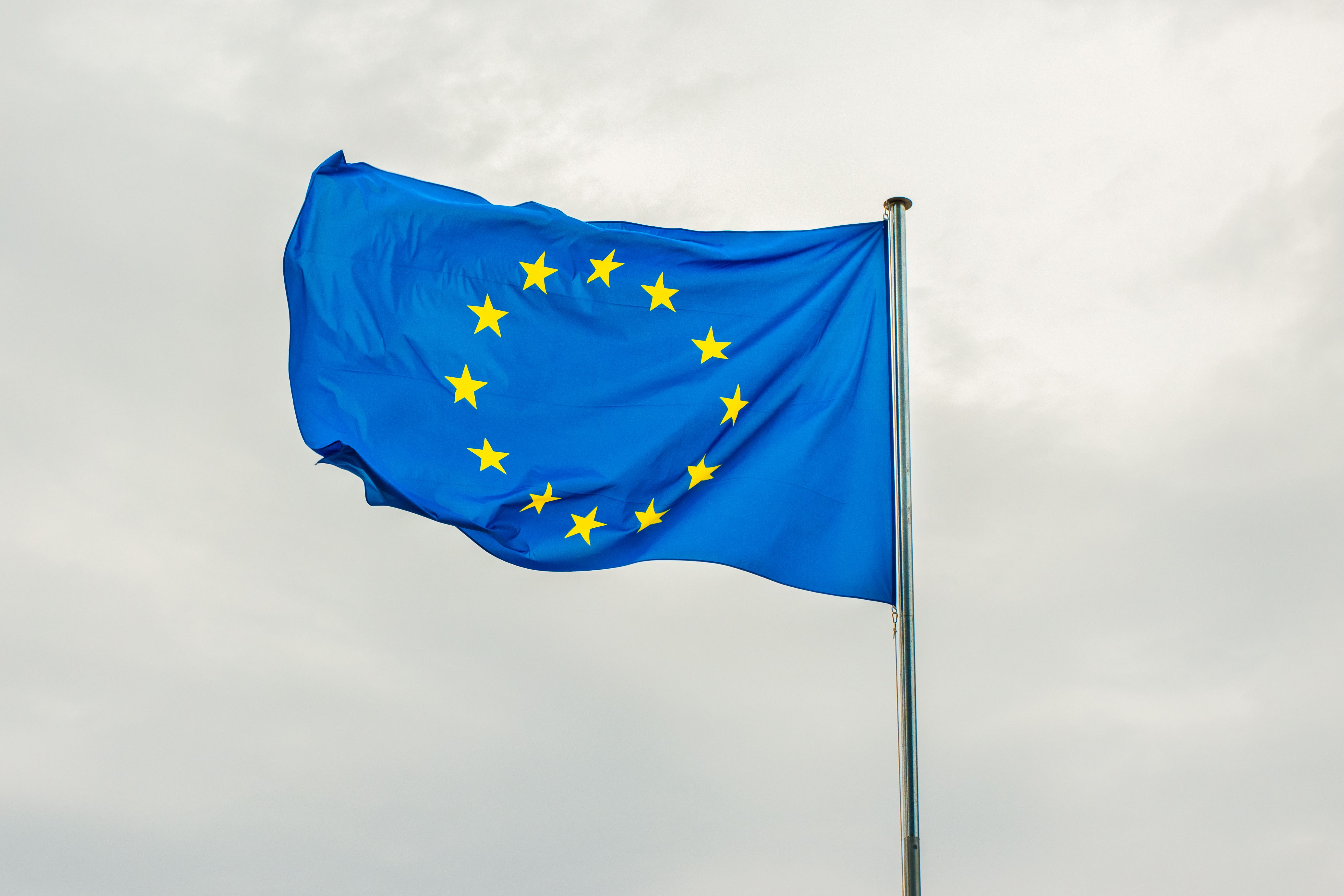
Picture credit: by Dušan Cvetanović on pexels.com.

